Jeff Rupert and Richard Drexler Redefine Contemporary Jazz Duet Dynamics with the Release of the Critically Acclaimed Album Imagination

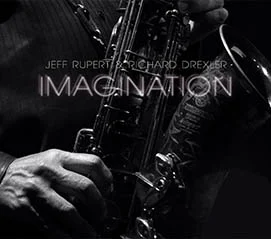
The contemporary jazz landscape has long celebrated the vast sonic possibilities of large ensembles, big bands, and complex multi-instrument arrangements. Yet, every so often, a stripped-down collaboration arrives to remind listeners of the profound intimacy and formidable technical mastery possible within the framework of a minimalist duet. Such is the case with Imagination, the remarkable collaborative recording featuring saxophonist Jeff Rupert and pianist Richard Drexler. Recorded live and capturing an electric, unscripted synergy, the album presents an exquisite masterclass in acoustic interplay, demonstrating how two veteran musicians can command a room with nothing more than a tenor saxophone, an 88-key piano, and a shared vocabulary rooted in the rich traditions of jazz history.
From the opening notes of the album, the listener is immediately struck by the telepathic communication between Rupert and Drexler. Despite the absence of a rhythm section—no bass to anchor the low end, no drums to propel the beat—the duo generates an astonishingly full and wholesome soundscape. The secret lies in their deep mutual respect, dynamic equilibrium, and an uncanny ability to share the sonic space without ever stepping on each other’s musical toes. The resulting performance is a fluid exercise in call-and-response, where the spotlight shifts almost magically between the saxophone and the piano, creating the illusion of a much larger ensemble operating with singular purpose.
The Art of the Dialogue: Channeling Jazz Royalty
At the core of Imagination is an effortless melodic grace that recalls the golden eras of jazz history while firmly establishing a contemporary voice. Jeff Rupert, known for his warm tone and expressive phrasing, approaches the tenor saxophone with a vocalized quality that evokes the legendary lineages of Lester Young and Stan Getz. His playing is characterized by rounded edges, hushed tones, and a lyrical sensitivity that treats every melody as if it were a story waiting to be told. Rather than relying on aggressive pyrotechnics, Rupert utilizes ebullient arpeggios and brilliantly gilded glissandi that mimic the human voice, breathing life into every composition he touches.
Equally vital to the album’s success is the virtuosic yet deeply sensitive pianism of Richard Drexler. Operating as an absolute equal partner in this musical dialogue, Drexler possesses an innate impulse to adorn simple melodies with sophisticated harmonies and tasteful counterpoint. His chordal voicings provide both the harmonic foundation and the rhythmic momentum traditionally supplied by a full rhythm section. Drexler’s ability to weave intricate accompaniments while leaving ample room for Rupert to soar demonstrates a profound understanding of chamber jazz dynamics. Together, the duo creates a conversational appeal that draws the listener deep into the heart of each composition, transforming standard-bearing performance into an act of high-art storytelling.
Repertoire and Chronology: A Curated Journey Through Song
The inspiration behind Imagination is anchored in a meticulously curated repertoire that bridges American songbook classics, Latin jazz gems, and striking original compositions. The tracklist itself is a testament to the duo’s broad artistic vision, featuring enduring standards alongside inspired contemporary pieces:
- Without a Song
- I Can’t Help It
- Snowfall
- Strange Meadowlark
- Imagination
- A Felicidade
- My Mistress’ Eyes
- Soul Eyes
Each selection on the album serves a distinct purpose in showcasing the duo’s stylistic versatility. For instance, the flowing tempo of Claude Thornhill’s classic "Snowfall" highlights Rupert’s delicate touch, as the saxophonist sends up phrase after phrase of gossamer notes that gently nudge Drexler into a rarefied harmonic realm of his own. The interplay here is effortless, characterized by a silken texture that is easy on the ears yet intellectually stimulating for the discerning jazz aficionado.
Similarly, the duo navigates the intricate bossa nova rhythms of Antonio Carlos Jobim’s "A Felicidade" with a light, breezy touch that respects the song’s Brazilian roots while infusing it with spontaneous American jazz improvisation. Another standout moment occurs on Mal Waldron’s haunting jazz classic, "Soul Eyes," where the slow tempo allows both artists to explore the emotional depths of the melody through sustained tones and reflective spaces.
Perhaps one of the most intriguing entries on the album is Jeff Rupert’s original composition, "My Mistress’ Eyes." Conceived as a Shakespearean sonnet translated into musical form, the piece demonstrates Rupert’s prowess as a composer, blending poetic structure with modern harmonic sensibilities. Drexler rises to the occasion, providing a shimmering piano backdrop that underscores the romantic and literary inspirations behind the music.
Technical Brilliance and the Power of Negative Space
One of the most remarkable technical achievements of Imagination is the dynamic balance achieved between the two instruments. In a duet setting, the risk of muddy frequencies or sonic crowding is exceptionally high, particularly when pairing a horn with a full-range keyboard instrument. However, Rupert and Drexler navigate this challenge through a masterclass in orchestration and arrangement.
Throughout the album, soloing is executed in a series of dynamic highlights. When Rupert steps forward to deliver a poignant melodic statement, Drexler deftly recedes into the shadows, providing a sparse, supportive cushion of chords. Conversely, when Drexler takes the lead, Rupert drops into a supportive, harmonically rich counterpoint or steps back entirely to let the piano breathe. This invisible passing of the torch prevents listener fatigue and maintains a high level of engagement from the first track to the last.
Furthermore, the album’s production philosophy places immense value on negative space. In jazz, the notes you do not play are often just as important as the notes you do. By allowing silence and breath to punctuate their phrases, Rupert and Drexler create a sense of pure subtlety and suspense. Recorded live, the album captures the acoustic authenticity of the performance space, preserving the natural reverberation of the instruments and the palpable energy of a real-time creative exchange. Every breath into the saxophone and every felt hammer striking a piano string contributes to a visceral listening experience that feels remarkably immediate and personal.
Background Context and Industry Reception
The release of Imagination arrives at a time when jazz audiences and critics alike have increasingly shown an appreciation for stripped-down, acoustic recordings that prioritize emotional honesty over commercial polish. In an industry frequently dominated by high-production-value fusion records and massive big-band revivals, small-group intimate recordings offer a refreshing return to the roots of the genre.
Both Rupert and Drexler bring decades of extensive professional experience to this collaboration, having performed and recorded with numerous jazz legends throughout their respective careers. Their deep familiarity with the idiom allows them to take bold artistic risks without ever losing the thread of the melody. Industry insiders and jazz critics have been quick to praise the project, noting that Imagination stands out as a defining work in the contemporary duo format. The album’s ability to maintain a full-band soundscape using only two instruments has drawn admiration from music educators and fellow performers, who view the recording as a textbook example of advanced listening and responsive musicianship.
Broader Impact and Implications for the Genre
The commercial and critical trajectory of Imagination underscores the enduring viability of independent, artist-driven jazz recordings in the digital age. By focusing on uncompromising artistic integrity, superb musicianship, and a timeless repertoire, Rupert and Drexler have crafted a project that appeals to both purists and casual listeners.
The implications of this release extend beyond the immediate accolades. In an era where live music performance spaces face ongoing economic and logistical challenges, high-caliber acoustic duets represent an agile and logistically streamlined model for touring and live presentation. The telepathic rapport demonstrated by Rupert and Drexler on Imagination proves that an expanded rhythm section is not strictly necessary to captivate an audience; rather, supreme instrumental control, deep mutual trust, and a shared love for the melody are more than enough to fill a room.
Ultimately, Imagination is much more than a collection of well-played standards and originals; it is a document of two master musicians at the absolute peak of their creative powers. Through radiant creativity, unyielding technical precision, and an intuitive conversational style, Jeff Rupert and Richard Drexler have delivered a modern classic that will undoubtedly resonate within the jazz community for years to come.