Willie Nelson Faces His Mortality and Honors a Lifelong Bond in New Reflective Memoir

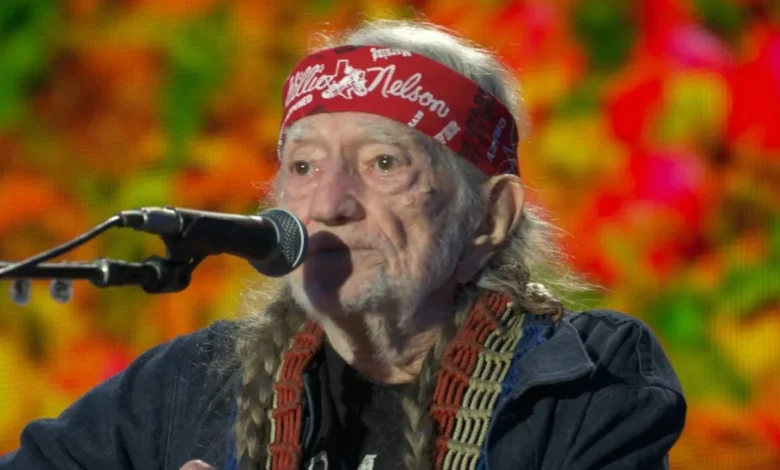
At 93 years of age, country music icon Willie Nelson continues to defy both the passage of time and the physical limitations that have sidelined many of his contemporaries. As he prepares for the November 10th release of his latest literary project, The Last Leaf: Reflections on Late-Life Creativity—and My Longest Love Affair, the singer-songwriter is offering an unvarnished look at the fragility of his recent years. Central to this narrative is his harrowing battle with COVID-19 in 2022, an experience that brought the legendary performer to the precipice of death and prompted a profound reassessment of his priorities, his marriage, and his enduring connection to the music industry.
A Near-Fatal Encounter with COVID-19
While Nelson’s recent career output—including the May 2024 release of his 79th solo studio album, Dream Chaser—suggests a man in the prime of his professional life, the reality behind the scenes has been far more precarious. In a recent sit-down with CNN’s Anderson Cooper, Nelson candidly discussed the 2022 COVID-19 infection that nearly claimed his life. The severity of the illness was such that the singer admitted he had reached a point of resignation, experiencing what he described as the "worst feeling" of his life.
The logistical reality of his recovery was facilitated by his wife, Annie D’Angelo. Recognizing the critical nature of the situation, D’Angelo effectively transformed their home into a specialized medical facility. The intervention was comprehensive, involving the use of nebulizers, monoclonal antibodies, steroids, and the antiviral medication Paxlovid. D’Angelo noted that there were moments during the quarantine period when the outcome remained uncertain, describing the experience as a period of intense, round-the-clock medical vigilance.
Nelson’s recovery was rapid by clinical standards—he returned to the stage within two weeks—but the psychological toll of being confined to his home, away from the touring lifestyle that has defined his identity for over six decades, was significant. Nelson described the isolation as akin to a "prison sentence," highlighting the symbiotic relationship between his physical health and his commitment to the road.
The Role of Annie D’Angelo: The Heroine of the Narrative
The forthcoming memoir serves as both an autobiography and a tribute to D’Angelo, whom Nelson credits with his survival. The couple first met in 1986 on the set of the film Stagecoach, where D’Angelo was working as a makeup artist. They married in 1991 and have since raised two sons, Lukas and Micah.
In The Last Leaf, Nelson positions D’Angelo as the "heroine" of his story. He attributes his survival not merely to medical intervention, but to the psychological support provided by his spouse. In a particularly poignant admission, Nelson recounted his desire to "punch out" during the height of his illness, only to be met with D’Angelo’s firm resolve. Her direct approach—telling him, "If you die, I’ll kill you"—underscores a partnership defined by both deep affection and a shared refusal to succumb to the inevitable decline associated with advanced age.
Chronology of a Storied Career
Willie Nelson’s career is marked by a series of pivots that have allowed him to remain relevant across multiple generations. Born in 1933 in Abbott, Texas, Nelson rose to prominence in the 1960s as a songwriter in Nashville, penning hits for others before launching his own career as a performer. His transition to the "Outlaw Country" movement in the 1970s cemented his status as a counter-cultural icon.
- 1986: Nelson meets Annie D’Angelo on the set of Stagecoach.
- 1991: Nelson and D’Angelo marry in Nashville.
- 2022: Nelson suffers a severe case of COVID-19, leading to the creation of a home-based medical unit.
- 2024: Release of the 79th solo studio album, Dream Chaser.
- 2024 (November 10th): Scheduled release of The Last Leaf: Reflections on Late-Life Creativity—and My Longest Love Affair.
The endurance of his career is statistically anomalous. In an industry where artists often face declining commercial viability after age 60, Nelson has maintained a consistent touring schedule and high album production rates well into his 90s. His ability to perform, characterized by his idiosyncratic phrasing and unpredictable rhythmic delivery, remains a hallmark of his live shows, despite the physical strain of decades of touring and smoking.
Reflections on the Afterlife and Legacy
During his interview with Cooper, Nelson addressed the subject of mortality with the pragmatic, philosophical tone that has long characterized his public persona. He expressed a belief in reincarnation, suggesting that the conclusion of one’s life is merely a precursor to another form of existence. When asked what form he might return in, Nelson noted a preference for the life of a "rodeo cowboy," a sentiment that aligns with his long-standing cultural association with the American West.
This perspective on the afterlife provides the thematic framework for his new book, which aims to bridge the gap between his past creative output and his current reflections on the late stages of life.
Honoring the Memory of Dolly Parton
The interview also touched upon the recent passing of Dolly Parton, a contemporary and frequent collaborator of Nelson’s. Nelson spoke of his genuine shock regarding her death, noting that he had conducted an interview with her shortly before her passing during which she appeared in good health. The privacy with which Parton handled her medical struggles was noted by Nelson, who emphasized that even close associates were unaware of the severity of her condition.
Nelson’s professional admiration for Parton remains undiminished. He recalled her early days on the Porter Wagoner Show, noting that her ability to harmonize with his unique, off-kilter phrasing made her one of the few artists with whom he could perform effortlessly. Nelson recently recorded a cover of Parton’s signature track, "I Will Always Love You," which he described as a "positive song" from his most recent recording sessions. This cover serves as a testament to the decades-long professional and personal bond between the two country music pillars.
Analysis: The Implications of Nelson’s Longevity
Willie Nelson’s continued professional activity at age 93 presents a unique case study in the longevity of performing artists. His refusal to retire is not, as D’Angelo suggests, a mere habit, but an essential component of his psychological well-being. The "retirement" conversation, which the couple has had frequently, is consistently met with the conclusion that for Nelson, cessation of work would be synonymous with a decline in health.
From a sociological perspective, Nelson represents a shift in how aging is perceived within the entertainment industry. By continuing to produce content, write books, and tour, he challenges the traditional narrative of "winding down." However, the public disclosure of his 2022 health crisis serves as a necessary reminder of the physical costs associated with such a lifestyle.
As The Last Leaf hits shelves, it is expected to provide a deeper understanding of the internal mechanics that have allowed Nelson to remain a fixture of American culture. The book is likely to be categorized not just as a music memoir, but as a meditation on the importance of support systems, the necessity of creative expression in the face of physical decline, and the enduring nature of artistic partnerships. For Nelson, the focus remains clear: he intends to continue performing as long as he is able, driven by the same creative impulse that fueled his early days in Nashville.
Related posts: