Jeff Rupert and Richard Drexler Deliver a Masterclass in Intimate Jazz Dialogues on Their Acclaimed Duet Album Imagination

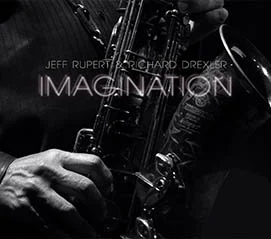
The contemporary jazz landscape has long celebrated the dynamic energy of large ensembles and high-octane big bands, yet some of the genre’s most profound artistic statements continue to emerge from the stripped-down, exposed environment of the intimate duo. Saxophonist Jeff Rupert and pianist Richard Drexler have firmly claimed their space in this elite tradition with their critically acclaimed collaborative project, Imagination. Recorded live and capturing the rare lightning-in-a-bottle energy of an unscripted musical conversation, the album showcases two veteran virtuosos operating at the absolute peak of their creative powers. Through a carefully curated repertoire of standards and originals, Rupert and Drexler dismantle the traditional boundaries between soloist and accompanist, offering listeners a masterclass in musical telepathy, harmonic sophistication, and unyielding restraint.
Main Facts of the Collaboration and Album Architecture
At its core, Imagination is a masterwork of acoustic minimalism. Featuring exclusively Jeff Rupert on tenor saxophone and Richard Drexler on piano, the album strips away the rhythmic and harmonic safety nets of a traditional drum kit and double bass. Without these foundational elements, every note, chord, and silence carries immense weight, demanding absolute technical mastery and deep empathetic listening from both performers.
The album’s tracklist reads like a journey through the upper echelons of jazz history, seamlessly blending timeless American standards with modern compositions. The official track listing comprises:
- Without a Song
- I Can’t Help It
- Snowfall
- Strange Meadowlark
- Imagination
- A Felicidade
- My Mistress’ Eyes
- Soul Eyes
The dynamic range achieved across these eight pieces is nothing short of remarkable. Rupert’s approach to the tenor saxophone on this recording avoids the booming, aggressive bravado often associated with modern horns. Instead, he channels the breathy, rounded tones and lyrical phrasing of jazz icons such as Lester Young and Stan Getz. His arpeggios and glissandi are delivered with an ebullient lightness, frequently mimicking the expressive cadence of the human voice.
Parallel to Rupert’s melodic excursions is the peerless pianism of Richard Drexler. Rather than filling the aural space with dense, competing chords, Drexler approaches the piano with an architectural sensibility. His impulse to adorn simple melodies without cluttering the arrangement makes him an equal and indispensable partner in the musical exposition. The resulting sound is a masterclass in counterpoint, where the piano and saxophone weave around one another in a continuous, flowing dialogue.
Chronology and Background Context
The genesis of Imagination lies in decades of shared musical exploration between Rupert and Drexler, two artists deeply embedded in the Florida and national jazz scenes. While both musicians boast extensive résumés featuring performances with legendary jazz figures and major symphony orchestras alike, their periodic collaborations as a duo allowed them to develop a singular musical shorthand.
The decision to record the album live was a deliberate artistic choice designed to preserve the organic spontaneity of their stage performances. In a live setting, the margin for error in a saxophone-and-piano duet is razor-thin; there are no second takes to correct intonation or re-balance dynamics in post-production. The recording sessions captured this high-wire act in real-time, preserving the exact environmental acoustics and emotional atmosphere of the performance space.
Over the course of the recording, the duo established a seamless method of passing the compositional torch. Rather than adhering to a rigid soloist-accompanist hierarchy, Rupert and Drexler engineered a fluid system of musical highlights. One moment, the saxophone steps into the luminous spotlight while the piano recedes into subtle, harmonic shadows; the next, through an invisible and almost magical transition, the roles reverse, allowing Drexler’s luminous chordal voicings and melodic counter-lines to take center stage.
Critical Analysis of Repertoire and Performance Highlights
The artistic success of Imagination is heavily anchored in the inspired selection of its repertoire. Each piece serves as a distinct vehicle for the duo’s conversational aesthetic, highlighting different facets of their technical and emotional range.
A prime example of this delicate interplay is found in their interpretation of Claude Thornhill’s flowing standard, "Snowfall." Here, Rupert negotiates the rolling tempo by projecting phrase after delicate phrase of notes that seem to float effortlessly in the air. This linear ascent gently coaxes Drexler into a rarefied harmonic realm, where the pianist responds with crystalline chord clusters that complement the saxophone’s contours without ever overshadowing them.
Similarly, the duo breathes fresh life into Antonio Carlos Jobim’s beloved bossa nova masterpiece, "A Felicidade." While the tune is historically associated with lush, sweeping orchestrations and rhythmic percussion, Rupert and Drexler distill the composition down to its emotional essence. The rhythmic pulse is strongly marked yet deeply internalized, driven entirely by the subtle, synchronized breathing and phrasing of the two players rather than a mechanical backbeat.
The album also ventures into deeply conceptual territory with Rupert’s original composition, "My Mistress’ Eyes." Inspired by William Shakespeare’s famous sonnet, the piece translates the rigid meter and romantic sentiment of Elizabethan poetry into a modern jazz framework. The composition serves as a testament to Rupert’s ingenious writing, demanding a level of lyrical expression that bridges centuries of artistic tradition.
Rounding out these standout moments is a hauntingly reverent rendition of Mal Waldron’s classic, "Soul Eyes." Originally written as a modal jazz exploration, the tune is approached by Rupert and Drexler with a reverent minimalism. They utilize the natural resonance of the room and the intentional deployment of silence—the spaces between the notes—to evoke a profound sense of melancholy and introspection.
Supporting Data and Technical Mastery
From a musicological and audio engineering standpoint, Imagination represents a triumph of acoustic balancing. In a duo setting devoid of amplification walls or multi-track layering, capturing the natural timbre of both instruments requires meticulous microphone placement and spatial awareness.
The recording successfully highlights the physical characteristics of the instruments: the woody, resonant low-end and breathy upper register of Rupert’s tenor saxophone mesh seamlessly with the warm, woody attack and sustained decay of Drexler’s acoustic grand piano. The harmonic interplay relies heavily on what music theorists describe as "curved edges"—a deliberate softening of the attack on phrases to allow the overtones of both instruments to blend harmoniously, rather than colliding in abrasive frequency clashes.
Furthermore, the rhythmic foundation of the album is maintained entirely through internal pulse. Without a drummer to dictate the tempo, Rupert and Drexler must share a singular internal clock. The stability of tempos across challenging pieces like "Strange Meadowlark" and "Without a Song" demonstrates an uncanny rhythmic synchronization that can only be forged through years of rigorous musical partnership.
Broader Impact and Implications for Modern Jazz
The release and subsequent reception of Imagination arrive at a fascinating juncture in the evolution of the modern music industry. In an era dominated by heavily produced tracks, algorithmic playlisting, and maximum volume compression, an uncompromisingly acoustic, live-recorded jazz duet serves as a vital counterweight.
Music critics and jazz historians have noted that albums of this caliber perform a crucial cultural function: they remind contemporary audiences of the foundational tenets of jazz—listening, reacting, improvising, and storytelling. By stripping away extraneous instrumentation, Rupert and Drexler place the listener directly inside the creative act. Every harmonic substitution, dynamic shift, and micro-timing adjustment is laid bare for analysis and appreciation.
For educational institutions and aspiring jazz musicians, Imagination offers a pristine case study in ensemble communication. The album demonstrates that emotional resonance and technical brilliance do not require massive soundscapes or complex electronic enhancements. Instead, maximum artistic impact can be achieved through profound listening, absolute mutual respect between performers, and an unwavering commitment to melodic integrity.
As the jazz world continues to embrace cross-genre fusions and avant-garde experimentations, projects like Imagination anchor the genre in its rich, conversational traditions while pushing those traditions forward. Jeff Rupert and Richard Drexler have crafted an enduring statement—a one-day classic captured live that will undoubtedly be studied, admired, and celebrated by jazz aficionados for generations to come.