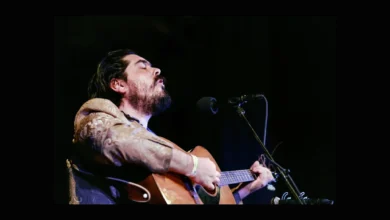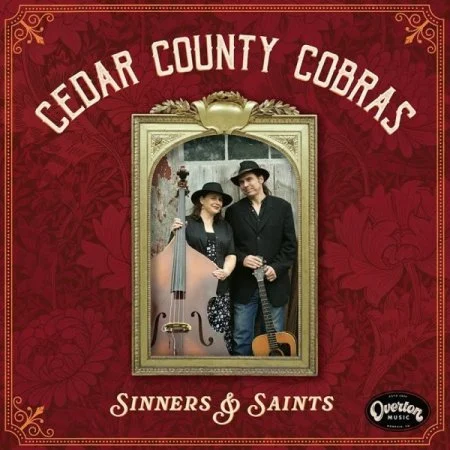
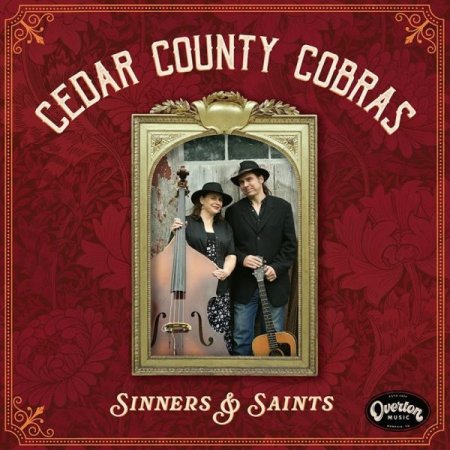
The contemporary roots music landscape is frequently crowded with high-gloss production and digitally scrubbed instrumentation, but traditional blues and Americana continue to find vital, uncompromising expression through independent artists dedicated to authentic acoustic craftsmanship. The Cedar County Cobras, an Iowa-based roots duo featuring slide guitarist and vocalist Tom Spielbauer and upright bassist and mandolinist April Dirks, exemplify this raw approach. Their latest 10-track, 33-minute release, Sinners and Saints, distributed via Overton Music, captures the grit, hardship, and storytelling tradition of early Delta blues while incorporating contemporary social commentary, folk instrumentation, and traditional gospel influences.
The Origins and Evolution of the Cedar County Cobras
The foundation of the Cedar County Cobras is deeply rooted in personal perseverance and cross-genre musical collaboration. Tom Spielbauer’s journey to becoming a prominent figure in the regional and national blues circuit is defined by resilience. In 2005, Spielbauer was diagnosed with advanced macular degeneration at a young age, a progressive eye condition that ultimately led to his legal blindness. This diagnosis forced a jarring pivot in his life, abruptly ending his career in construction and concrete pouring—a physically demanding trade that had defined his daily routine.
Faced with a sudden loss of livelihood, Spielbauer redirected his focus toward music, channeling the acoustic Delta slide guitar traditions pioneered by historical greats like Blind Willie McTell and Canned Heat’s Alan Wilson—artists who similarly navigated vision impairments while leaving indelible marks on American music history. Initially performing as a solo act, Spielbauer relied on a self-played foot drum to anchor his rhythmic patterns, developing a dense, driving sound that belied the minimalist configuration of a single-person stage setup.
The trajectory of the project shifted in 2014 when Spielbauer partnered with April Dirks, an Iowa native whose musical background was steeped in the high lonesome sounds of traditional bluegrass. Dirks brought a distinct sensibility to the collaboration, introducing a rhythmic precision and a gypsy-leaning harmonic texture to Spielbauer’s delta blues foundation. Quickly mastering the upright bass, Dirks provided a low-end acoustic warmth that locked in with Spielbauer’s foot percussion, allowing the duo to expand their stylistic range into broader American roots territory.
This partnership eventually yielded significant critical recognition within the blues community. In 2022, the Cedar County Cobras won the Iowa Blues Challenge, a victory that propelled them to the national stage as semi-finalists at the prestigious International Blues Challenge in Memphis, Tennessee, in 2023. These accolades validated the duo’s dedication to pre-war blues idioms and acoustic integrity, setting the stage for the recording and release of Sinners and Saints.
Track-by-Track Analysis: Narrative Themes and Musical Arrangements
Sinners and Saints moves deliberately through themes of personal accountability, social friction, systemic injustice, and redemptive faith across its ten tracks. Rather than relying on standard 12-bar blues clichés, the duo uses their instrumentation to frame narratives that resonate with modern rural and working-class experiences.
The album opens with "Matches and Gasoline," a mid-tempo track that serves as an acoustic metaphor for the destructive power of local gossip and unchecked rumor mills. Spielbauer’s stinging slide guitar underscores the narrative weight of the lyrics, particularly the refrain, "People round here talkin’, sayin’ things they don’t know," warning of how casual malice can destabilize a community.
The tempo picks up on "Motorbike," a driving boogie featuring guest instrumentalist Dave Moore on harmonica. The song channels a familiar Americana trope—the desperate urge to flee geographic stagnation and suffocating social environments. Spielbauer vocalizes a desire for anonymity and autonomy, singing, "I wanna go somewhere where no one knows my name. The people round here, they’re driving me insane. Tired of the same old faces, here in this town. Tired of being set up and being pushed around."
One of the project’s most politically and socially resonant pieces is "Bessie Smith’s Last Ride." Featuring Heath Alan on saxophone and taking over lead vocal duties, the track reflects on the tragic 1937 death of legendary blues singer Bessie Smith, while drawing stark parallels to contemporary racial profiling and institutional failures. The lyrics confront historical continuity in systemic bias: "Eighty years later and things have never changed. Faces might look different, but the idea is still the same. They saw a black man driving, right away they’re thinking. They said it was his fault and they accuse him of drinking."
The album also explores traditional repertoire and spiritual introspection through covers and original compositions. "St. James Infirmary" receives a moody, atmospheric reading, enriched by the additions of Heath Alan on saxophone and Tanner Taylor on Hammond B3 organ and piano. Spielbauer handles the lead vocal duties while Dirks shifts to mandolin, adding a melancholic top-end texture to the classic lament.
This leads directly into the gospel-infused "Get Right Church," where vocal backing from Monica Faye and Krista Guillaume provide a church-hall resonance, underscored by Taylor’s continued work on keys. Spielbauer delivers a sobering memento mori, advising listeners, "One of these mornings and it won’t be long, you’ll look for me and I’ll be gone."
Maintaining boundaries and personal autonomy forms the lyrical backbone of "Mind My Own Business," where Spielbauer reflects on the wisdom of non-interference and hard-earned life lessons: "Careful what you wish for, you might get what you want. Might find out later, it wasn’t what you thought."
In a humorous yet pointed critique of modern digital culture, "Guitar Zero" takes direct aim at video game players who simulate musicianship on plastic controllers. Spielbauer challenges virtual hobbyists to invest the physical and mental labor required to master a physical instrument, noting, "You got to get drunk and practice and do it every day. You go to believe me there just ain’t no other way." He asserts that manipulating buttons on a toy interface bypasses the genuine creative struggle inherent to traditional musicianship.
Shifting the narrative perspective, April Dirks takes the vocal lead on "Ruby Red." Written from the perspective of a Vietnam War veteran returning home only to find his partner missing, the song offers a poignant, acoustic-driven portrait of post-war displacement and personal loss: "Oh, Ruby Red, where are you tonight. I didn’t want to leave you, no I didn’t want to fight."
The instrumental track "Springtime" offers a brief, reflective acoustic interlude before the album concludes with a solemn rendition of Thomas Dorsey’s foundational 1932 gospel composition, "Precious Lord." Backed once more by Monica Faye and Krista Guillaume, the closing track solidifies the album’s thematic arc, offering a final statement of spiritual redemption, endurance, and faith.
Production, Instrumentation, and Aesthetic Approach
Musically, Sinners and Saints relies heavily on the organic interplay between Spielbauer’s resonator and slide guitar work and Dirks’ foundational bass and mandolin accompaniment. Eschewing modern multi-track layering and heavy compression in favor of a clean, room-ambient sound, Overton Music has captured the duo with a fidelity that highlights their live-performance chemistry.
The inclusion of guest artists—including Dave Moore, Heath Alan, Tanner Taylor, Monica Faye, and Krista Guillaume—expands the sonic palette without overwhelming the core acoustic framework. The additions of the Hammond B3 organ, piano, saxophone, and multi-part vocal harmonies prevent the 33-minute runtime from becoming monotonous, offering subtle shifts in texture that distinguish Delta blues stomp numbers from gospel laments and folk ballads.
Broader Impact and Industry Implications
The release of Sinners and Saints arrives at a time when traditional acoustic blues occupies a specialized, fiercely loyal niche within the broader American music ecosystem. While mainstream commercial success often favors pop-oriented country and digitally produced crossover acts, regional circuits and organizations like the Blues Foundation continue to provide critical infrastructure for artists preserving historical forms.
For the Cedar County Cobras, the album represents a continuation of their upward trajectory following their successes at the Iowa Blues Challenge and the International Blues Challenge. By pairing pre-war musical techniques with contemporary social narratives—addressing everything from systemic racism and veterans’ trauma to digital-age superficiality—the duo bridges the gap between historical reenactment and living, breathing roots music.
Ultimately, Sinners and Saints functions as an accessible entry point for fans of traditional folk and Americana while offering enough instrumental grit and lyrical depth to satisfy dedicated blues purists. Through resilience, instrumental mastery, and sharp songwriting, Spielbauer and Dirks have crafted a concise, cohesive record that cements their status as significant contributors to the modern American roots canon.
Related posts: