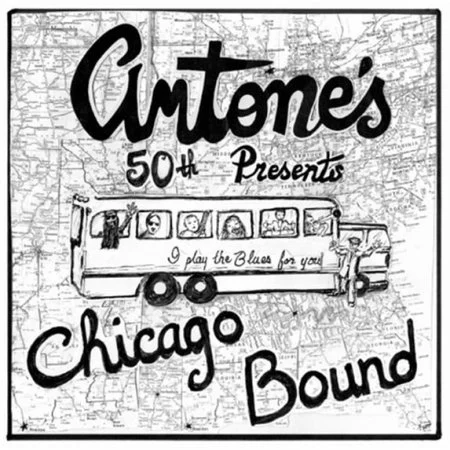
When the sprawling, four-disc commemorative box set Antone’s: 50 Years Of The Blues hit record store shelves last year, it marked a monumental milestone for one of America’s most revered live music institutions. Yet, the sheer volume of musical history associated with the legendary Austin, Texas venue meant that numerous recorded performances and collaborative sessions inevitably remained on the cutting-room floor. Rather than letting those stellar sessions languish in the archives, producers have curated a remarkable companion release. Titled Antone’s 50th Presents Chicago Bound: Honoring Muddy, Cliff & Blue, this 11-track, 35-minute collection captures the spirit of an elite cross-section of blues, zydeco, and roots musicians who converged to celebrate the rich musical traditions of Chicago, Texas, and Louisiana.
Operating as an essential “cream of the crop” anthology, the record highlights the deep historical ties between the iconic Austin venue and the legendary blues hubs of the American Midwest and the Gulf Coast. Featuring an expansive roll call of contemporary luminaries and second-generation standard-bearers, the album acts as both a continuation of last year’s anniversary celebrations and a standalone masterclass in modern blues interpretation.
Main Facts and Track Breakdown
Clocking in at a brisk 35 minutes, the album wastes no time establishing its heavyweight credentials. The tracklist is structured as a tribute to foundational blues architects, utilizing a rotating cast of virtuoso players who deliver electrifying performances across eleven carefully selected cuts.
The sequence pays immediate homage to the legendary Muddy Waters through three distinct interpretations. The title track, originally composed by Jimmy Rogers, is transformed into a staggering minimalist masterpiece featuring a stripped-down duo performance. It pairs John Primer—distinguished as Muddy’s final lead guitarist—with Steve Bell, a master harp player and son of Carey Bell, who himself blew harp for Muddy Waters. The sheer sonic density and emotional resonance achieved by just two musicians stands as one of the record’s early high-water marks.
Lurrie Bell takes the helm for a second Jimmy Rogers composition, “Act Like You Love Me.” Backed by an all-star ensemble featuring rhythm guitarists Anson Funderburgh and Derek O’Brien, pianist Nick Connolly, bassist Scott Nelson, drummer Jay Moeller, and a roaring horn section comprising Mark Kazanoff and Joe Sublett, Bell delivers a performance steeped in authentic Chicago grit. The album closes with a thunderous, full-band rendition of Muddy Waters’ immortal anthem, “Got My Mojo Working.” Here, John Primer shares guitar duties with Lil’ Ed Williams, supported once again by Steve Bell on harmonica, Sumito Ariyoshi on piano, Rodrigo Mantovani on bass, and drummer Kenny “Beedy Eyes” Smith—the son of Muddy’s legendary longtime drummer, Willie “Big Eyes” Smith.
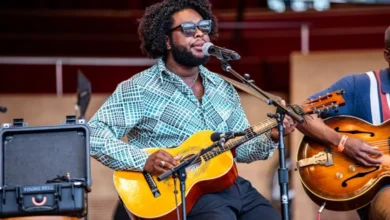
The legendary Bobby “Blue” Bland receives due reverence through a pair of standout tracks. Kam Franklin delivers a commanding vocal masterclass on “I Wouldn’t Treat A Dog (The Way You Treated Me).” Her soaring, powerful delivery is framed by The Dreamers, led by Bobby’s own drummer son, Rod Bland. The backing ensemble features guitarists Brad Stivers and Zach Ernst, bassist Scott Bomar, organist Archie “Hubbie” Turner, and a dynamic horn section featuring trumpeters Marc Franklin and Alex Schuetrumpf alongside saxophonists Art Edmaiston and Tom Link.
Later in the tracklist, Kim Wilson guides The Fabulous Thunderbirds through “I’m Not Ashamed,” a blistering cover of Bland’s 1959 Duke Records hit. Wilson’s razor-sharp vocals are propelled by the Thunderbirds’ current lineup—Jay Moeller on guitar, Bob Welsh on organ, Steve Kirsty on bass, and Rudy Albin on drums—augmented by the aforementioned horn section and guest guitarist Billy Flynn. The result is an undeniable standout that bridges traditional rhythm and blues with contemporary precision.
Louisiana Rhythms and Texas Swing
Antone’s has long served as a crucial bridge connecting the blues of Chicago and Texas with the vibrant, accordion-driven sounds of Louisiana. This cultural exchange is honoured through a star-studded interpretation of Clifton Chenier’s zydeco standard, “One Step At A Time.” The recording boasts a jaw-dropping roster of talent: Ivan Neville handles vocals and organ duties, sharing guitar and vocal responsibilities with CC Adcock. Most notably, Rolling Stones icons Keith Richards and Ronnie Wood step in to share guitar duties. Meanwhile, Jimmie Vaughan sets aside his guitar to blow high-pitched, Jimmy Reed-style harmonica, supported by Steve Riley’s accordion and Curley Taylor’s traditional rubboard. The foundational Louisiana groove is anchored by drummer “Big” Robert St Julien—who famously played alongside Chenier—and bassist Chuck Bush.
The legendary Jimmy Reed is represented directly via “Baby What’s Wrong,” illuminated by the inimitable vocals of Lavelle White, who was 95 years old when the track was recorded in 2025. White is joined by pianist Marcia Ball, guitarist Derek O’Brien, and harp player Mark Kazanoff.
Guitar virtuosity takes center stage when Anson Funderburgh tackles Albert Collins’ searing instrumental, “Backstroke.” Funderburgh is backed by Nick Connolly on organ, Sarah Brown on bass, Jason Corbiere on drums, and the formidable horn stylings of Mark Kazanoff and John Mills, collectively known as The Texas Horns. Doyle Bramhall II rounds out the regional showcases with a blistering, percussion-heavy assault on Hound Dog Taylor’s “Give Me Back My Wig.” Bramhall handles lead vocals, guitar, bass, and drums, supported by a dual-drummer configuration featuring JJ Johnson and Jay Moeller, alongside Derek O’Brien on second guitar.
Chronology and Background Context
To understand the profound significance of Chicago Bound, one must examine the history of its namesake institution. Founded by the late Clifford Antone in 1975, Antone’s Nightclub in Austin quickly established itself as the "Home of the Blues." Throughout the late 20th century, the venue served as a vital incubator for both rising regional talents and aging blues legends from Chicago and the Mississippi Delta, providing them with a steady platform when mainstream commercial avenues had largely dried up.
Clifford Antone’s vision was not merely to operate a club, but to preserve a dying American art form by fostering cross-generational mentorship. Elder statesmen of the blues were routinely paired with eager young acolytes from Texas and beyond, creating a living university of the genre.
This new album acts as a direct sonic extension of that educational ethos. The overarching project functions as a multi-layered tribute to Clifford Antone himself, who passed away in 2006 but remains the spiritual heartbeat of the Austin music community. The album opens a direct window to the past via a rare audio extract of Clifford’s voice, wherein he famously asserts, “The Blues Is So Big.”
The audio fragment flows seamlessly into “Hangin’ On A Cliff,” a heavy-grooving, hard-shuffling tribute performed by ZZ Top frontman Billy Gibbons, accompanied by his current BFG bandmates, keyboardist Mike “The Drifter” Flanigin and drummer Chris “Whipper” Layton. Gibbons’ weathered, gravel-soaked vocals provide a poignant narrative capstone to a record steeped in historical reverence.
Broader Impact and Implications
The release of Antone’s 50th Presents Chicago Bound carries notable implications for the contemporary roots music landscape. In an era where traditional blues often struggles for mainstream radio visibility, archival and commemorative projects of this scale serve a vital preservationist function. By intentionally assembling veteran torchbearers alongside younger generational talents—such as the sons of Muddy Waters’ and Carey Bell’s former bandmates—the album ensures that the oral and instrumental traditions of Chicago and Texas blues are actively handed down rather than safely cataloged in a museum.
Industry analysts note that releases tied to landmark institutional anniversaries provide a much-needed economic and cultural boost to regional music scenes. By spotlighting the interconnected web of musicians who consider Austin a second home, the album reinforces the city’s enduring status as an essential capital of American music. Furthermore, the inclusion of cross-genre luminaries like Keith Richards and Ronnie Wood broadens the commercial reach of the project, introducing a younger or rock-focused demographic to the foundational blues artists who originally inspired the British Invasion.
Ultimately, Chicago Bound succeeds because it avoids feeling like a dusty museum piece. Propelled by world-class musicianship, spontaneous collaborative energy, and deep-seated reverence for its progenitors, the 35-minute collection captures lightning in a bottle. It proves that half a century after Clifford Antone first opened his doors, the blues remains as vital, collaborative, and fiercely alive as ever.