Garefowl Blends Folk Instrumentation, Environmental Audio, and Dark History in New Album Things That Vanish

The contemporary musical collective Garefowl has officially released its sophomore studio album, Things That Vanish, arriving on October 2 via the avant-garde imprint AD 93. Distributed in both digital formats and physical LP pressings, the record stands as a singular entry in the modern experimental folk landscape, rejecting conventional genre boundaries in favor of a site-specific, historically charged sonic exploration. Conceived by founding members Ewan Macdonald and his father, Murdo Macdonald, the project bears a direct lineage to the tragic history of the North Atlantic avian ecosystem: the duo are relatives of Lachlan MacKinnon, one of the men recorded as having killed the last flightless great auk on the remote Scottish archipelago of Stac an Armin in 1840.
Rather than merely recounting historical devastation, Things That Vanish channels the weight of ecological loss into an expansive, meditative examination of survival, memory, and the contemporary resonance of the remote St Kilda archipelago. Today, St Kilda serves as a sanctuary for nearly a million breeding seabirds, maintaining its status as the largest colony of its kind in the North Atlantic. Through an intricate fusion of traditional folk instrumentation, acoustic drone work, and raw environmental field recordings, Garefowl attempts to translate the precarious beauty of these vanishing landscapes into a cohesive musical statement.
The Evolution of Garefowl: From Lockdown Experimentation to Environmental Soundscapes
Garefowl’s artistic trajectory represents a distinct evolution in collaborative remote and site-specific composition. The project’s inception materialized during the height of the COVID-19 pandemic lockdowns, leading to the creation of their debut full-length album, Cliffs, released in November 2020. Put together entirely through remote collaboration, Cliffs relied on a foundation of traditional acoustic strings augmented by synthesizers to evoke the desolate majesty of British and Irish coastal cliffs.
For the follow-up record, the ensemble deliberately dismantled that electronic framework. Synthesizers were entirely excised from the production process, replaced instead by a rigorous collection of field and hydrophone recordings captured directly on St Kilda. Furthermore, the band integrated acoustic drones engineered by Richard O’Flynn and Joe Gardner, who utilized X-ray diffraction (XRD) data to generate unique vibrational frequencies.
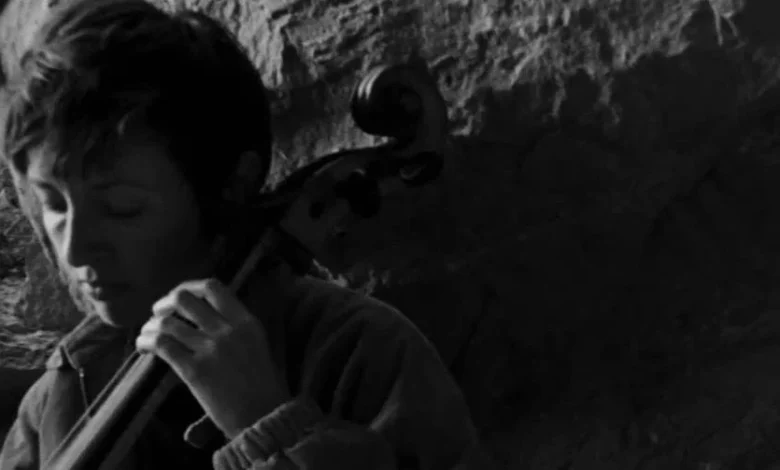
The current lineup of Garefowl brings together a diverse spectrum of musical backgrounds and specialized instrumentation. The ensemble features Nathan Bontrager on viola da gamba, harmonium, and banjo; Stuart Graham on bouzouki, harmonica, and harmonium; Chris Jones on concertina and mandolin; Ewan Macdonald on fiddle and smallpipe drone; Richard O’Flynn managing island sounds, percussion, and XRD drones; and Jess Whelligan on cello. This collective expertise allows the group to move fluidly between traditional Celtic folk arrangements and experimental, atmospheric drone music.
A Visual and Auditory Chronicle: The Release of Buthaigir/Puffin
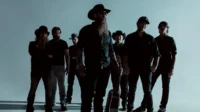
Alongside the album’s release, Garefowl unveiled an official music video for one of the record’s early-released singles, Buthaigir/Puffin. Directed by Luke Nairn and animated by Liam Painter, the accompanying visual medium serves as an artistic extension of the album’s thematic framework. The video weaves together live stop-motion stone animations, 16mm performance footage captured by the band, and behind-the-scenes B-roll compiled during the recording process on the islands of St Kilda.
The creative vision behind the video was heavily influenced by the physical realities of the band’s recording expeditions. According to director Luke Nairn, the primary objective was to mirror the symbiotic relationship between the musicians and their harsh, isolated recording environment.
"I was so inspired by how the actual album was made that I really wanted the video to reflect the recording process and how the band worked with their surrounding environment on St Kilda," Nairn explained. "I started having conversations with animator Liam Painter about how we could pull this off, and we landed on a stop-motion dance with rocks, inspired by a piece made in the 1960s by legendary Czech animator and filmmaker Jan Švankmajer. Bringing performance and the animation together felt like the right way to honour the emotion of the music and the project’s roots; I very much wanted it to feel like you’re flipping through a picture book about a folk tale."
Capturing the Nighttime Soundscape of Hirta
The recording sessions for Things That Vanish took place under unconventional, immersive conditions. Rather than working within a sterile studio environment, the ensemble captured much of the material at night on Hirta, the largest island in the St Kilda archipelago. These nocturnal sessions provided an intimate window into the island’s stark isolation and vibrant nocturnal wildlife.
Reflecting on the creation of Buthaigir/Puffin during their track-by-track commentary series, members of the ensemble noted the profound influence of the surrounding wilderness. "We recorded the album at night, stepping outside during breaks to take in the late-night soundscape of Hirta: a quietly rolling swell of wind, waves, seabirds, sheep, and the otherworldly thrum of the snipe," the band shared. "While we were recording this tune, a ewe poked her head through the door in search of her lamb."
This raw, unvarnished acoustic reality permeates the entire tracklist of Things That Vanish. The hydrophone recordings plunge listeners beneath the churning surface of the North Atlantic, capturing the muffled, rhythmic pulses of oceanic currents alongside the soaring cries of fulmars, gannets, and puffins overhead. By anchoring traditional folk motifs in these hyper-specific geographic audio data points, Garefowl bridges the gap between historical elegy and modern acoustic anthropology.
Historical Context and Ecological Implications
The release of Things That Vanish arrives at a critical juncture for contemporary conversations regarding biodiversity loss, conservation ethics, and human culpability. The extinction of the great auk (Pinguinus impennis)—a flightless, penguin-like seabird native to the North Atlantic—remains one of the most starkly documented examples of anthropogenic extinction. The species was systematically hunted for food, bait, and feather down by humans, culminating in the slaughter of the final known specimens on Stac an Armin in July 1840.
By tying their artistic output directly to this lineage, Ewan Macdonald and the members of Garefowl invite a broader consideration of how historical ecological violence continues to shape contemporary landscapes. St Kilda, abandoned by its permanent human population in 1930 due to extreme isolation and economic unsustainability, now operates as a dual UNESCO World Heritage site, managed primarily for its natural and cultural significance. It stands as a monument to human endurance and subsequent retreat, leaving the islands as a heavily monitored sanctuary for migratory seabirds.
Cultural analysts note that experimental folk projects like Garefowl utilize sound not merely as entertainment, but as a form of non-invasive environmental archiving. By translating hydrophone data, X-ray diffraction patterns, and acoustic ecology into tangible musical structures, the band offers listeners a visceral connection to fragile ecosystems that remain inaccessible to the general public due to their extreme remoteness.
Broader Industry Reception and Distribution
Since its rollout via AD 93—a record label celebrated for championing boundary-pushing electronic, ambient, and avant-garde music—Things That Vanish has drawn attention from critics across both traditional folk and contemporary experimental music spheres. The juxtaposition of archaic folk instrumentation like the viola da gamba and concertina with cutting-edge field audio techniques has positioned the album as a unique milestone in the ongoing evolution of "ecomusicology."
As the physical vinyl pressings and digital distributions circulate globally, Garefowl’s latest work reinforces the enduring relevance of looking backward to understand the systemic challenges of the present. Through meticulous sound design, genealogical reckoning, and a profound respect for the natural world, Things That Vanish delivers a haunting reminder of the delicate equilibrium that defines life on the edge of the North Atlantic.