Justin Bieber, Shakira, Madonna, BTS Deliver Electric Halftime Set at World Cup Final

The highly anticipated final match, a culmination of weeks of intense competition and global excitement, was not only a battle for football supremacy but also a monumental display of international musical and cultural talent. Held at the colossal New York New Jersey Stadium, more commonly known as MetLife Stadium, the event broke new ground by integrating a lavish, Super Bowl-esque entertainment program, a departure from traditional football tournament formats. This ambitious undertaking, orchestrated by FIFA in collaboration with Global Citizen, aimed to captivate a worldwide audience estimated in the billions, blending the raw passion of sport with the universal appeal of music, all while championing a crucial philanthropic cause.
Setting the Stage: The 2025 FIFA World Cup Context
The 2025 FIFA World Cup represented a landmark edition of the quadrennial tournament, hosted across multiple nations in North America, underscoring FIFA’s commitment to expanding football’s global footprint. This particular final in the New York metropolitan area symbolized a convergence of diverse cultures and an unparalleled platform for international unity. The decision to introduce elaborate entertainment segments, particularly a full-fledged halftime show, reflected a strategic move by FIFA to enhance the spectator experience, attract new demographics, and align with the entertainment expectations set by major North American sporting events. This shift was widely interpreted as an effort to maximize engagement and leverage the immense global spotlight of the World Cup for broader social impact, particularly through the partnership with Global Citizen. The tournament itself was a testament to meticulous planning, bringing together 48 nations in a celebration of athletic prowess and international camaraderie, with viewership projections surpassing all previous records for a single sporting event.
A Grand Overture: The Pre-Match Extravaganza
Hours before the kick-off that would determine the world champion, the atmosphere at New York New Jersey Stadium was already electric, charged by a pre-game ceremony designed to ignite anticipation. Headlining the pre-match festivities was Grammy-nominated artist Post Malone, whose unique blend of hip-hop, pop, and rock resonated with the diverse crowd. Malone’s performance set an energetic tone, showcasing his distinctive sound and stage presence to millions watching worldwide. He was joined by a constellation of international stars, including Italian pop icon Laura Pausini, former Pussycat Dolls frontwoman Nicole Scherzinger, internet personality and streamer IShowSpeed, and British pop sensation Robbie Williams, each contributing to a vibrant musical tapestry that spanned genres and continents.
Adding a surprising element of Hollywood glamour, acclaimed actor Tom Cruise made a special appearance, further elevating the event’s star power and cross-cultural appeal, demonstrating the World Cup’s magnetic draw beyond the sports world. The ceremonial climax of the pre-game show came with a powerful rendition of the U.S. national anthem, delivered by the esteemed Jennifer Hudson, whose soulful voice filled the stadium, evoking a profound sense of national pride and global anticipation for the final match about to unfold between Spain and Argentina. This meticulously curated pre-game lineup served not just as entertainment but as a strategic prelude, transforming the stadium into a global cultural hub even before the first whistle, signaling the innovative direction FIFA was taking with its marquee event.
The Unprecedented Halftime Spectacle: A Global Fusion
Traditionally, football matches, even at the World Cup level, feature a brief interlude at halftime for teams to regroup, with minimal on-field entertainment. The 2025 FIFA World Cup final, however, shattered this precedent, unveiling an 11-minute halftime show that rivaled the scale and ambition of any major global entertainment event. This groundbreaking initiative was a collaborative effort between FIFA and Global Citizen, designed not only to entertain but also to raise awareness and funds for critical global issues. The seamless transition from competitive sport to a world-class concert within minutes was a logistical marvel, executed by an army of dedicated crew members. As Spain and Argentina’s players retreated to their locker rooms for strategic discussions and tactical adjustments, the pitch transformed into a dynamic stage, ready to host an eclectic mix of music, dance, and theatrical performances. The sheer audacity of packing such a diverse and high-caliber lineup into a mere 11 minutes underscored the event’s innovative spirit and its commitment to delivering an unforgettable experience to its global audience, estimated to be over 1.5 billion people. This strategic move was seen by many as FIFA’s answer to the immense popularity of American sports’ halftime shows, particularly the Super Bowl, aiming to capture a broader entertainment market.
Act by Act: Unpacking the 11-Minute Marvel
The halftime show was a whirlwind of global talent, meticulously choreographed to deliver maximum impact in its limited timeframe, ensuring every second was packed with star power and dynamic performance.
Madonna’s Electrifying Entrance
The spectacle kicked off with an iconic figure: Madonna. The Queen of Pop, a global legend with a career spanning decades, made an unforgettable entrance, eschewing a conventional walk onto the pitch by riding through the stadium’s underground tunnels in a golf cart. Her chauffeurs were none other than Brazilian football legends Ronaldo and Ronaldinho, a symbolic handover from sports royalty to music royalty that immediately went viral. Blazing through a reimagined version of her 2000 hit "Music" and her recent single "Danceteria" from her fresh release, Confessions II, Madonna demonstrated her enduring power and ability to command the global stage. Her performance was a vibrant opening statement, merging her unparalleled artistry with the high-octane energy of the World Cup, setting an incredibly high bar for the acts that followed.
Symphonic Grandeur Meets Muppet Mayhem
Following Madonna’s high-energy opener, the stage was set for a truly unique ensemble. Conductor Gustavo Dudamel, a maestro renowned for his dynamic interpretations and passion for classical music outreach, led a monumental orchestra. This wasn’t just any orchestra; it was a fusion of elite musicians from the New York Philharmonic, the prestigious Simón Bolívar Symphony Orchestra of Venezuela, and the virtuoso Iranian violinist Bijan Mortazavi. Together, they delivered a rousing rendition of "Seven Nation Army," the stadium-classic banger by The White Stripes that has become an unofficial anthem in sports arenas worldwide. The unexpected, yet delightful, twist came with the accompaniment of The Electric Mayhem, the house band from The Muppets, adding a touch of whimsical chaos, cross-generational appeal, and pure entertainment value to the symphonic grandeur. This segment perfectly encapsulated the show’s mission: to unite diverse elements in a celebration of global culture and artistic expression.
K-Pop Phenomenon’s Swift Impact
The global reach of the halftime show was further amplified by a brief but impactful cameo from BTS, the South Korean K-Pop titans and Rolling Stone‘s recent cover stars. Despite having performed in Paris less than 24 hours prior, showcasing their relentless schedule and global demand, the septet appeared to perform a few seconds of their chart-topping hit "Dynamite." Their lightning-fast appearance underscored their immense global demand and the logistical prowess required to include such a high-profile act. Though brief, BTS’s segment sent immediate shockwaves across social media, trending globally within minutes and showcasing the unparalleled power of K-Pop and its ability to connect with millions worldwide, even in a fleeting moment, further diversifying the musical offerings.
Ted Lasso’s Motivational Moment with Justin Bieber
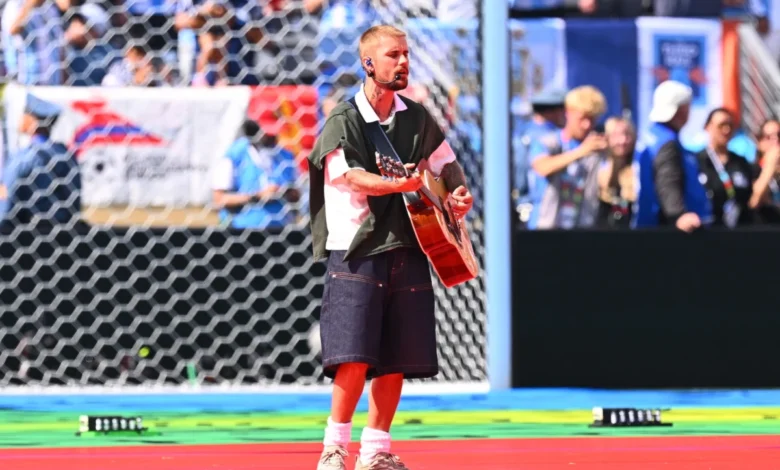
A distinct nod to American soccer culture and its recent popularization came next, merging fiction with reality in a segment that delighted fans. Actor Jason Sudeikis, in character as the beloved Coach Ted Lasso from the critically acclaimed series, along with his trusty deputy Coach Beard (Brendan Hunt), strode onto the pitch. In a humorous and heartwarming moment, Lasso delivered one of his signature pep talks, this time directed at pop superstar Justin Bieber. This unexpected celebrity interaction brought a dose of humor and inspirational charm to the proceedings. Following this unique motivational interlude, Bieber took the stage, delivering a moving rendition of his song "Everything Hallelujah." Bieber’s performance, coming after his headlining set at Coachella in April, further cemented his status as a global entertainer capable of commanding immense stages, seamlessly transitioning from Lasso’s wisdom to his own powerful vocal delivery.
The Official Anthem and Unifying Chorus
The musical journey continued with the official song of the tournament, "Dai Dai," performed by Colombian global superstar Shakira and Nigerian Grammy-winner Burna Boy. Their energetic collaboration resonated with the tournament’s spirit of international camaraderie and celebration, embodying the fusion of Latin American and African musical influences. Shakira, who had previously performed "Dai Dai" with Burna Boy during the World Cup opening ceremony in Mexico City, later shared her joy on Instagram, specifically highlighting the participation of Uganda’s Ghetto Kids, who danced with her at the final, emphasizing the show’s inclusive global spirit and its commitment to showcasing diverse talents.
The whirlwind performance reached its unifying crescendo with the PS 22 Chorus, a heartwarming choir comprising fourth and fifth graders from a public elementary school in Staten Island. They performed "We Dance," a song specially written by British rock band Coldplay, with frontman Chris Martin joining them on stage. This segment underscored the power of music to transcend age and background, fostering a sense of shared humanity and optimism. As the final notes faded, an Argentinian sportscaster’s iconic "GOLLLLL" echoed through the stadium, punctuated by a spectacular fireworks display erupting from the outer rim. In a flash, the elaborate field covering was removed by an army of dedicated volunteers, smoke cleared, sprinklers rehydrated the pitch, and the footballers were back, ready to resume their quest for glory, marking the end of an unprecedented 11 minutes.
Beyond the Pitch: A Philanthropic Heartbeat
Crucially, the entire halftime show was conceived with a profound philanthropic purpose: to benefit the FIFA Global Citizen Education Fund. This ambitious initiative aims to raise $100 million to provide children worldwide with expanded access to education and football programs, recognizing the transformative power of both. The partnership between FIFA, the world’s leading football organization, and Global Citizen, a prominent advocacy organization working to end extreme poverty, signifies a powerful alignment of sport and social responsibility, leveraging the World Cup’s immense platform for a greater cause.
At the time of the final, the fund had already successfully raised over half its target, demonstrating the immediate and tangible impact of the tournament’s charitable component. A significant mechanism for this fundraising was the commitment to donate $1 from every ticket sold for matches throughout the tournament, a strategy that encouraged direct participation from fans. This direct contribution model allowed millions of fans globally to become active participants in a movement that seeks to leverage the universal appeal of football to create lasting positive change, particularly in educational access for underserved communities and promoting healthy lifestyles through sports. The success of this fundraising effort underscores the growing trend of major sporting events embracing social causes, transforming them into platforms for global good beyond mere entertainment.
A Tournament of Sound: Musical Highlights Across the Cup
The final’s performances were the grand culmination of a tournament brimming with memorable musical moments, setting a new standard for World Cup entertainment from its very beginning. The musical journey began with a bang at the 2026 World Cup opening match between the United States and Paraguay in Los Angeles on June 12. Katy Perry and 10-year-old Norwegian singer Tius Luka performed "Wonder," preceded by a high-voltage performance of "Game Time" by Future and Tyla. They were followed by Lisa of Blackpink, Brazilian icon Anitta, and Nigerian superstar Rema, who delivered "Goals," showcasing a diverse range of global pop and hip-hop. That same day, Canada’s opening ceremony featured an impressive lineup including Canadian musical legends Michael Bublé and Alanis Morissette, alongside Alessia Cara, Eliana, Jessie Reyez, Nora Fatehi, Sanjoy, Vegedream, and William Prince, showcasing the rich and diverse musical heritage of the host nations. Even at the quarterfinal stage, the musical prestige continued, with British pop star Ellie Goulding performing at the match between England and Norway, ensuring that the entertainment factor was consistently high throughout the entire competition, building anticipation for the grand finale.
Reactions and Reflections: Shaping the Future of Football Entertainment
The integration of such a high-profile entertainment package into the FIFA World Cup final garnered widespread attention and diverse reactions from around the globe. From organizers, the sentiment was overwhelmingly positive, with FIFA and Global Citizen representatives expressing immense satisfaction with the execution and the philanthropic impact. A FIFA spokesperson, speaking after the event, noted, "This year’s World Cup final was a testament to our vision of football as more than just a game; it is a global phenomenon capable of uniting people and driving significant social change. The partnership with Global Citizen and the incredible artists who performed have set a new benchmark for how major sporting events can contribute to the world." Similarly, Global Citizen lauded the collaboration, highlighting the substantial progress toward the education fund’s goal. "The funds raised and the awareness generated during this World Cup will have a tangible impact on the lives of millions of children globally," stated a Global Citizen executive, "proving that entertainment can be a powerful force for good, reaching audiences that traditional fundraising might miss."
Fans and critics alike engaged in spirited discussions across social media and traditional media outlets. While some football purists argued for a return to a more traditional, football-centric halftime, the vast majority praised the spectacle, acknowledging its ability to draw in new audiences, particularly younger demographics and those less familiar with football, and elevate the event’s global appeal as a holistic entertainment product. The blend of established legends like Madonna and Dudamel with contemporary giants like BTS and Justin Bieber was seen as a masterful stroke, catering to a broad demographic and showcasing global musical trends. The inclusion of figures like Ted Lasso and The Muppets also added a unique, lighthearted, and distinctly North American flavor to the global event, bridging cultural divides through humor and shared nostalgia, further solidifying the World Cup’s status as a premier global cultural event.
The Final Whistle and Lasting Legacy
As the final whistle blew on the Spain vs. Argentina match, marking the end of a thrilling contest that saw one nation claim football’s ultimate prize, the echoes of the unprecedented musical performances lingered. The 2025 FIFA World Cup final, with its audacious entertainment agenda, has undeniably carved a new path for global sporting events. It demonstrated that football, while remaining the heart of the competition, can be seamlessly integrated with world-class entertainment and impactful philanthropy. This fusion not only enriched the spectator experience but also amplified the tournament’s message of unity and social responsibility on an unparalleled scale. The success of the FIFA Global Citizen Education Fund stands as a tangible legacy, illustrating the potential for future World Cups to serve as powerful catalysts for positive global change, extending their influence far beyond the ninety minutes of play. The New York New Jersey Stadium, on that momentous day, was not just the venue for a football final, but a stage where sport, music, and philanthropy converged to create an unforgettable chapter in the history of global entertainment, setting a new, higher standard for engagement and impact. This innovative approach is likely to influence future major sporting events, setting a new standard for how they engage with audiences and contribute to the broader world.