Lex Walton and Dan Boeckner Unite on Ultimate Love Forever to Deliver a Theatrical Masterclass in Modern Arena Rock

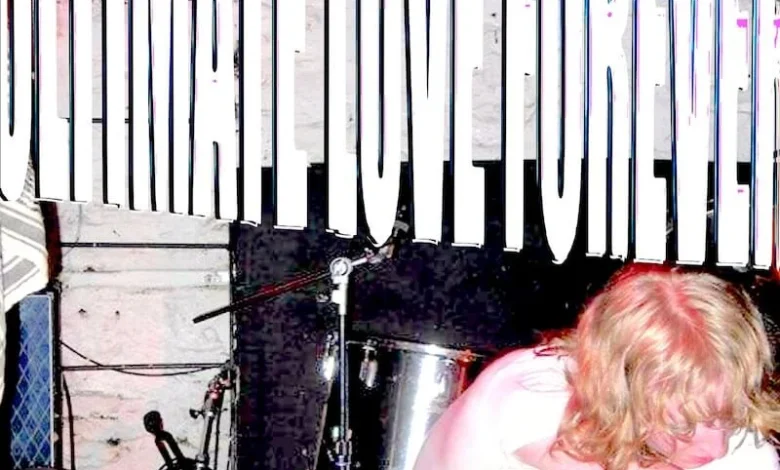
Lex Walton has firmly
established herself as a formidable force in contemporary rock music, synthesizing the raw, unapologetic snarl of punk vocals with sweeping, arena-sized instrumental arrangements. Her latest artistic venture, the deeply anticipated album Ultimate Love Forever, represents a high-water mark in her burgeoning career. Produced by Dan Boeckner—a defining figure of the late-2000s and 2010s indie-rock landscape best known for his work in critically acclaimed duos such as Wolf Parade and Handsome Furs—the record marries sonic bombasticism with lyrical subversion. While Boeckner’s production fingerprints are evident in the album’s unabashed, sweeping romanticism reminiscent of Wolf Parade’s golden era, Walton anchors the project in a distinctively modern theatricality. The resulting body of work operates on a fascinating dichotomy: its lyrical content is sharp, lacerating, and occasionally nihilistic, yet the musical delivery remains an uninhibited celebration, vibrating with the energetic pulse of old-school music halls and high-kicking stagecraft.
The Genesis of a Collaboration: Background and Context
The partnership between Lex Walton and Dan Boeckner did not materialize in a vacuum; rather, it represents a convergence of distinct generations and philosophies within independent rock. Boeckner has spent over two decades navigating the shifting tides of the music industry. As a co-frontman of Wolf Parade, he helped define the maximalist, emotionally charged indie rock of the mid-2000s, an era characterized by dense synthesizer lines, dueling vocals, and an almost operatic approach to song structures. Following his tenure with Wolf Parade, Boeckner’s subsequent projects, including Handsome Furs, Operators, and Divine Fits, further refined his ear for driving, electronic-infused rock arrangements.
Lex Walton, meanwhile, emerged from underground circuits with a reputation for uncompromising lyricism and an intense, performative stage presence. Where many contemporary indie artists lean toward bedroom-pop minimalism or detached post-punk irony, Walton embraces maximalism. Her vocal delivery is heavily indebted to the aggressive, confrontational lineage of punk, yet it is executed with the melodic precision and tonal control required to front a stadium-ready ensemble.
When Boeckner stepped into the producer’s chair for Ultimate Love Forever, the objective was to bridge these stylistic worlds. The collaboration was born out of a shared appreciation for high-stakes rock music—records that refuse to whisper when they can roar. Industry insiders noted that the recording sessions, which took place over several months in studios across the Pacific Northwest, were defined by a rigorous pursuit of sonic breadth. Boeckner’s role extended far beyond traditional production; he served as a sounding board, arranger, and stylistic catalyst, helping Walton translate her theatrical visions into a cohesive sonic reality.
Chronology of the Production and Release Cycle
The rollout of Ultimate Love Forever has been meticulously orchestrated to build anticipation within the independent music community, reflecting modern release strategies while honoring traditional album-crafting values.
Phase One: Pre-Production and Studio Sessions (Late 2022 – Mid 2023)
The foundational writing for the record began in the wake of Walton’s regional touring cycle. Seeking to expand her sonic palette beyond standard guitar-bass-drums configurations, she began incorporating music hall cadences and dense string arrangements into her demos. By late 2022, preliminary tracks had caught the attention of Boeckner. Formal recording sessions commenced in early 2023, utilizing a mix of vintage analog equipment and modern digital production techniques to achieve the desired blend of warmth and high-definition clarity.
Phase Two: Secret Showcases and Industry Buzz (Late 2023)
As mixing and mastering concluded, select tracks were previewed to a limited audience of critics and industry professionals. The response was immediate, with particular praise directed at the juxtaposition between Walton’s bleak, introspective lyricism and the buoyant, high-energy instrumentation. These early listening sessions generated significant underground momentum, positioning the album as one of the most anticipated independent rock releases of the cycle.
Phase Three: Official Announcement and Single Releases (Early 2024)
The formal announcement of Ultimate Love Forever included the release of lead singles that showcased the album’s stylistic breadth. Critics were quick to point out the unmistakable Wolf Parade-esque grandeur in the keyboard stabs and driving percussion, balanced entirely by Walton’s distinctive vocal snarl.
Musical Architecture and Sonic Analysis
From a musicological perspective, Ultimate Love Forever defies easy categorization. The album’s instrumentation is notably dense, featuring sweeping synthesizer pads, jagged rhythm guitars, and percussion that demands physical engagement. Yet, this wall of sound is carefully orchestrated, allowing space for Walton’s vocal performances to cut through the mix with absolute clarity.
The vocal style employed by Walton relies heavily on tension. Her delivery carries the spit and snarl of classic punk—unfiltered, urgent, and emotionally raw—yet the melodies themselves are constructed with a classicist’s ear for hook-driven songwriting. This friction creates a unique listening experience where the listener is simultaneously unsettled by the bleak narrative themes and invigorated by the infectious rhythm.
Boeckner’s production contributions are especially apparent in the structural crescendos of the tracks. Songs frequently begin with relatively restrained arrangements before swelling outward, incorporating layers of instrumentation until they achieve arena-rock proportions. This dynamic range ensures that the record maintains its momentum across its runtime, avoiding the listener fatigue often associated with heavily compressed modern rock productions.
Lyrically, the album does not shy away from darkness. The themes traverse modern alienation, existential dread, and the complexities of human connection in an increasingly fragmented world. However, as music critics have noted, the mood is rarely despondent in a passive sense. Instead, the nihilism is channeled into a performance—a theatrical presentation of despair that paradoxically feels liberating. The music high-kicks and cake-walks, evoking the ghosts of early 20th-century cabaret halls filtered through the distorted lens of 21st-century rock and roll.
Industry Implications and Critical Reception
The release of Ultimate Love Forever arrives at a critical juncture for rock music. In recent years, commercial charts have been dominated by hip-hop, pop, and electronic genres, while rock has frequently retreated into niche subgenres such as lo-fi bedroom pop or retro-revivalist garage rock. Albums that consciously embrace large-scale theatricality and arena-sized production values are increasingly rare in the independent sector.
By bridging the gap between the sophisticated indie-rock sensibilities of the late aughts—exemplified by Boeckner’s extensive catalog—and the fierce, contemporary urgency of Walton’s performance style, the album demonstrates that rock can still be both intellectually engaging and viscerally thrilling.
Early critical notices have praised the record for its refusal to compromise. Reviewers have highlighted the collaboration as a masterclass in co-production, where the producer elevates the artist’s core vision without overshadowing her unique identity. Furthermore, the album serves as a testament to the enduring viability of artist-driven, patron-supported music ecosystems. Platforms and publications that rely on direct community backing—such as Aquarium Drunkard and various independent distribution networks—have championed the record precisely because it represents the kind of uncompromising, high-craft art that mainstream algorithms often overlook.
Broader Impact on the Independent Music Landscape
As Walton prepares to take the material on the road, industry observers are closely monitoring how the complex studio arrangements will translate to live performance. Given the theatrical nature of the recordings—the music hall rhythms, the soaring vocal lines, and the dense instrumental layers—the live touring cycle is expected to rely heavily on dynamic stage production and an expanded touring ensemble.
The success of Ultimate Love Forever may also signal a broader shift toward maximalism among independent rock artists. For over a decade, economic realities and changing consumer tastes favored stripped-down setups and home-studio intimacy. Walton and Boeckner’s collaborative effort proves that there remains a profound appetite for music that dares to be grand, loud, and unapologetically theatrical.
Ultimately, Ultimate Love Forever stands as a defining artistic statement for both creators. For Dan Boeckner, it reinforces his legacy as a vital architect of modern independent rock, capable of nurturing and elevating fresh talent. For Lex Walton, it represents a bold ascension into the upper echelon of contemporary rock artists—a performer who can look the void in the eye, smile sharply, and turn the apocalypse into an unforgettable dance hall number.