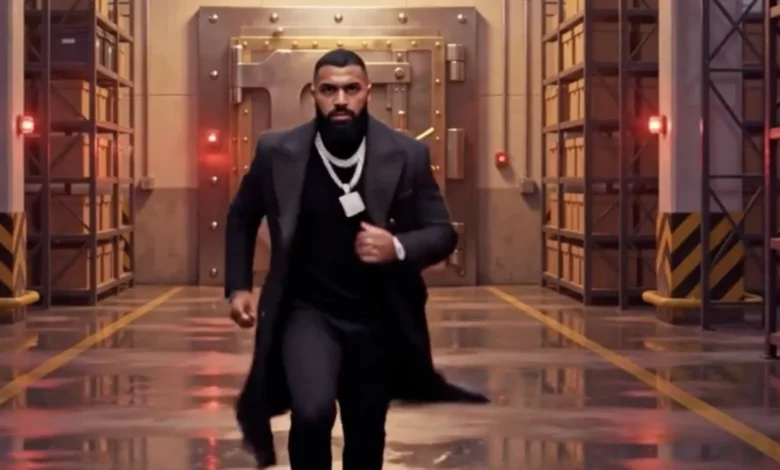
In an unexpected intersection of legacy R&B culture and emerging generative technology, iconic singer Ginuwine has launched an interactive web-based video game titled My Ride: The Ginuwine Story Game. The project, which utilizes artificial intelligence to render its visuals and environment, positions the "Pony" hitmaker as the protagonist in a high-stakes, surreal heist to recover his master recordings from a fictionalized version of a major record label. The release represents a growing trend of artists using unconventional digital mediums to address long-standing grievances regarding music industry ownership and artist rights.
The Premise: A Digital Heist for Artistic Autonomy
My Ride: The Ginuwine Story Game functions as a narrative-driven browser experience where the player assumes the identity of the R&B legend. The game’s central plot is rooted in the industry-wide contention over master recordings. In the game, players must navigate a series of challenges—including physical confrontations with security personnel, infiltration of corporate headquarters, and strategic musical performances—to reclaim Ginuwine’s original studio masters from an antagonistic music executive at Sony Music.
The game is not merely a combat-oriented title; it incorporates creative elements, such as dropping beats and delivering lyrical bars, to progress through the narrative. As the player succeeds, the objective shifts from theft to artistic liberation, culminating in a triumphant concert performance that broadcasts new music to his fans. This thematic focus on "getting what’s owed" reflects a career that has spanned over three decades, during which the conversation surrounding artist royalties and intellectual property has evolved significantly.
Development and Technological Framework
The game was developed by LMG Games, a studio spearheaded by Anderson Westfield, an entrepreneur known for utilizing AI-generation tools to create interactive media. The studio has previously garnered attention for similar projects based on pop culture properties such as the films Friday and Don’t Be a Menace to Society.
The project relies heavily on AI-driven assets to generate its environments and character models. This approach allows for rapid production cycles compared to traditional game development, which typically requires years of manual asset creation, coding, and motion capture. LMG Games has positioned itself not just as a developer, but as an educational hub, offering courses to the public on how to construct video games using AI frameworks. Ginuwine’s public endorsement of the platform—referring to Westfield as "king" on social media—suggests a growing alliance between legacy entertainers and tech-forward developers looking to disrupt traditional entertainment models.
Contextualizing the Battle for Master Recordings
To understand the weight behind this digital venture, one must consider the historical context of the "master recordings" debate. In the music industry, "masters" refer to the original recordings from which all subsequent copies are derived. For decades, standard recording contracts often saw labels retain ownership of these masters, leaving artists with a percentage of sales but no control over how the music is licensed, sampled, or exploited in perpetuity.
The movement for artists to regain control of their masters gained significant mainstream momentum in the 2010s and 2020s, spearheaded by high-profile artists like Taylor Swift and Kanye West. For an artist of Ginuwine’s tenure—having debuted in the mid-90s during the height of the major label system—the issue is particularly poignant. By turning his personal struggle into a game, Ginuwine is utilizing a form of "gamified advocacy," bringing a complex legal and financial issue to an audience that may not otherwise engage with the minutiae of record label contracts.
Timeline of the Artist’s Career and Industry Shift
- 1996: Ginuwine releases his debut album, Ginuwine… the Bachelor, produced by Timbaland. The album establishes him as a cornerstone of the 90s R&B landscape.
- 1996–2005: The artist experiences a prolific period, releasing multiple platinum-certified albums. During this era, standard industry contracts almost universally favored label ownership of masters.
- 2019–2021: The "Masters Movement" gains massive cultural traction, with artists publicly highlighting the financial limitations of not owning their intellectual property.
- 2026 (November): Ginuwine announces the launch of My Ride: The Ginuwine Story Game, framing the project as a way for fans to experience his fight for ownership.
Cameos and Cultural Resonance
The game features appearances by members of the Supafriendz, the collective of hip-hop and R&B artists that rose to prominence alongside Ginuwine in the late 1990s. The inclusion of Timbaland, Missy Elliott, Tank, and the late Aaliyah adds a layer of nostalgia that anchors the game in the specific cultural milieu of the Virginia-based music scene.
By including Aaliyah—whose legacy remains a sensitive and cherished subject in R&B history—the developers have attempted to create an emotional connection for fans. The narrative framing suggests that these figures are providing guidance to the player, reinforcing the "righteousness" of the mission. This inclusion serves both as a fan-service element and a way to emphasize the collaborative nature of the music industry in the 90s, contrasting with the solitary, corporate nature of the game’s antagonist.
Implications of AI-Generated Media in Music Marketing
The use of AI to create a promotional video game is a significant shift in music marketing. Historically, artists have used music videos, interviews, and social media campaigns to promote their work. The transition to an interactive, AI-generated game suggests that artists are looking for "sticky" content—digital experiences that keep fans engaged for longer periods than a three-minute song or a social media post.
However, the use of AI in this context also raises questions about the future of intellectual property in digital spaces. As AI tools become more adept at replicating likenesses and voices, the line between official artist projects and unauthorized content continues to blur. While Ginuwine has explicitly endorsed and promoted this game, the existence of a platform that allows for the rapid creation of games based on public figures suggests a future where artists may need to be more vigilant about their digital likenesses, even as they embrace new technology to tell their stories.
Industry Analysis: The Economics of Advocacy
From a business perspective, My Ride is an experimental bridge between activism and entertainment. While it is unlikely that the game will lead to a literal change in Ginuwine’s legal contracts with major labels, it serves a secondary, perhaps more valuable purpose: brand solidification. By casting himself as an underdog fighting a corporate machine, Ginuwine taps into a narrative of empowerment that resonates with modern audiences who are increasingly skeptical of large corporate entities.
The game also acts as a sophisticated viral marketing tool. By providing a URL (playtheride.com) and inviting followers to "see how far you make it," the artist creates a direct engagement funnel. The "absurdity" of the game is its greatest marketing asset; in a saturated digital landscape, the strange, AI-rendered aesthetic of the game ensures that it stands out in news cycles and social media feeds, effectively keeping the artist’s name in the cultural conversation without the need for a traditional album release.
Final Outlook
As the music industry continues to grapple with the realities of digital ownership and the rise of AI, Ginuwine’s move represents a bold, if unconventional, step. Whether the project will be remembered as a pioneer in artist-driven digital gaming or a footnote in the history of celebrity marketing remains to be seen. However, it is clear that for artists looking to assert control over their legacy, the battleground is no longer limited to the boardroom—it has now moved into the browser, where the players hold the power to reclaim what is theirs. As Ginuwine himself stated in his promotional efforts, the game invites fans to "live free and get what’s owed," effectively turning a personal grievance into a collective, interactive experience.