Morrissey Urges Queen Mary University of London to Permanently End Sepsis Experiments on Animals

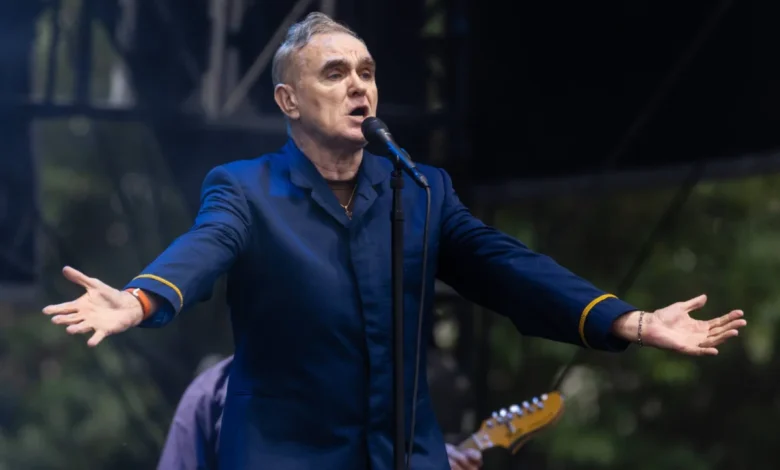
Iconic British singer-songwriter and long-standing animal rights advocate Morrissey has penned a sharply critical open letter to Queen Mary University of London (QMUL), demanding an immediate and total halt to its history of conducting sepsis experiments on mice. Released publicly by People for the Ethical Treatment of Animals (PETA) on Thursday, November 26, the correspondence highlights ongoing ethical concerns within the British higher education sector regarding the use of live animals in biomedical research.
The intervention by the former Smiths frontman coincides with sustained activism from animal rights groups targeting the institution, as well as Morrissey’s impending return to the United Kingdom for a five-date winter concert tour in support of his 14th solo studio album, Make-Up Is A Lie.
Inside the Open Letter: Cruelty and Scientific Critique
In his direct address to QMUL President and Principal Professor Colin Bailey, Morrissey did not mince words regarding the methodologies historically utilized in the university’s laboratories. Referencing details provided by PETA, the musician detailed procedures in which laboratory mice are surgically operated on to puncture their intestines, allowing faecal matter to leak directly into their abdominal cavities.
This process intentionally induces severe sepsis, forcing the subjects to endure extreme physiological distress—including high fevers, labored breathing, and progressive multi-organ failure—prior to being euthanized.
Beyond the ethical objections raised over the infliction of deliberate pain, Morrissey’s letter challenged the scientific validity and translational efficacy of animal models in sepsis research. Citing data compiled by PETA, the singer emphasized that more than 150 experimental pharmaceutical compounds that successfully cured or mitigated sepsis in murine (mouse) models have ultimately failed during subsequent human clinical trials. This stark translational failure rate forms a cornerstone of modern arguments against animal-based biomedical research, with critics asserting that genetic and physiological disparities between mice and humans render such tests scientifically obsolete.
While acknowledging a recent communication from QMUL informing PETA that the institution is not actively utilizing a specific method known as caecal ligation and puncture (CLP)—widely considered the gold standard for inducing murine sepsis—Morrissey pressed for absolute clarity. He demanded official confirmation that QMUL has permanently abandoned all variants of sepsis induction involving live animals and possesses no future plans to reinstate such protocols.
Concluding his letter with a characteristically sharp offer, Morrissey proposed a formal meeting alongside PETA’s resident scientists upon his arrival in the UK. Should the university commit to consigning animal-based sepsis trials to history, the singer stated he would happily "raise a glass to your belated enlightenment."
A Timeline of Escalating Pressure and Protest
The release of Morrissey’s open letter is the latest development in a protracted, multi-front campaign spearheaded by PETA against Queen Mary University of London’s research practices. For over a year, the organization has maintained sustained pressure on QMUL administration, calling for a complete modernization of its research methodology to prioritize human-relevant, non-animal alternatives—an approach already adopted by institutions such as the University of Kent, which recently committed entirely to animal-free sepsis research.
The campaign escalated dramatically on the same day the letter was published, when a PETA activist successfully disrupted the prestigious Times Higher Education Awards ceremony held in Birmingham. QMUL had been nominated for the coveted University of the Year accolade at the event. During the proceedings, a demonstrator intercepted the ceremony to broadcast a direct message to university leadership: to cease painful sepsis experiments on mice immediately and transition toward modern, humane scientific alternatives.
PETA’s disruption at a high-profile academic gathering highlights a strategic shift toward public accountability for universities nominated for excellence awards while maintaining controversial laboratory practices. Representatives for QMUL have faced mounting scrutiny from students, faculty, and external advocates, though a comprehensive institutional policy shift regarding all forms of animal testing has yet to be formally declared. NME and other major cultural outlets have reached out to QMUL for official commentary on both the disruption and Morrissey’s correspondence.
Morrissey’s Decades-Long Activism Legacy
Morrissey’s latest intervention is consistent with a career spanning four decades defined by militant advocacy for animal welfare. Long before veganism and ethical consumerism entered mainstream cultural discourse, the artist established himself as a preeminent voice for animal rights through his work with The Smiths, most notably via their landmark 1985 studio album, Meat Is Murder. The record’s title track and accompanying promotional materials served as an early introduction to vegetarianism and animal liberation for millions of fans worldwide.
Over the years, the singer has frequently leveraged his global platform and artistic profile to collaborate directly with PETA on high-profile campaigns. Notable milestones in this activism include:
- 2014: Voicing and starring in an animated PETA video exposé detailing the systemic cruelties of battery farming within the egg industry.
- 2017: Fronting a holiday season campaign urging consumers to reject traditional festive culinary norms by sparing turkeys from slaughter during Christmas.
- 2023: Issuing a formal public appeal to major travel provider Jet2holidays, demanding the company sever its commercial partnerships with marine theme parks that hold cetaceans in captivity.
By intertwining his public profile with institutional activism, Morrissey continues to use his artistic visibility—amplified this winter by his upcoming tour—to keep animal welfare issues at the forefront of public consciousness.
Broader Implications for Biomedical Research in the UK
The standoff between QMUL and animal rights advocates reflects a broader, systemic debate unfolding across the United Kingdom’s scientific and academic landscape. As technological innovations accelerate, the pressure on research universities to move away from in vivo (animal) testing toward in vitro (cell-based), computer-simulated, and human tissue-based models has never been more intense.
Proponents of modern methodologies argue that human-relevant testing platforms offer vastly superior predictive accuracy for clinical outcomes, avoiding the ethical compromises and financial waste associated with failed animal trials. Conversely, traditional biomedical establishments have historically defended animal research as an indispensable bridge for understanding complex multi-organ systemic conditions like sepsis—a condition that remains a leading cause of mortality worldwide, claiming millions of lives annually.
However, public sentiment and growing institutional precedents—such as the University of Kent’s transition to animal-free sepsis protocols—suggest that the social license for traditional animal testing is narrowing. The willingness of universities to embrace transparency and modern alternatives will likely become a critical metric for their institutional reputation, governance standards, and eligibility for premier academic accolades.
Upcoming Tour and Musical Context
While navigating the political and ethical friction surrounding his open letter, Morrissey is preparing to embark on a five-date United Kingdom concert tour. The itinerary is scheduled to commence in Brighton on December 6, before routing through major cultural centers including Cardiff, Liverpool, Glasgow, and Leeds.
The live performances are designed to support his 14th solo album, Make-Up Is A Lie, which was released to critical discussion in March. The record has maintained a prominent place in the artist’s recent public commentary; last month, Morrissey made headlines by publishing his own personal ranking of his extensive solo discography. In the self-evaluation, he positioned Make-Up Is A Lie in the second-tier position of his solo catalog, ranking it directly behind his highly anticipated yet persistently unreleased album, Bonfire of Teenagers.
As the singer prepares to take the stage across the UK this December, the intersection of his artistic platform and relentless political advocacy ensures that institutions like QMUL will continue to face intense public scrutiny regarding their laboratory practices long after the concert curtains close.