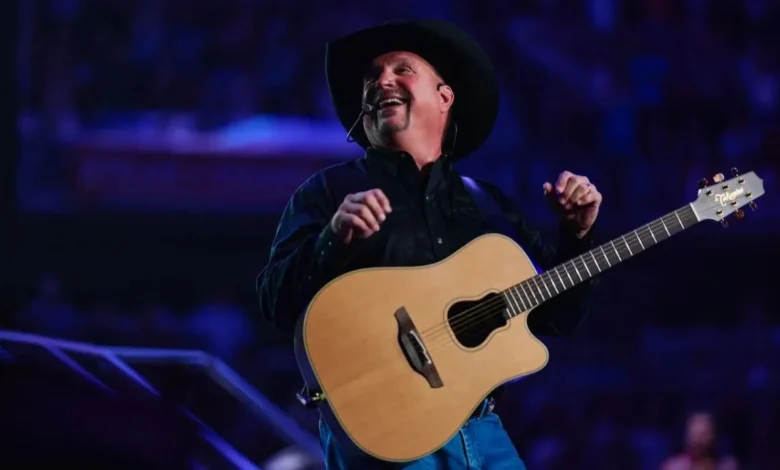
In a move that marks a significant shift in the landscape of Music City’s terrestrial radio market, country music icon Garth Brooks has reached a definitive agreement to acquire 100.1 FM. The frequency is currently home to WRLT-FM, better known as Lightning 100, an institution of Nashville’s independent and alternative music scene. The transaction, executed through Brooks’ media entity, Sevens Network LLC, is currently pending regulatory approval from the Federal Communications Commission (FCC). Upon the successful transfer of the license, Brooks intends to pivot the station toward a dedicated country format, while the long-standing Lightning 100 brand will relocate its broadcasting operations to 106.3 FM and 102.5HD3.
The Evolution of the Nashville Radio Landscape
The acquisition represents more than just a change in ownership; it signals a high-profile consolidation of traditional radio power in a city that serves as the global epicenter for the country music industry. For decades, Lightning 100 has functioned as an “Adult Album Alternative” (AAA) beacon, providing a vital platform for singer-songwriters, local independent artists, and genre-bending acts that often fall outside the rigid programming constraints of mainstream corporate country radio.
WRLT-FM earned its reputation through a carefully curated blend of regional discovery and national indie-alternative staples. Programs such as “Nashville Sunday Night,” which broadcasts live performances from the city’s historic venues, and “The 615,” a dedicated showcase for homegrown talent, have been foundational to the station’s identity. The shift to the 106.3 FM frequency, a significantly smaller footprint, raises questions about the future reach of the independent station, even as its management assures listeners that its signature programming will remain intact.
Chronology of the Deal and Strategic Context
The acquisition follows a period of transition for Garth Brooks’ media aspirations. In 2023, Brooks entered into a highly publicized three-year partnership with the digital audio platform TuneIn. That collaboration resulted in the launch of several online-first channels, most notably The BIG 615, which aimed to bring a “global” perspective to country music programming. However, the partnership concluded in September 2026, leaving Brooks without a terrestrial home for his expanding broadcasting ambitions.
By securing 100.1 FM, Brooks is effectively moving from a purely digital footprint to a traditional broadcast infrastructure. Industry analysts note that while digital streaming continues to grow, terrestrial radio remains a potent force in Nashville, where the drive-time culture and the concentration of music industry professionals make the FM dial a primary vehicle for promotion and audience retention. For Brooks, this acquisition serves as the keystone in a broader strategy to bridge the gap between legacy country broadcasting and modern, on-demand digital engagement.
Official Statements and Organizational Impact
In his public comments regarding the deal, Garth Brooks emphasized the role of Nashville as a rapidly evolving urban center. “This is an opportunity to bring the entire family of country music together in one spot—the legends, the greats, and the future greats,” Brooks stated. “Nashville is being called ‘The Newest City in America,’ and we want to bring a new kind of communication, combining terrestrial and digital radio, built to grow with this city.”
The response from the Lightning 100 team, while acknowledging the loss of their primary frequency, has been framed with an emphasis on continuity. In an official communication released via social media channels, the station noted, “Lightning 100 is turning the page, but the music we love isn’t going anywhere!” The station’s management is currently focusing on a seamless transition to their new dial position, aiming to retain their core listener base while navigating the technical complexities of shifting broadcast towers and signal coverage areas.
Data Analysis: The Value of Terrestrial Frequency
The acquisition of a terrestrial radio frequency in a top-tier media market like Nashville involves complex logistical and financial hurdles. Historically, FM frequencies in major metropolitan areas are considered high-value assets due to their limited supply. The value of a station like 100.1 FM is derived not just from its geographic reach, but from the “cultural capital” it has accumulated over years of loyal listenership.
While the exact financial terms of the Sevens Network LLC deal remain confidential, industry experts suggest that the purchase price reflects both the scarcity of available spectrum and the strategic value of the 100.1 signal’s reach across Davidson County and its surrounding suburbs. For Brooks, the investment is a long-term play to establish a proprietary platform that he can control entirely, free from the constraints of third-party digital agreements that previously limited his autonomy.
Implications for Local Artists and the Music Community
The displacement of an indie-focused station by a major country outlet raises concerns among local musicians regarding the potential loss of airtime for non-country artists. Lightning 100 has been a consistent champion for the “Nashville Sound” that exists outside of the Music Row establishment. From organizing the “Live on the Green” music festival to hosting in-studio sessions for touring indie bands, the station has served as a cultural gatekeeper.
The station’s commitment to returning “Live on the Green” in 2027 suggests that the brand intends to remain an active participant in the city’s live event economy, regardless of its radio frequency change. However, the move to 106.3 FM—which typically offers a more limited signal range than the 100.1 frequency—may present a challenge to the station’s ability to reach the same broad audience that it has enjoyed for years.
The Future of Sevens Network and Radio Innovation
As the FCC begins its review process, the industry will be watching closely to see how Sevens Network integrates its new terrestrial asset with its digital archives. The “hybrid” model suggested by Brooks—blending traditional radio’s spontaneity and community connection with the data-rich nature of digital streaming—could provide a template for other artists looking to control their own broadcast channels.
For the Nashville public, the transition is a stark reminder of the volatility inherent in the media business. As the city continues its rapid growth, the battle for control of the airwaves reflects the broader tension between legacy media institutions and the new guard of content creators who are increasingly looking to own their distribution channels.
Looking Ahead: Regulatory Hurdles and Public Sentiment
The FCC approval process is expected to take several months, during which time WRLT-FM will continue to operate under its current format. Once the regulatory hurdle is cleared, the transition will likely trigger a massive marketing push from the Sevens Network to introduce the new country format to the Nashville market.
The reception among long-time listeners will be the ultimate test of the strategy. Nashville’s radio market is fiercely competitive, with several established country stations already vying for the same demographic. Brooks’ success will depend on his ability to differentiate his new offering from the existing heavyweights while simultaneously managing the public relations challenge of displacing an iconic local brand.
As the 2026 “Blame It All on My Roots Tour” continues to draw fans, Brooks is clearly positioning himself at the center of both the live music and radio broadcasting worlds. Whether this convergence will redefine Nashville radio or simply add another layer of corporate influence remains to be seen. What is certain is that for the residents of Nashville, the radio dial—and the musical identity of their city—is in the midst of a significant, and potentially irreversible, transformation.
Related posts: