The current landscape of jazz and improvised music is undergoing a period of significant expansion, characterized by a bridge between traditional foundational elements and contemporary global influences. This season’s new releases represent a diverse array of projects, ranging from debut statements by rising stars to experimental collaborations that challenge the boundaries of genre. As labels such as Mack Avenue, Candid Records, and various independent imprints prepare for the final quarter of 2024, the industry is witnessing a trend toward thematic storytelling, cross-cultural synthesis, and the reclamation of historical narratives.
Emerging Voices and Thematic Debuts
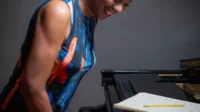
At the forefront of this current wave is Ekep Nkwelle, whose debut album, Caged Bird, marks a pivotal moment for a performer who has already graced stages at the Newport Jazz Festival and Carnegie Hall. Nkwelle, who has built a reputation through high-profile collaborations with Wynton Marsalis and Dee Dee Bridgewater, has opted to release her debut as a conceptual work. Inspired by Maya Angelou’s seminal autobiography, I Know Why the Caged Bird Sings, the nine-track collection serves as a narrative arc moving from profound sorrow to artistic liberation. Industry analysts note that Nkwelle’s trajectory—establishing a national profile before the age of 27 without a recorded album—is increasingly rare in the digital era, suggesting that the industry continues to place high value on live performance pedigree as a precursor to studio success.
Similarly, Montreal-based drummer and composer Ronny Desinor, performing under the moniker Nnordy, is set to release his self-titled debut on September 18 via Lovely Lovely Sounds. The project represents a technical shift in contemporary fusion, focusing on the intersection of complex polyrhythmic frameworks and accessible, catchy melodic structures. By utilizing a full live ensemble rather than relying on programmed loops, Desinor aims to capture the kinetic energy of the Montreal jazz scene. The inclusion of notable collaborators like Anomalie and Joanna Majoko signals a strategic effort to bridge the gap between technical jazz fusion and the broader neo-soul audience.
Avant-Garde Explorations and The Trio Format
Experimental music continues to thrive within the trio format, as evidenced by the latest work from Lothar Ohlmeier, Rudi Fischerlehner, and Isambard Khroustaliov. Their third collaborative release, Landscapes (Not Applicable), serves as a case study in the evolution of free improvisation. The trio draws from a diverse lineage, citing influences from the electroacoustic pioneers of the musique concrète movement, the avant-garde aesthetic of Sun Ra, and the electric-period explorations of Miles Davis.
The music is characterized by what the ensemble describes as a "constant pursuit of absolute freedom," a philosophy that has historically defined the avant-jazz movement in Europe. By integrating industrial textures with traditional instrument velocities, the group creates an abstract dialogue that favors deep listening over structured composition. This release underscores a growing market for boundary-less music that avoids the commercial imperatives of traditional jazz charts, catering instead to a dedicated listener base interested in sonic texture and collaborative communion.
Socio-Political Narratives and Artistic Tributes
Several artists are utilizing their platform to address historical and cultural identity. French Mauritanian pianist Leïla Olivesi has released African Rhapsody, a work that explores the intellectual and artistic contributions of the Négritude movement. Following her 2022 Django Reinhardt Prize win, Olivesi has assembled an octet to interpret a poetic and imagined Africa. The project functions as both a musical composition and a historical reclamation, referencing the works of French-speaking African and Caribbean intellectuals under colonial rule.
This thematic focus on identity is mirrored in the Prism Quartet’s Generate Music. Premiered during the group’s 40th-anniversary season, the project directly challenges the legacy of the Nazi-era "degenerate music" label. By bringing together a supergroup of performers—including Tyshawn Sorey, Ursula Rucker, and David Krakauer—the project aims to map the creative bonds between Black and Jewish American communities. The implication of this work is significant; it suggests a shift in the role of the jazz quartet from pure entertainment to a vehicle for social empathy and historical re-contextualization.
Collaborative Intersections and Genre Fluidity
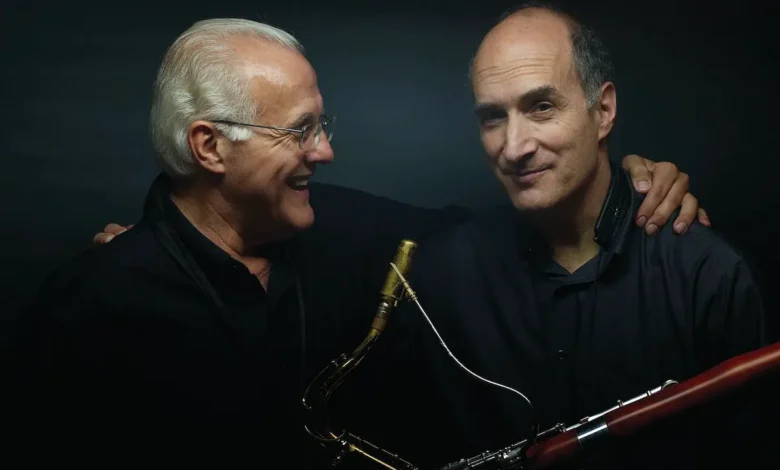
The intersection of jazz with other musical forms continues to provide some of the most dynamic releases of the season. Keith Oxman and Frank Morelli’s Classicool represents a sophisticated fusion of tenor saxophone and bassoon, building upon the success of their 2021 Ox-Mo Incident. By reinventing a dozen standards, the pair continues to demonstrate that the classical-jazz hybrid remains a viable and commercially successful path for technical virtuosos.
Parallel to this, Zacchaeus Paul’s Jazz Money Vol. 2: Swingin’ R&B highlights the current trend of blending hard-swinging jazz with neo-soul and hip-hop. Following the critical acclaim of the first volume, which was recognized by NPR Music as a top discovery of 2024, this new installment maintains a focus on cinematic storytelling and spontaneous improvisation. Paul’s work is emblematic of a younger generation of jazz musicians who prioritize "genre-defying" sounds, effectively lowering the barrier to entry for listeners who may not have a traditional jazz background but are attracted to the improvisational spirit of the genre.
The Return of the Acoustic and Intimate Ensemble
In contrast to the highly produced projects, John Petrucelli’s The Endurance of Optimism emphasizes the intimacy of the live recording. Captured at the Drift Lounge in Salt Lake City, the album documents a trio exploration of original compositions and standards. Notably, this recording serves as a milestone for the artist, as it is the first to feature the Petrucelli Mark One tenor saxophone, a custom instrument that marks a new phase in his sonic identity.
Similarly, the mother-son duo of Isabelle and Raphael Olivier continues their 13-year collaboration with the release of Open. Their work, characterized by the interplay of harp and guitar, serves as a counterpoint to the more aggressive, high-velocity jazz projects being released this quarter. By focusing on a "sonic journey" intended to encourage mindfulness, the duo addresses a segment of the market that views jazz as a meditative and restorative practice.
Industry Context and Future Outlook
The breadth of these releases suggests a healthy, albeit fragmented, industry. The diversity of labels represented—ranging from established institutions like Candid Records and Mack Avenue to specialized imprints like Not Applicable and Dark Circle Recordings—indicates that there is no longer a "one-size-fits-all" strategy for jazz distribution.
The timeline of these releases, stretching from late summer into October 2024, reflects a strategic effort to capitalize on the autumn concert season, a period when many of these ensembles will be touring. The inclusion of diverse influences—from Norwegian folk songs on Østerlide’s Villfar og Sylverklar to the South African and Brazilian influences on Miles Pillinger’s Belonging—demonstrates that the jazz genre is increasingly serving as a global umbrella for traditional music preservation.
As the industry moves forward, the primary challenge remains the reconciliation of these varied artistic visions with the streaming-dominated economy. However, the commitment to physical media, such as the vinyl releases for Leïla Olivesi and Miles Pillinger, confirms that the jazz community continues to value the album as a comprehensive, curated experience. Whether through the social commentary of the Prism Quartet or the technical fusion of Nnordy, these artists are successfully expanding the lexicon of jazz, ensuring its relevance in a rapidly changing cultural landscape. The coming months will likely see these projects gain traction through international festival circuits, further cementing the role of the artist as both a performer and a cultural historian.