Janelle Monáe, Ms. Rachel, Kneecap, More Sign Letter to Venues Macklemore Said Wouldn’t Host Free Palestine Tour

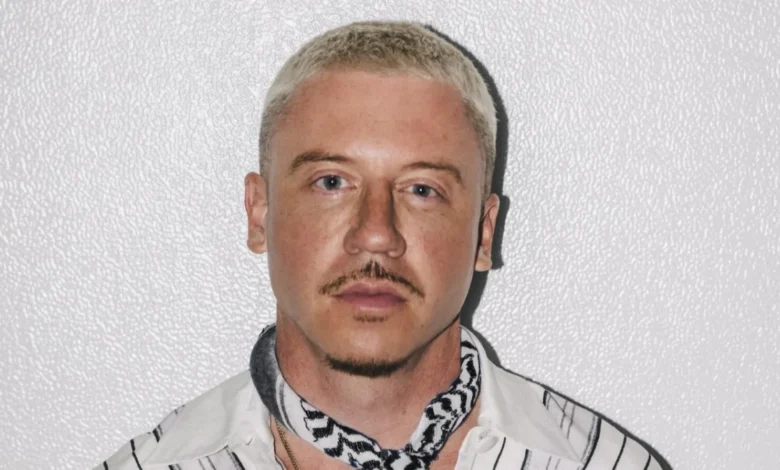
A coalition of prominent figures from the music, film, and activist communities has formally challenged the refusal of major U.S. arenas to host Macklemore’s "Free Palestine Tour." The open letter, spearheaded by the Committee for the First Amendment, argues that the systematic exclusion of the Seattle-born rapper from high-capacity venues constitutes a form of political censorship and an alarming encroachment on artistic freedom.
The signatories, which include high-profile names such as Jane Fonda, Mark Ruffalo, Janelle Monáe, AURORA, Ms. Rachel, Portugal. The Man, and the Irish hip-hop group Kneecap, assert that the decision by stadium operators to cancel or deny performance dates is not a mere logistical matter, but a calculated effort to silence dissent regarding the humanitarian crisis in Gaza.
The Scope of the Controversy
The letter is addressed to the management of several of the most influential entertainment hubs in the United States, including Madison Square Garden and Barclays Center in New York, the Kia Forum and Crypto.com Arena in Los Angeles, the Prudential Center in Newark, the Chase Center in San Francisco, and Climate Pledge Arena in Seattle.
The Committee for the First Amendment contends that these venues, many of which enjoy varying degrees of public funding or government-backed incentives, are operating within a political vacuum that they claim does not exist. The letter explicitly states, "Arenas that exclude artists for their political views cannot pretend they are separate from that campaign—particularly those that receive public funding." The coalition argues that by barring Macklemore, these corporations are effectively participating in a wider government-backed effort to intimidate artists who choose to use their platforms to discuss sensitive geopolitical topics.
Chronology of the Conflict
The current standoff is the culmination of months of friction between the artist and the live-entertainment industry. The tension first gained significant public attention in September 2026, when Macklemore was abruptly removed as a supporting act from Ed Sheeran’s "Loop Tour."
Reports surfaced that the removal was not a decision made by Sheeran himself, but one forced by stadium operators. Robert Kraft, the owner of the New England Patriots and a significant figure in the stadium management landscape, reportedly led the opposition against Macklemore, citing the rapper’s vocal support for Palestine and his on-stage commentary during the tour. The threat to bar Macklemore from future stadium access forced a professional separation, underscoring the influence that venue owners can exert over the touring circuit.
Undeterred by his removal from the stadium circuit, Macklemore pivoted to an independent model. He launched his "Free Palestine Tour" in October 2026, successfully executing sold-out performances in Dublin, Paris, and London. These shows were intended to prove the commercial viability of his tour, countering claims made by venue representatives—most notably those associated with Madison Square Garden—that he was no longer an "arena-level act." Despite this proven demand, Macklemore alleged in November that when he attempted to secure dates for a domestic U.S. leg of the tour, previously available slots were abruptly withdrawn the moment venue management realized the nature of the shows.
Supporting Data and Industry Precedent
The current situation highlights the precarious intersection of private property rights and the First Amendment in the modern entertainment industry. Unlike public squares, arenas are privately owned or managed, granting operators broad latitude in booking decisions. However, legal experts note that when these venues rely on municipal bonds, tax subsidies, or public land, the moral—if not always the legal—expectation of viewpoint neutrality increases.
Industry data suggests that the live music business is currently undergoing a period of heightened sensitivity. According to recent trade reports, talent agencies and venue operators are increasingly performing "risk assessments" on artists who engage in overt political advocacy. While these assessments are often framed as "security and safety" concerns, critics argue they are increasingly used as a pretext for managing corporate brand alignment.
The "chilling effect" mentioned in the open letter is a sentiment shared by other industry figures. U2, a band long known for their own political activism, and the rock band Garbage have both previously expressed concern over the shrinking space for political discourse in live performance settings. The fear, according to the letter’s signatories, is that if an artist as commercially established as Macklemore can be effectively "blacklisted" from major arenas, the impact on smaller, less protected artists will be devastating.
Official Responses and Corporate Stance
To date, the majority of the venues named in the open letter have remained silent regarding the specific allegations of political censorship. Typically, arena management companies cite "scheduling conflicts," "maintenance requirements," or "private business discretion" when declining to comment on booking decisions.
In instances where statements have been issued by similar organizations in the past, the defense is usually rooted in the "neutrality" of the venue. The argument maintains that arenas are landlords providing space for entertainment and that they do not endorse the personal views of the performers. However, the Committee for the First Amendment challenges this, noting that the refusal to book an artist based on their message is, in itself, a non-neutral act.
Broader Implications and Future Outlook
The implications of this dispute extend beyond the career of a single rapper. As the industry faces increased scrutiny, the debate over who controls the stage is likely to intensify. If the trend of venue-based political vetting continues, it could lead to a permanent shift in how tours are booked, potentially forcing artists to rely on alternative, non-corporate venues such as independent warehouses, public parks, or grassroots-organized festivals.
Macklemore has signaled that he is prepared for this shift. By stating his willingness to build his own stages or play in non-traditional, outdoor settings, the artist is signaling that he will not abandon his commitment to his political messaging. This strategy mirrors historical precedents where artists, faced with industry-wide boycotts, successfully created their own touring ecosystems, thereby bypassing the traditional gatekeepers.
The letter concludes with a rallying cry: "The aim is to silence and intimidate, and the chilling effect extends far beyond one act." By mobilizing such a diverse and prominent group of signatories, the Committee for the First Amendment has successfully elevated the issue from a private business dispute to a public debate about the nature of free expression in the United States.
As of late 2026, the industry remains in a state of watchful waiting. Whether the pressure from this coalition will influence the booking policies of major arenas remains to be seen. However, the debate has already served to highlight the growing divide between the corporate infrastructure of the live entertainment industry and the shifting political expectations of the artists who drive that industry’s value. The case of Macklemore vs. the Arena Circuit is likely to be viewed as a benchmark for how artistic dissent is navigated in the modern commercial era.