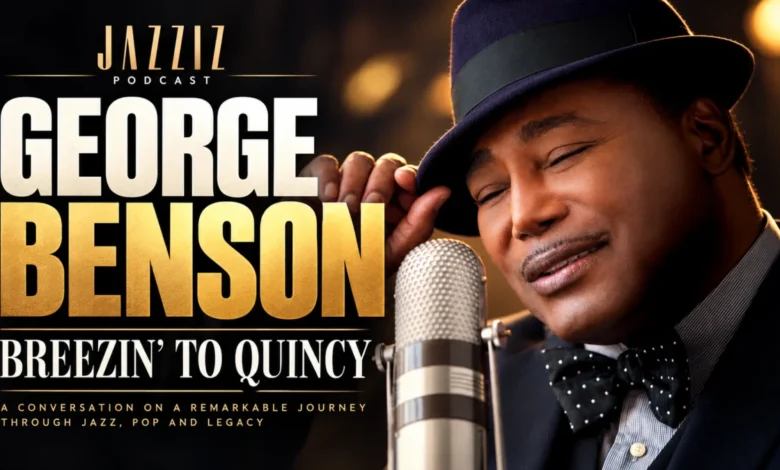
The intersection of jazz mastery and commercial crossover success has rarely been navigated with as much grace as it has been by George Benson. In a wide-ranging, definitive conversation with JAZZIZ Magazine for its Fall 2026 issue, the legendary guitarist and vocalist explores the intricate tapestry of his career, offering a rare glimpse into the creative philosophies that transformed him from a virtuosic jazz guitarist into a global pop-soul icon. The interview, conducted by Michael Fagien, serves as the cornerstone of the publication’s latest cover story, titled "Let Them Hear It," which chronicles Benson’s evolution, his enduring collaborations, and the pivotal lessons he garnered from the titans of the 20th-century music industry.
A Career Defined by Artistic Synthesis
George Benson’s journey is not merely a chronicle of record sales, though his commercial impact remains staggering. Born in 1943 in Pittsburgh, Pennsylvania, Benson emerged as a child prodigy on the ukulele before transitioning to the guitar, eventually becoming a protégé of the legendary Wes Montgomery. His early career was firmly rooted in the hard-bop and soul-jazz traditions of the 1960s, where he recorded for labels like Prestige and Verve.
However, the mid-1970s marked a seismic shift. The 1976 release of the album Breezin’ remains one of the most significant pivot points in contemporary jazz history. Not only did the album reach number one on the Billboard 200, but it also became the first jazz album to be certified triple platinum. This success effectively shattered the barriers between the jazz establishment and the burgeoning R&B and pop radio formats. In his discussion with JAZZIZ, Benson reflects on the "unexpected path" that led to Breezin’, revealing that the transition was less about calculated commercialism and more about an organic discovery of his own voice—both literal and instrumental.
The Quincy Jones Collaboration and the Sound of an Era
Central to Benson’s transformation into a crossover superstar was his partnership with the late producer Quincy Jones. The collaborative synergy between the two reached its zenith with the 1980 album Give Me the Night. The project served as a masterclass in production, blending sophisticated jazz-inflected chord structures with the slick, danceable production of the disco and funk era.
Benson recalls the meticulous nature of working with Jones, noting that the producer’s ability to "hear" the potential in an artist’s range was unparalleled. Give Me the Night not only produced the hit title track, which became a staple of American soul radio, but it also solidified Benson’s identity as a vocalist. For decades, jazz critics had debated whether a guitarist should venture into pop singing; Benson, under Jones’s tutelage, proved that the two disciplines were not mutually exclusive but rather complementary expressions of the same artistic impulse.
The Philosophy of Communication: "Let Them Hear It"
The title of the JAZZIZ cover story, "Let Them Hear It," is derived from a fundamental mantra that has guided Benson’s professional life. During the interview, Benson emphasizes that music is an exercise in vulnerability and exchange. "You don’t know what’s going on in people’s minds until you let them hear it," he notes, suggesting that the primary responsibility of the performer is to bridge the gap between their internal creative state and the audience’s reception.
This philosophy was forged through his interactions with the icons who came before him. Benson speaks extensively about the profound influence of Nat King Cole and Louis Armstrong. From Cole, Benson learned the art of phrasing—the ability to tell a story through song that feels intimate, even in a crowded concert hall. From Armstrong, he absorbed a vital lesson about the audience: that the performer’s role is to act as a conduit for joy, regardless of the complexity of the musical theory underpinning the performance.
A Reimagining of the Canon
Benson’s career has also been characterized by a willingness to interpret the "Great American Songbook" through his own unique lens, a trait that extended to his reinterpretations of pop-rock classics. His ability to take compositions like The Beatles’ Abbey Road and recast them through the nuanced, melodic sensibilities of a jazz improviser is a testament to his versatility.
During the discussion, Benson touches upon the technical and emotional challenges of recording such reinterpretations. He notes that the goal was never to merely mimic the originals but to expose the underlying harmonic brilliance of the songwriting. This approach mirrors his work with jazz pianist McCoy Tyner, with whom Benson explored the more rigorous, avant-garde edges of the genre. These diverse influences—from the structural rigidity of rock anthems to the fluid, modal explorations of Tyner—have allowed Benson to maintain a stylistic fluidity that few of his peers have managed to sustain for over six decades.
Broader Implications and Historical Impact
The significance of George Benson’s career cannot be overstated when analyzing the evolution of the jazz industry. In the late 1970s and early 1980s, the "jazz-fusion" movement faced skepticism from purists. Benson’s success acted as a catalyst for what would eventually be termed "Smooth Jazz," though he has frequently resisted such restrictive labels. His career path demonstrates that high-level technical proficiency does not have to be sacrificed at the altar of accessibility.
Data regarding his impact confirms this: Benson has won 10 Grammy Awards and has been recognized with an NEA Jazz Master honor. His influence extends beyond the guitar, as he is widely cited by modern R&B and neo-soul artists as a foundational influence on their vocal phrasing. By integrating the guitar’s melodic lines with his own vocal scatting, Benson created a signature sound that became a blueprint for future generations of musicians.
Looking Toward the Future
As the Fall 2026 issue of JAZZIZ Magazine hits the stands, the conversation with Benson serves as both a retrospective and a forward-looking statement. Even after a career spanning more than 60 years, he remains a student of his craft. He speaks candidly about the unexpected influence of contemporaries like Peter Frampton, whose work in the 1970s provided a different perspective on how to integrate the guitar into mainstream consciousness.
The interview, captured with the evocative photography of Greg Allen, paints a portrait of an artist who is at peace with his legacy. Benson’s career is a study in the balance between commercial viability and artistic integrity. By constantly challenging himself to explore new sounds—from the bebop of his youth to the polished pop of his middle years and his continued engagement with the standards—Benson has managed to remain relevant in an industry that is notoriously unforgiving of artists who refuse to evolve.
Ultimately, the lesson that George Benson offers in this issue of JAZZIZ is one of endurance. He suggests that the music business is not merely about the mechanics of the industry, but about the resilience of the musician. As he prepares for the next chapter of his storied career, the message remains clear: the artist’s job is to create, to listen, and most importantly, to let the world hear it. The Fall 2026 issue of JAZZIZ, featuring this exclusive interview, is currently available for readers to explore the full depth of these reflections.
The conversation stands as a reminder that the most enduring careers are those built on a foundation of genuine curiosity and a willingness to transcend the boundaries of genre, proving that when an artist is true to their own voice, the audience will inevitably follow.