The Unsung Rhythms of the Mississippi Hill Country: David Evans and the Preservation of a Musical Legacy

For over half a century, the scholarly and preservationist work of ethnomusicologist David Evans has served as the primary bridge between the sequestered, percussive blues traditions of northern Mississippi and the global stage. A professor emeritus at the University of Memphis and a 2023 inductee into the Blues Hall of Fame, Evans has dedicated his career to documenting the Hill Country blues—a genre characterized by its riff-based, hypnotic, and highly danceable structure. His foundational research, most notably his 1982 seminal text Big Road Blues: Tradition and Creativity in the Folk Blues, shifted the academic perspective on the genre, moving it away from the rigid structures of the Mississippi Delta and toward a more nuanced understanding of local community evolution.
A Geographical and Cultural Distinction
The Hill Country, a region spanning Marshall, Panola, Tate, Lafayette, and Tippah counties, possesses a socioeconomic history that diverges sharply from the plantation-dominated landscape of the Mississippi Delta. According to Evans, while the Delta was defined by a system of white-owned plantations and Black sharecroppers, the Hill Country featured a high density of small, Black-owned landholdings. This land ownership provided a level of stability that fostered a distinct, self-contained musical culture.
Musically, this translated into a rejection of the 12-bar standardization that came to define urban and Delta blues. Hill Country blues is defined by its percussive intensity, often relying on a single or two-chord structure that loops in a riff-based, trance-like state. This sound is inextricably linked to the region’s deep-rooted fife-and-drum traditions and string-band music. Unlike the showy, harmonically complex Piedmont blues of the East Coast, Hill Country music prioritizes rhythm, repetition, and a raw, visceral connection between the performer and the audience.
The Evolution of a Sound: A Chronology of Documentation
The origins of Hill Country blues remain somewhat elusive, as the genre did not gain significant commercial visibility until the late 20th century. While sporadic recordings of musicians in Hernando and Senatobia exist from the 1920s, including gospel-inflected slide-guitar work by Blind Willie Davis, there is limited empirical evidence of the genre’s fully formed state prior to 1942.
The timeline of preservation is punctuated by a few key academic and folkloric interventions:
- 1942: Alan Lomax conducts seminal field recordings in Tate and Panola counties, capturing the fife-and-drum traditions of Sid Hemphill. These recordings represent the earliest substantial documentation of the region’s musical life.
- 1954: Fred Ramsey attempts to document regional blues across Alabama, Louisiana, and Mississippi, though his findings fail to trigger broader commercial or academic interest.
- 1964–1967: A period of renewed interest begins as folklorists like George Mitchell and Bill Ferris begin documenting musicians like Mississippi Fred McDowell and Napoleon Strickland.
- 1969–1981: David Evans conducts extensive field recordings, documenting the works of R.L. Burnside, Junior Kimbrough, and Jessie Mae Hemphill. During this time, he manages the High Water label, ensuring these musicians had a professional platform for their work.
- 1990s: The emergence of Fat Possum Records brings Hill Country blues to international prominence, finally introducing the raw, unvarnished sounds of the region to a wider, mainstream rock-oriented audience.
The Architecture of the Hill Country Sound
For the uninitiated, the lack of traditional structure in Hill Country blues can be jarring. Evans notes that professional musicians accustomed to conventional arrangements often struggle to perform in this style because it lacks a clear "beginning, middle, and end" in the Western sense. Instead, the "structure" is the riff itself.
The lyrics, too, often defy standard narrative coherence. A blues song might jump between disparate thoughts or contrasting verses, reflecting the reality of the environments in which they were often performed—rowdy, noisy house parties or outdoor picnic grounds where a listener might only catch a single, poignant line. Evans argues that the goal of these performances was not to tell a linear story but to create a moment of profound recognition—a "that’s me" moment—that forged solidarity between the performer and the community.
These performances were often tied to seasonal cycles, particularly the summer picnic circuit that ran from the Fourth of July until the onset of the harvest in late summer. Venues like L.P. Buford’s country store became informal laboratories for the music, where the proximity of the audience to the performer facilitated a feedback loop that emphasized danceability and rhythmic stamina.
Profiles in Influence: McDowell, Hemphill, and Burnside
Mississippi Fred McDowell
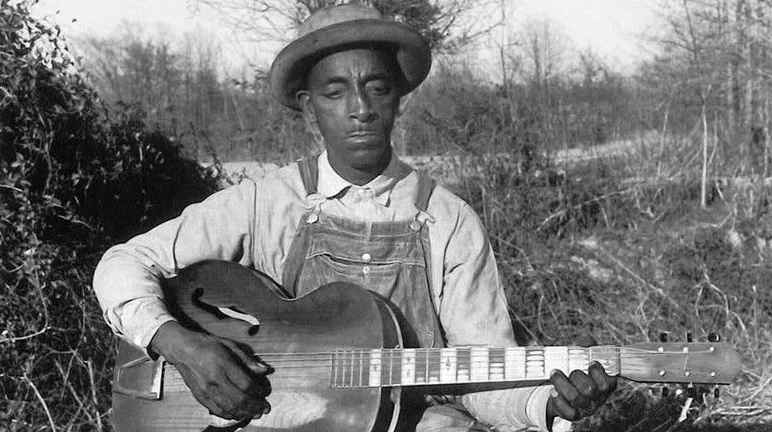
Widely regarded as the architect of the genre’s international exposure, McDowell was a master of the bottleneck slide. Though he spent his early years in Tennessee, his residency in Como, Mississippi, became the epicenter of the Hill Country sound. Evans notes that McDowell’s willingness to stick to his folk roots, even after achieving success on the folk-revival circuit, allowed him to maintain a level of purity in his performance that defined the genre for a generation.
Jessie Mae Hemphill
Representing a lineage that connected 19th-century traditions to the modern era, Jessie Mae Hemphill was, in Evans’ view, the "blues boiled down to its essence." Despite facing significant health challenges, including a 1993 stroke that ended her guitar-playing career, her legacy as a composer and performer remains unparalleled. Her ability to blend the spiritualism of the church with the grit of the juke joint created a sound that was uniquely hers, though her commercial potential was tragically hampered by a lack of institutional support during her peak years.
R.L. Burnside
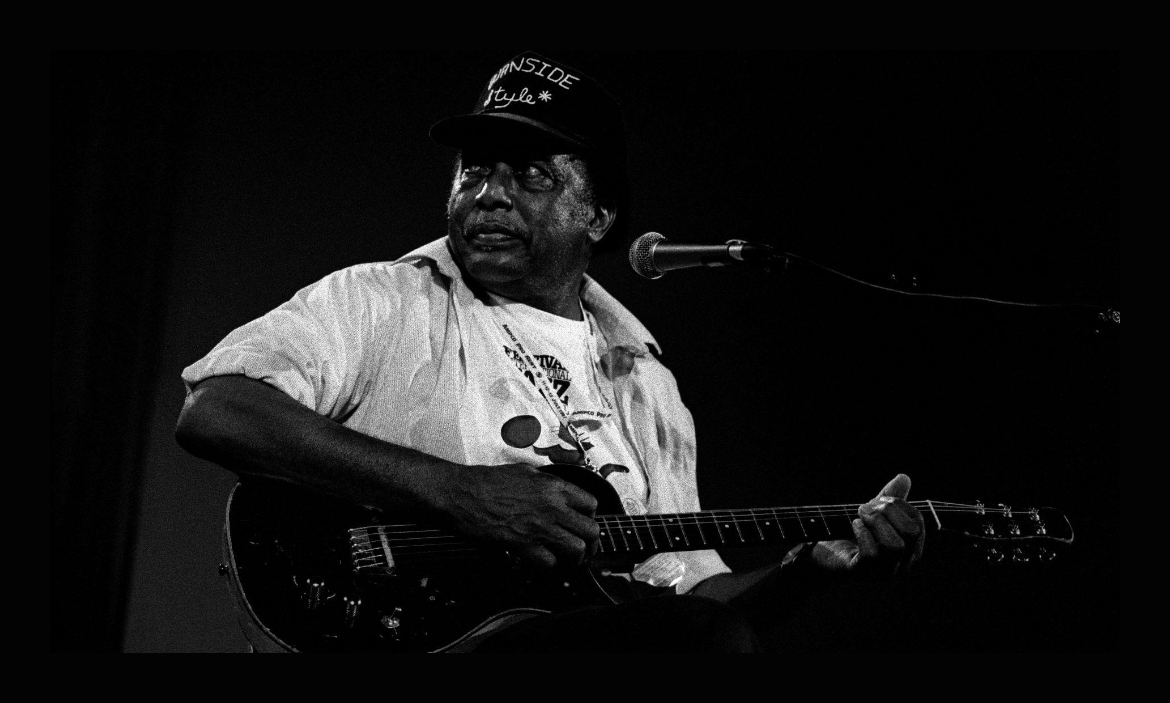
Burnside became the face of the Hill Country revival in the 1990s, but his career was long and storied before the mainstream took notice. His transition from acoustic to electric, influenced by exposure to the Chicago blues scene, allowed him to amplify the inherent percussiveness of his style. Evans, who toured with Burnside in the 1980s, emphasizes that Burnside was a custodian of traditional songs passed down through the generations, particularly those from the repertoire of Ranie Burnette, while also demonstrating a rare, trusting willingness to experiment with his sound.
Broader Implications and Scholarly Legacy
The significance of David Evans’ work extends beyond mere archiving; it is a critical study in how cultural traditions survive in the face of commercial homogenization. Evans’ efforts to reissue the Library of Congress recordings alongside his own field research in the 1978 collection Afro-American Folk Music from Tate and Panola Counties, Mississippi provided a necessary context for understanding the transition from the older, fife-and-drum-led music to the guitar-centric blues of the mid-20th century.
The implications of this research are twofold. First, it highlights the danger of relying on commercial record companies to act as the primary curators of cultural history; had folklorists not intervened, the nuances of the Hill Country sound—its specific regional tunings, its rhythmic oddities, and its unique lyrical structures—might have vanished entirely. Second, it challenges the monolithic view of "The Blues." By isolating the Hill Country as a distinct, cohesive, and historically significant region, Evans has provided a roadmap for future ethnomusicologists to explore other overlooked pockets of American musical history.
Ultimately, the Hill Country blues serves as a testament to the resilience of community-based art. As Evans famously notes, the music was never meant for the concert hall or the museum; it was meant for the picnic ground and the house party, serving a functional purpose in the social life of its creators. Through the tireless efforts of figures like Evans, these private, local conversations have been preserved, allowing the "truth" of the blues to continue to resonate with new audiences long after the original performers have passed. The genre remains, in its essence, a rhythmic dialogue—an enduring, percussive heartbeat of Mississippi history.