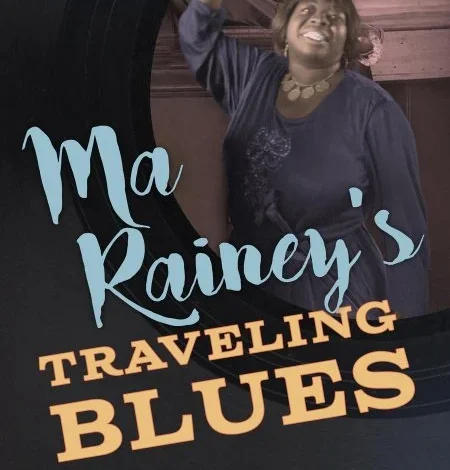
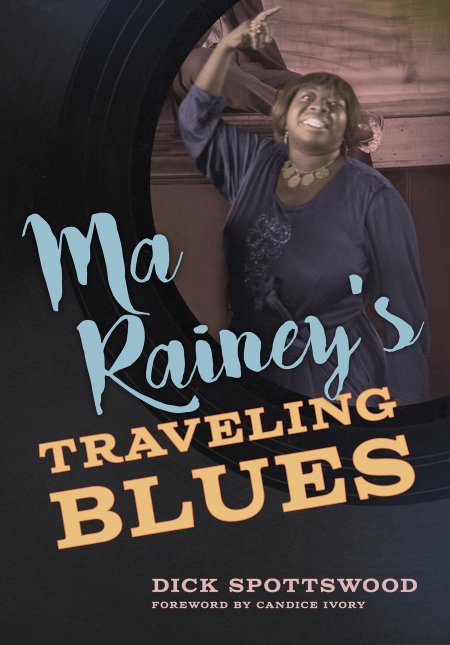
Renowned musicologist and researcher Dick Spottswood has released a definitive, highly anticipated biographical work entitled Ma Rainey’s Traveling Blues, published by the University Press of Mississippi. Spanning 260 pages, the book offers an exhaustive and scholarly look into the life and legacy of Gertrude “Ma” Rainey, widely celebrated as the “Mother of the Blues.” Spottswood, an 89-year-old scholar whose decades-long career has focused on documenting foundational American roots music, bluegrass, and ethnic folk traditions, provides a fresh and thoroughly researched examination of an artist who helped shape the dawn of the commercial recording industry.
Despite her monumental status in musical history—having been inducted into both the Blues Hall of Fame and the Rock and Roll Hall of Fame, receiving a posthumous Grammy Lifetime Achievement Award, and being immortalized on a 1994 U.S. commemorative postal stamp—Ma Rainey’s life has long been shrouded in historical ambiguity. Prior to Spottswood’s publication, only one full-length scholarly biography had been written: Sandra R. Lieb’s 1981 work, Mother of the Blues: A Study of Ma Rainey. Spottswood’s new text builds upon this foundation, utilizing newly surfaced archival materials, long-forgotten contemporary interviews, census records, and lyrical analysis to present a definitive portrait of the iconic contralto.
Chronology and Early Life: Correcting the Historical Record
One of the most significant contributions of Spottswood’s book is its meticulous correction of Ma Rainey’s biographical timeline. While widely cited digital resources, including Wikipedia, have traditionally listed her birth year as 1886, Spottswood cites a 1900 census report establishing that Gertrude Pridgett was born in 1882 in Russell County, Alabama.
Raised primarily in Georgia, Pridgett demonstrated an early affinity for performance. By the age of 14, she was already singing in a local revue titled A Bunch o’ Blackberries. Shortly thereafter, she ventured out on her own, running away to join the vibrant and grueling circuit of vaudeville, tent shows, and traveling variety acts that traversed the Jim Crow-era American South. During her travels with a minstrel troupe owned by Moses Stokes, she met Will “Pa” Rainey, a fellow performer. The two married in 1904 and formed a formidable creative partnership.
The Raineys eventually joined the prestigious Rabbit Foot Minstrels, widely considered the premier touring African American entertainment troupe of the era. Capitalizing on their growing popularity, the couple eventually launched their own independent touring company, famously billing themselves under various titles, including Rainey and Rainey, Assassinators of the Blues. These formative decades on the road not only honed Rainey’s performance style—melding theatrical stagecraft with raw, emotive vocal delivery—but also placed her at the epicenter of developing Black secular folk music.
The Recording Era and Cultural Impact
The landscape of American music shifted dramatically in 1920 when Mamie Smith recorded “Crazy Blues,” widely acknowledged as the first blues vocal recording. However, the commercial market expanded exponentially in 1923 when scout J. Mayo Williams discovered Ma Rainey and brought her to the Paramount Records studio in Chicago.
In her initial session, Rainey recorded “Bo-Weavil Blues” alongside seven other sides. These recordings struck a profound chord with Black audiences across the United States, cementing her reputation and establishing a definitive artistic standard for the burgeoning recording industry. Over the next five years, Rainey recorded more than 100 sides for Paramount, with 94 ultimately being released to the public. Her repertoire frequently addressed complex themes of love, female autonomy, sexuality, and the grinding realities of racial and economic oppression.
Rainey’s recording career came to a halt with the onset of the Great Depression in 1929, leading to her retirement from active touring and recording by the mid-1930s. She returned to Georgia, where she managed theaters until her death from a heart attack in Columbus, Georgia, in 1939. Despite her retirement, her musical footprint endured, heavily influencing subsequent generations of vocalists, most notably her protégé Bessie Smith, as well as Memphis Minnie and countless contemporary artists who continue to cover her compositions today.
Structure and Scholarly Methodology of the Publication
Ma Rainey’s Traveling Blues is structured to serve both as a narrative biography and an indispensable archival reference. The core biographical text spans 164 heavily illustrated pages, weaving Rainey’s personal trajectory into the broader tapestry of early 20th-century American history. Spottswood contextualizes her life through the intersecting cultural pressures of race, gender, and class, paying particular attention to the unique challenges she faced as a Black bisexual woman navigating an exploitative recording industry and a rigidly stratified society. While married to a man, Rainey frequently incorporated thinly veiled references to same-sex relationships into her songwriting, a bold assertion of autonomy for her era.
The book is complemented by an introduction written by Candice Ivory, a 2025 Blues Music Award nominee, who underscores Rainey’s contemporary relevance. The remaining 100 pages of the publication provide vital scholarly documentation, including:
- A comprehensive timeline of Ma Rainey’s life and career milestones.
- A complete discography cataloging her 78-rpm recordings.
- Full transcriptions of the lyrics to her recorded songs.
- Twenty pages of detailed footnotes and source citations.
- A thorough bibliography reflecting Spottswood’s rigorous library science background and decades of archival research.
Broader Impact and Critical Reception
Music historians and literary critics have lauded Ma Rainey’s Traveling Blues as a masterclass in biographical research. Unlike popular, romanticized retellings of early blues history, Spottswood’s work eschews casual narrative shorthand in favor of documented historical evidence.
The publication arrives at a time of renewed public interest in Ma Rainey’s legacy, catalyzed in recent years by stage and cinematic adaptations such as August Wilson’s acclaimed play and subsequent film, Ma Rainey’s Black Bottom. However, while dramatic adaptations have brought her theatrical persona to mainstream audiences, Spottswood’s book provides the definitive historical counterweight, grounding her artistic genius in the socio-political reality of her time.
Industry analysts note that comprehensive works of this caliber are vital for preserving the foundational history of American popular music. By meticulously documenting the life of an artist who stood at the literal genesis of the commercial recording industry, Ma Rainey’s Traveling Blues ensures that the Mother of the Blues is remembered not merely as a historical footnote, but as a pioneering architect of modern American music.