The Jazz Book Revised and updated edition by Joachim E. Berendt Paladin Grafton Books pb 530pp £4.95

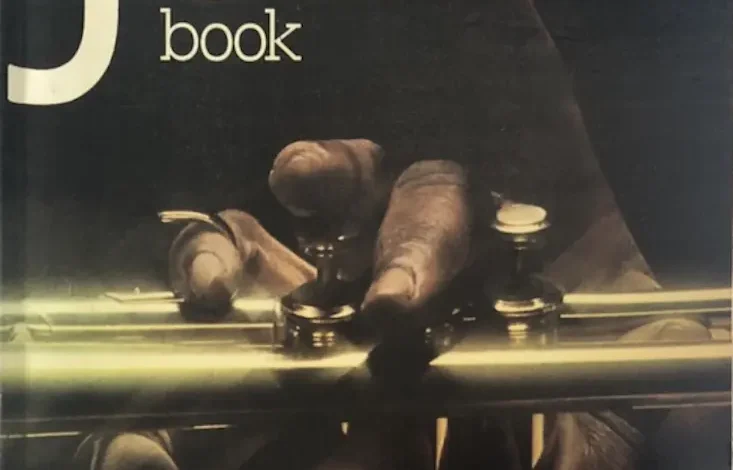
The enduring legacy of Joachim E. Berendt’s seminal work, The Jazz Book, continues to influence the global discourse on improvised music following its latest reprint. Originally introduced to the United Kingdom market in 1983 and subsequently released in paperback in 1984, the text remains one of the most exhaustive surveys of the genre ever compiled. Spanning the evolution of jazz from its origins in New Orleans to the contemporary avant-garde, the work serves as both a primary reference guide and a philosophical treatise on the social functions of musical improvisation.
A Chronology of a Definitive Text
The origins of Joachim E. Berendt’s research trace back to the mid-20th century, a period when jazz was transitioning from a popular entertainment form into a recognized art form of significant academic interest. Berendt, a German music journalist and critic, first published the German edition of the book, titled Das Jazzbuch, in 1953. Over the subsequent decades, the book underwent numerous revisions to reflect the rapid shifts in musical style, ranging from the swing era and bebop to the rise of free jazz and fusion.
The 1983 UK publication served as a landmark moment for jazz historiography in the English-speaking world. By providing a structured, 530-page analysis of the genre, Berendt offered a comprehensive roadmap for both novices and scholars. The subsequent 1984 paperback release further democratized the information, cementing its place on the shelves of university libraries, conservatories, and private collections. Its continued availability in print—decades after its inception—speaks to the structural integrity of Berendt’s original research and the timeless nature of the musical traditions he documented.
Analytical Framework and Methodology
Berendt’s methodology relies on a dual approach: technical analysis and socio-political contextualization. The book provides detailed profiles of major and minor figures in jazz history, ranging from foundational innovators such as Louis Armstrong and Duke Ellington to the more experimental voices of the late 20th century. By deconstructing the roles of various instruments—the saxophone, the trumpet, the piano, and the rhythm section—Berendt offers readers a technical vocabulary with which to understand the mechanics of improvisation.
What distinguishes this work from other encyclopedic volumes of the era is Berendt’s willingness to engage in speculative discourse. He balances a rigorous investigative approach with a subjective, almost religious, fervor for the music. While he often presents his own opinions on the relative quality of specific jazz movements, he provides riders and qualifications for his assertions, signaling a clear commitment to impartiality. This tension between his personal advocacy for certain styles and his duty as a chronicler creates a dynamic reading experience that is both informative and provocative.
The Socio-Political Philosophy of Jazz
A central pillar of The Jazz Book is the author’s perception of jazz as an expression of political and societal values. Berendt famously frames his analysis through an enlightened liberal lens with distinct socialist leanings. He argues that jazz is fundamentally an art of individual liberation, where the performer’s personal voice is prioritized over the rigid structures of traditional Western orchestral orthodoxy.
In his examination of free collective improvisation, Berendt draws direct parallels to Marxist theories of labor and cooperation. He posits that the interaction between musicians in a jazz ensemble—where each individual contributes to a larger whole without surrendering their autonomy—mirrors an idealized form of social organization. Furthermore, he critiques the "bourgeois" tendency to consume art as a passive act of self-affirmation. For Berendt, jazz is a tool for discovery, demanding that the listener engage in an active, intellectual, and emotional process of exploration alongside the performer. These theoretical assertions, while occasionally dismissed as sophistry by more conservative critics, provide a necessary intellectual framework for understanding why jazz evolved into a global medium for civil rights, protest, and artistic autonomy.
Supporting Data and Statistical Scope
The scale of the 530-page volume is significant, offering a level of depth that remains rare in contemporary music publishing. The book covers:
- Historical Eras: Comprehensive sections on New Orleans jazz, the Swing era, Bebop, Hard Bop, Cool Jazz, and Free Jazz.
- Instrumental Breakdown: Detailed chapters on the evolution of brass, reed, and percussion techniques.
- Indexical Utility: The inclusion of an exhaustive index allows the text to function as a functional reference tool, enabling students to track the career trajectories of musicians across multiple decades.
- Global Reach: The book accounts for the internationalization of jazz, acknowledging how musicians in Europe and beyond adapted the American-born art form to their own cultural contexts.
Critical Reception and Implications
The reception of The Jazz Book has been largely defined by its ability to provoke debate. Critics have noted that while Berendt’s assessments of certain artists may be polarizing, they remain consistently credible and grounded in a deep familiarity with the source material. By treating jazz not merely as a sequence of notes but as a living, evolving culture, Berendt forced a reevaluation of how music critics should approach their subject matter.
The implications of this book extend beyond the jazz community. It serves as a study of how cultural history is written and preserved. By documenting the "perceptive pen portraits" of musicians, Berendt ensured that the oral histories and informal traditions of the jazz world were codified for future generations. For educators, the text provides a structured way to teach the complexities of improvisation, ensuring that the nuances of swing, syncopation, and harmonic progression are not lost to time.
Broader Impact on Music Historiography
The legacy of Berendt’s work is evident in the current academic climate surrounding musicology. The Jazz Book established a template for the "general reference work" that is both readable and intellectually rigorous. It moved the genre away from simple biographical sketches toward a more holistic view of music as a reflection of its time.
As the industry moves further into the digital age, the value of such comprehensive physical volumes becomes increasingly apparent. While online databases offer immediate access to information, they often lack the cohesive narrative voice and thematic consistency found in a single-author work like Berendt’s. His ability to synthesize the political, the technical, and the personal into a single, accessible format remains a high-water mark for music journalism.
Future Outlook and Final Assessment
As new editions of The Jazz Book continue to circulate, the work serves as a reminder of the importance of maintaining a historical perspective in an industry prone to rapid, often superficial, changes. Whether one agrees with Berendt’s Marxist interpretations of improvisation or his preference for expression over technical precision, the sheer breadth of his research is undeniable.
For the serious student of music, the book remains an indispensable resource. It challenges the reader to look beyond the surface of a performance and to consider the social, cultural, and political stakes inherent in the act of playing jazz. With its latest reprint, the text is poised to educate a new generation of listeners, ensuring that the legacy of the innovators documented by Berendt continues to inform the future of the genre. The Jazz Book is not merely a chronicle of the past; it is a vital tool for understanding the ongoing evolution of one of the 20th century’s most significant artistic movements.