Gabriel Zucker Presents The Delegation: A Masterclass in Avant-Garde Modern Jazz and Genre-Defying Composition

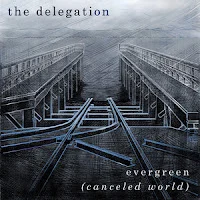
The contemporary music landscape is frequently defined by rigid genre classifications, making boundary-pushing debuts all the more striking when they arrive. Pianist, composer, and vocalist Gabriel Zucker has officially stepped into the spotlight with the debut release of his large ensemble, The Delegation. This ambitious project challenges conventional listening habits by weaving seemingly disparate sonic elements into a cohesive, highly intellectual, and emotionally resonant auditory experience. Released to critical intrigue, the album represents a significant milestone in modern avant-garde jazz, successfully bridging the gaps between chamber music, contemporary big band arrangements, pop sensibilities, and electronic soundscapes.
Main Facts of the Release
The Delegation operates as a large-scale ensemble featuring a diverse roster of talented musicians capable of navigating complex, shifting arrangements. Gabriel Zucker, a notable figure in New York’s creative music scene, conceived the project to explore the intersections of structured composition and improvisational freedom. The core of the album’s appeal lies in its cascading structures—sounds shaped from ideas that initially exhibit little direct relation to one another, yet remain firmly bound by the overarching thoughtfulness of the ensemble’s execution.
Listeners are immediately confronted with a collection of randomized soundscapes that quickly congeal into a world of modern musical outbursts. The compositions frequently feature short melodic fragments that reflect and distort earlier passages, creating an internal dialogue within the tracks. Influences are cyclical, drawing heavily from the traditions of modern big band jazz, intricate chamber instrumentation, structural pop hooks, and avant-garde vocal techniques augmented by subtle electronics and digital effects.
The resulting sound is a delicate melding of harmonic colors that circle upon themselves, frequently blurring the lines between individual instruments and sections. While the album offers intense surges of rhythmic and dynamic energy, it also balances these moments with profound tranquility, acting as an unpredictable map for the listener’s journey.
Chronology and Development of The Delegation
The genesis of Gabriel Zucker’s large ensemble traces back to several years of compositional development within the vibrant New York City underground jazz and improvised music communities. Zucker, whose background includes studies in both philosophy and music, spent considerable time conceptualizing a project that could reflect the chaotic, fast-paced nature of modern life without sacrificing compositional rigor.
Phase One: Concept and Writing (2014–2015)
During this foundational period, Zucker began drafting the expansive scores that would form the bedrock of The Delegation. Drawing inspiration from contemporary classical composers as well as jazz innovators like Charles Mingus and Maria Schneider, he focused on creating a framework flexible enough to accommodate both strict notation and spontaneous group improvisation.
Phase Two: Ensemble Assembly and Workshops (2015–2016)
Zucker curated a cast of exceptional instrumentalists and vocalists drawn from the upper echelons of the contemporary creative music scene. Rather than relying on a standard big band lineup, he integrated strings, woodwinds, and specialized electronic performers, holding private workshops to test the limits of the complex charts.
Phase Three: Live Premieres and Refinement (2016–2017)
The ensemble debuted several of these intricate pieces in prominent New York jazz venues and performance spaces. These live performances served as a testing ground, allowing the composer to gauge audience reactions and fine-tune the dynamic interplay between the 15-plus members of the orchestra.
Phase Four: Official Studio Recording and Release (2017–Present)
Culminating years of planning, the ensemble entered the studio to capture the dynamic breadth of the project. The resulting debut album serves as the definitive statement of Zucker’s early compositional era, bringing his sprawling avant-garde vision to a broader international audience.
Supporting Data and Musical Architecture
Analyzing the structural components of The Delegation reveals a meticulous approach to large-ensemble arrangement. The music relies heavily on polyrhythms, microtonal inflections, and layered textures that defy standard 4/4 time signatures and conventional chord progressions.
- Instrumentation: The ensemble typically features a core rhythm section (piano, bass, drums), an expanded horn section (trumpets, trombones, saxophones), string elements (violins, cellos), and multi-instrumentalists handling electronics and avant-garde vocal duties.
- Dynamic Range: Decibel levels across the album fluctuate dramatically, shifting from delicate, near-silent ambient passages featuring bowed cymbals and muted trumpet whispers to thunderous, full-ensemble climaxes driven by aggressive percussion and distorted synthesizer patches.
- Form and Variation: Unlike traditional jazz compositions that follow an AABA head-solos-head format, Zucker’s pieces utilize through-composed structures where recurring motifs appear transformed, fragmented, or completely inverted by the time they reach the latter halves of the tracks.
The Question of Cohesion
A central philosophical query raised by the music of The Delegation is whether traditional cohesion is necessary for a deeply moving auditory experience. Throughout the album, listeners may find themselves questioning if it is better to seek an overarching narrative or simply surrender to the immediate impact of the present moment. The music acts as a visceral journey where the destination is secondary to the psychological and emotional states experienced during transit.
This thematic exploration finds its ultimate resolution in the album’s final track, “Yellow Paint (Summaries II) / End Of Time (Canceled II).” Within this monumental concluding piece, the disparate elements that characterize the earlier tracks finally converge. The accumulated tension, fragmented melodies, and stylistic contradictions dissolve into a unified statement. Here, the underlying message becomes unmistakably clear: the beauty of the work lies precisely within its chaos, and its true expression is revealed only through the collective unity of the ensemble.
Official Responses and Critical Reception
Since its rollout, The Delegation has garnered significant attention from contemporary music critics, avant-garde enthusiasts, and fellow composers. While mainstream commercial radio has largely kept its distance due to the uncompromising nature of the material, specialized jazz and experimental music publications have lauded the debut as a breath of fresh air.
Industry Analysts and Critics
Leading voices in jazz journalism have praised Zucker’s fearlessness in fusing disparate genres without sounding derivative. Reviewers have highlighted the ensemble’s precision, noting that executing scores of this magnitude requires an extraordinary level of musicianship and trust between the conductor and the players.
Audience and Community Feedback
Within the niche communities of modern creative music, the album has sparked vibrant discussions surrounding the future of large-ensemble jazz. Aficionados have pointed to The Delegation as proof that the big band format is not a relic of the swing era, but a vital, evolving medium capable of addressing contemporary aesthetic complexities.
Broader Impact and Industry Implications
The arrival of Gabriel Zucker’s The Delegation carries several important implications for the broader music industry, particularly for independent artists working outside mainstream commercial parameters.
-
Redefining Large-Ensemble Parameters
By successfully integrating elements of electronic sound design, chamber composition, and pop sensibilities into a jazz orchestra setting, Zucker provides a blueprint for how modern composers can expand the traditional big band footprint. This cross-pollination encourages younger musicians to abandon strict genre silos in favor of a more holistic approach to sound creation. -
The Viability of Complex Composition in the Digital Age
In an era heavily dominated by singles-driven streaming models and compressed audio formats, a sprawling, multi-movement avant-garde suite stands as a countercultural statement. The release proves that there remains a dedicated, attentive audience willing to engage with long-form, intellectually demanding musical narratives. -
Future Prospects for The Delegation
Industry observers anticipate that the critical success of this debut will open doors for wider touring opportunities, festival appearances, and potential institutional grants for Zucker and his ensemble. As contemporary jazz continues to absorb global and electronic influences, projects like The Delegation will likely serve as vital benchmarks for innovation.
Conclusion
Gabriel Zucker’s debut with The Delegation is more than just a collection of songs; it is a meticulously constructed sonic ecosystem that challenges both the performers and the audience. By embracing chaos, unpredictability, and radical stylistic juxtaposition, Zucker has crafted a work that captures the fragmented spirit of the modern era. Through its triumphant final movements, the ensemble proves that unity does not require the erasure of difference, but rather its harmonious embrace. As the contemporary music world continues to evolve, The Delegation stands as a shining example of what is possible when boundaries are intentionally erased in pursuit of pure, uncompromised artistic expression.
Related posts: