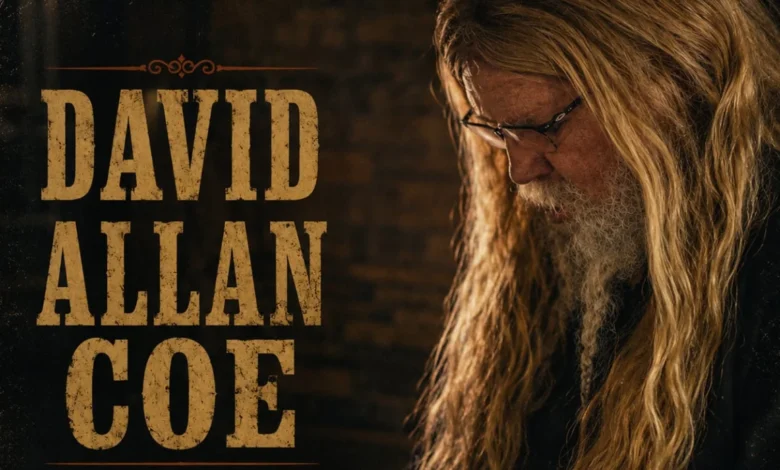
The long-shelved final recordings of outlaw country icon David Allan Coe have finally seen the light of day with the posthumous release of A Million Reasons. Originally tracked in 2017 during a twilight period of his career, the album was intended to spark a creative and commercial resurgence for the artist under the banner of Average Joes Entertainment, a prominent country-rap label founded by Colt Ford. However, shifting industry landscapes, administrative delays, and internal disputes left the master tapes gathering dust for nearly a decade. Following Coe’s passing on April 29, the project was acquired by his co-manager and former Average Joes partner, Ken Madson. Positioned neither as a meticulously planned grand finale nor as a career-defining masterpiece, A Million Reasons offers an intriguing, deeply flawed, yet unexpectedly poignant window into the final creative chapter of one of country music’s most polarizing figures.
A Complex Chronology and Shelved Origins
The trajectory of A Million Reasons mirrors the turbulent final decade of David Allan Coe’s life, a period marked by health struggles, family friction, and financial battles. In 2017, Coe entered the studio hoping to leverage the burgeoning country-rap movement to re-establish his commercial footprint. Average Joes Entertainment, known for bridging traditional rural storytelling with modern hip-hop beats, seemed a natural home for an artist who frequently laid claim to pioneering rap music decades prior.
Despite completion, the record was shelved indefinitely. As Coe stepped back from public life, questions surrounding his catalog, health, and estate management cast a shadow over his legacy. The master recordings eventually found their way to Ken Madson, who kept the material under wraps until after the artist’s death. Far from a polished swan song designed to cement a pristine historical legacy, the release of A Million Reasons serves primarily to fill the chronological gaps of Coe’s final active years in the recording studio, presenting an unvarnished and idiosyncratic portrait of an aging outlaw musician navigating changing genres.
Musical Analysis and Track Breakdown
Musically, A Million Reasons straddles multiple stylistic divisions, landing awkwardly across traditional country, southern rock, and modern country-rap idioms. Reviewers and longtime followers who approached the release with tempered expectations found a project that defies easy categorization—alternating between missteps and moments of genuine clarity.
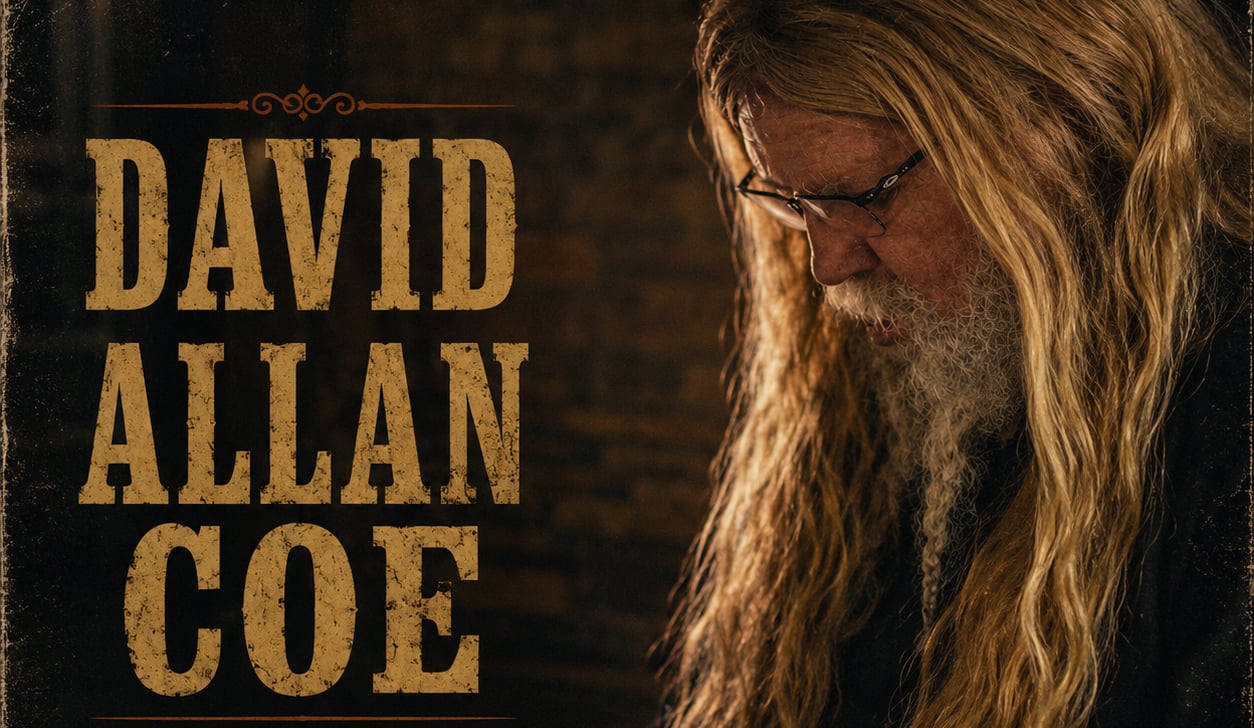
The record opens with an unnecessary and widely criticized spoken-word introduction by professional wrestler Ric Flair, a stylistic choice that adds little substantive value to the project. This is followed by a superfluous re-recording of Coe’s signature track, "You Never Even Called Me By My Name," which struggles to recapture the effortless charm of the 1975 original. Similarly, "Roll Me a Smoke" leans heavily into a simulated Jimmy Buffett island-time aesthetic; while bolstered by impressive pedal steel guitar work, the track borders on the comical, failing to anchor its thematic ambitions.
The album’s primary foray into the genre that funded its creation—country-rap—arrives via "Free My Mind." Featuring heavy bravado, the track highlights Coe’s long-standing assertion that he was an early architect of rap music. Yet, much like his earlier collaborations with the Moonshine Bandits, the execution feels uneven, revealing an artist attempting to chase contemporary relevance rather than leaning into his timeless strengths.
Conversely, tracks like "Corner of Cash and Coe" find the singer engaging in his trademark myth-building. By explicitly linking his legacy to that of his friend and contemporary Johnny Cash, Coe indulges in self-mythology. Yet, the song is redeemed by an underlying sincerity and warmth that long-time admirers of the outlaw movement will recognize and appreciate.
Another notable inclusion is a revitalized, energetic rendition of "Take This Job and Shove It." Steering clear of past overtly aggressive or derivative stylistic choices, this version stands as a surprisingly robust and contemporary take on the working-class anthem. The title track, "A Million Reasons," anchors the emotional core of the project. Rooted in real-world adversity—specifically, a severe financial judgment handed down by the Internal Revenue Service requiring the artist to pay a million dollars in restitution—the song provides a raw, contextualized look at Coe’s late-life pressures.
Kid Rock’s Collaborative Contributions
Notably, the album features two co-writing credits from Detroit rocker Kid Rock. Steering away from the country-rap tropes found elsewhere on the tracklist, these contributions offer some of the project’s most compelling moments. "Only God Knows Why" emerges as one of the standout recordings on A Million Reasons, showcasing a deeply introspective, mature songwriting sensibility that contrasts sharply with Coe’s typical theatrical bluster.
The second collaboration, "Single Father," attempts to capture a sentimental, blue-collar narrative. While the lyricism occasionally stumbles into clunky phrasing, its earnest attempt at emotional resonance provides a sympathetic angle for listeners attuned to domestic struggles. These collaborations demonstrate that when Coe focused on traditional storytelling and personal introspection rather than genre-hopping experimentation, his late-career output retained flashes of genuine narrative power.
Legacy, Controversy, and Cultural Impact
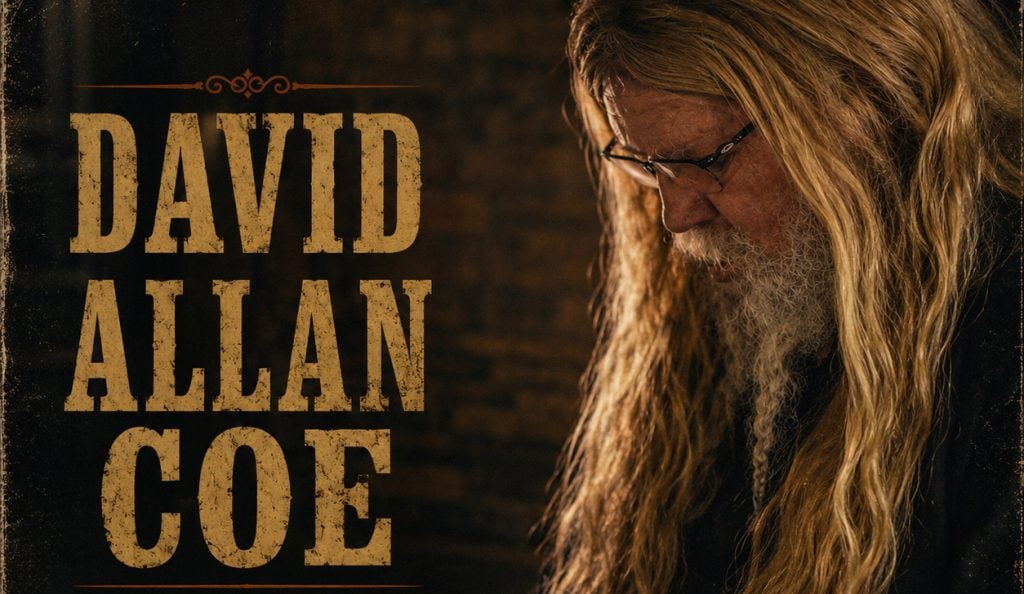
David Allan Coe’s legacy remains a complex paradox within the broader tapestry of American music. To his devoted fanbase, he will forever be celebrated as an unyielding iconoclast—a brilliant songwriter who penned enduring hits for himself and others, defying the corporate Nashville machine with uncompromising grit. To detractors, his career is inextricably tied to controversy, offensive recordings, and an unsavory public persona that overshadowed his musical contributions.
Experts note that attempts to neatly compartmentalize Coe often fail to capture the full breadth of his cultural footprint. He was simultaneously a gifted tunesmith capable of profound vulnerability and a provocateur who actively courted infamy. The release of A Million Reasons does little to fundamentally alter this dichotomous reputation, but it reinforces the permanence of the mark he left on the genre. In an era of tightly managed, algorithmically optimized country music, the unpolished authenticity of an artist like Coe is increasingly rare.
Broader Industry Implications and Final Assessment
The posthumous rollout of A Million Reasons highlights a growing trend within the music industry: the commercialization and archival excavation of legacy artists’ unreleased vaults. For independent labels like Average Joes Entertainment, releasing shelved material by a foundational figure offers both a tribute to an industry pioneer and a strategic capture of niche collector markets across traditional country and country-rap demographics.
Ultimately, A Million Reasons will not define David Allan Coe’s historical standing; that will forever rest upon his 1970s and 1980s catalog of classic recordings and landmark songwriting credits. Yet, by lifting the veil on his final studio experiments, the album grants closure to an otherwise turbulent and opaque final decade. It presents an imperfect, humanized final statement from an artist who lived entirely on his own terms—proving that even in his twilight years, David Allan Coe remained stubbornly, unmistakably himself.