Colman Domingo Delivers Scathing Critique of Elon Musk’s "Historically Accurate" AI-Generated The Odyssey Amidst Nolan’s Box Office Triumph

The cultural zeitgeist found itself once again at the intersection of technological ambition, artistic interpretation, and sharp social commentary as actor Colman Domingo delivered a viral, blistering takedown of Elon Musk’s proposal to create a fully AI-generated, "historically accurate" version of Homer’s The Odyssey. This development unfolds against the backdrop of Christopher Nolan’s critically acclaimed and commercially successful theatrical adaptation of the ancient epic, which has already shattered box office records, ironically becoming the very target of Musk’s "anti-woke" criticisms. Domingo’s pointed remarks have ignited further debate on the role of artificial intelligence in creative endeavors, the historical accuracy of mythological narratives, and the ongoing culture wars surrounding representation in art.
The Genesis of Controversy: Musk’s AI Vision for The Odyssey
Elon Musk, the billionaire entrepreneur known for his ventures in space exploration, electric vehicles, and social media, announced his ambitious plan to leverage his artificial intelligence platform, Grok AI, specifically its "Grok Imagine" feature, to produce a cinematic adaptation of Homer’s The Odyssey. The core of Musk’s proposition was a promise to deliver a "historically accurate" rendition, a direct counterpoint to what he repeatedly characterized as Christopher Nolan’s "woke" version. Musk’s criticisms of Nolan’s film centered primarily on its diverse casting, notably featuring Lupita Nyong’o as Helen of Troy and Elliot Page as Sinon. To underline his commitment, Musk had previously pinned a three-minute AI-generated preview on X (formerly Twitter), asserting that his forthcoming version would remain "true to the art of Homer." This initiative is part of a broader trend of Musk’s public engagement with cultural issues, frequently adopting a stance against what he perceives as "woke" ideologies and diversity, equity, and inclusion (DEI) policies. His pronouncements often find a significant echo chamber on the X platform, which he acquired in 2022 and has since reshaped, leading to accusations of amplifying specific narratives.
Colman Domingo’s Blistering Takedown Goes Viral
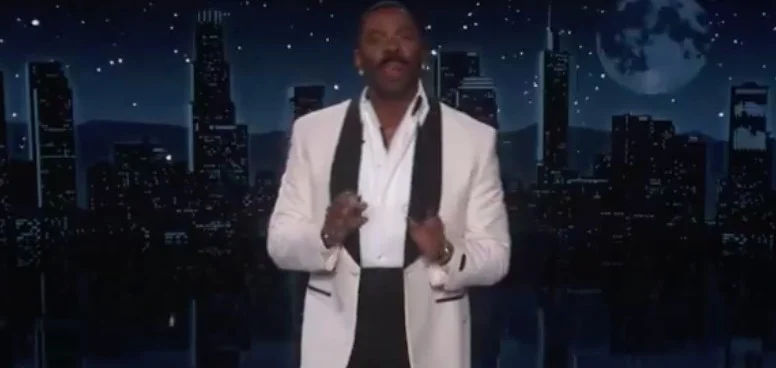
The comedic potential inherent in Musk’s "historically accurate" claim for a fantastical epic was not lost on Colman Domingo, an acclaimed actor known for his compelling performances and sharp wit. During a widely circulated public appearance on July 23, 2026, Domingo launched into a scathing critique that resonated deeply with many observers. He meticulously dismantled Musk’s premise with a combination of humor and incisive logic.
"Now Elon Musk is planning to create what he calls a ‘historically accurate’ version of The Odyssey using his Grok AI," Domingo began, setting the stage for his punchline. "And by ‘historically accurate,’ he means whiter than Christmas at Cracker Barrel." The comment immediately garnered widespread attention, highlighting the perceived racial undertones of Musk’s "anti-woke" critique against Nolan’s diverse cast. Domingo’s remark tapped into a broader societal conversation about the historical representation of classical figures and the anachronistic application of modern racial categories to ancient societies.
Domingo didn’t stop there. He then zeroed in on the fundamental flaw in Musk’s entire concept: the very nature of The Odyssey itself. "You can’t make a historically accurate version of something that is totally made the f** up. The Odyssey is fiction… like The Hunger Games*, or the president’s cognitive exams." This blunt assessment underscored the scholarly consensus that Homer’s epic is a work of mythology, populated by gods, monsters, sirens, witches, cyclopes, and a myriad of supernatural events that were never intended or presented as documented historical fact. The comparison to other well-known fictional works, even a contemporary political jab, served to emphasize the absurdity of applying a strict historical accuracy lens to a narrative steeped in divine intervention and fantastical creatures.
The Enduring Debate: Mythology Versus Documented History
At the heart of Domingo’s critique lies a foundational understanding of classical literature: The Odyssey is an epic poem, a cornerstone of Western civilization, but it is unequivocally a work of mythology. Composed possibly in the 8th century BCE, it chronicles the arduous journey of the hero Odysseus as he attempts to return home to Ithaca after the Trojan War. His decade-long voyage is fraught with encounters with divine wrath, monstrous adversaries like the Cyclops Polyphemus, alluring Sirens, the sorceress Circe, and the perilous straits of Scylla and Charybdis. These elements are not historical records but rather allegorical narratives, cultural memory, and imaginative storytelling that reflect the values, fears, and cosmological understanding of ancient Greek society.
Classicists and literary scholars have long affirmed that while epic poems like The Odyssey might contain echoes of historical events or cultural practices, they are not historical documents in the modern sense. The concept of "historical accuracy" as applied to such a work is problematic and often misinformed. Furthermore, the notion of "racial purity" or specific racial identities as understood in contemporary terms did not exist in ancient Greece in the same way. Ancient societies were complex tapestries of different peoples, cultures, and traditions, and attempts to impose modern racial categories onto them often lead to anachronistic and often racially charged interpretations. The diverse appearances and origins of figures in the ancient world, including those of the Mediterranean basin, defy simplistic categorizations.
Christopher Nolan’s The Odyssey: A Box Office Phenomenon and the "Woke" Accusation
In stark contrast to Musk’s theoretical AI endeavor, Christopher Nolan’s live-action adaptation of The Odyssey has not only materialized but has also achieved monumental commercial and critical success. Released in July 2026, the film instantly captivated audiences worldwide, demonstrating the enduring appeal of Homer’s narrative when brought to life by a visionary director. It opened with an astounding $123.5 million domestically and $139.6 million internationally, culminating in a massive $264.1 million global debut. This performance marked the biggest worldwide opening of Nolan’s illustrious career, surpassing even his previous record-holder, The Dark Knight Rises. It also secured its place as the third biggest opening for an R-rated film ever and the biggest opening for a live-action film in 2026, all against a production budget of $250 million.
Despite this resounding success, Nolan’s film became a primary target for Elon Musk’s "anti-woke" criticisms. Musk, utilizing his X platform, repeatedly lambasted the adaptation for its diverse casting choices. His attacks specifically highlighted Lupita Nyong’o, an Oscar-winning actress of Kenyan descent, portraying Helen of Troy, and Elliot Page, a transgender actor, appearing as Sinon. Musk’s argument, broadly, was that these casting decisions deviated from a supposed "historically accurate" or "traditional" representation of the characters, thereby rendering the film "woke." This perspective aligns with a broader conservative cultural critique that often views efforts towards diversity and inclusion in media as an imposition of modern political agendas onto classical or established narratives.
Industry and Academic Rebuttals to Musk’s Stance
The reactions from the filmmaking community, critics, and classical scholars to Musk’s pronouncements were immediate and largely dismissive. Many pointed out the inherent contradictions and logical fallacies in his arguments. Director Scott Derrickson, known for films like Doctor Strange, was among the Hollywood voices openly ridiculing the idea of an "historically accurate" Odyssey that simultaneously condemns diverse casting.
Classicists, in particular, highlighted that the racial purity arguments make little to no sense when applied to a fantasy poem populated by demigods, magical creatures, and characters born through supernatural circumstances. They emphasized that ancient Greek art and literature frequently depict a range of complexions and features, reflecting the diverse populations and cultural exchanges of the Mediterranean world. Furthermore, the very notion of a fixed, singular "race" of ancient Greeks, as sometimes implied by "historically accurate" arguments, is a modern construct that misrepresents historical realities. The fluidity of identity and the anachronism of applying contemporary racial politics to a 3,000-year-old epic were central to their rebuttals.
Lupita Nyong’o’s Poised Response and Broader Implications
Lupita Nyong’o, whose portrayal of Helen of Troy drew specific ire from Musk, has largely maintained a composed and dignified stance amidst the backlash. She publicly stated her disinterest in engaging with the criticisms, articulating a belief that the cast of Nolan’s The Odyssey accurately represents the multifaceted world, and that criticism, regardless of its merit, is an inevitable aspect of any public artistic endeavor. Her response underscores a broader philosophy adopted by many artists who prioritize creative freedom and inclusive representation over capitulating to politically motivated critiques.
Musk, for his part, has consistently denied accusations of racism and antisemitism, maintaining that his criticism is aimed solely at what he perceives as problematic diversity, equity, and inclusion (DEI) policies. However, critics and civil rights organizations continue to accuse him of actively amplifying far-right figures, anti-immigrant rhetoric, and racialized narratives through his online platform, X. This ongoing tension highlights the significant influence public figures like Musk wield in shaping cultural discourse and the potential for technological platforms to become battlegrounds for ideological clashes. The debate around The Odyssey thus becomes a microcosm of larger societal arguments concerning representation, historical interpretation, and the responsibilities of technology leaders.
The AI Frontier: Creativity, Authenticity, and Bias
Elon Musk’s proposal to generate a film using Grok AI also opens up a critical discussion about the rapidly evolving landscape of artificial intelligence in creative industries. While generative AI technologies have shown remarkable advancements in producing text, images, and even video, their capacity to truly replicate human artistry, emotional depth, and nuanced storytelling remains a subject of intense debate.
The implications of an AI-generated Odyssey extend beyond just "historical accuracy." They touch upon:
- Authenticity and Artistic Intent: Can an algorithm truly capture the human experience, the subtleties of character development, or the profound philosophical questions embedded in Homer’s epic? Or would it merely be a sophisticated pastiche of existing data, devoid of genuine creative spark?
- Bias in Data: AI models are trained on vast datasets, and if those datasets contain inherent biases – whether racial, gender-based, or cultural – the AI-generated output will inevitably reflect and potentially amplify those biases. An AI attempting "historical accuracy" might inadvertently perpetuate outdated or discriminatory representations if its training data is not carefully curated and balanced.
- The Role of Human Creators: What does the proliferation of AI-generated content mean for human actors, writers, directors, and artists? While AI can be a powerful tool, questions arise about its potential to displace human creativity rather than augment it.
- Copyright and Ownership: The legal and ethical frameworks surrounding AI-generated content, including intellectual property rights and the definition of authorship, are still nascent and highly contested.
Musk’s promise of an AI-generated feature by the end of 2026 sets a tangible timeline for this experiment, one that will undoubtedly be scrutinized for its artistic merit, technical execution, and adherence to the very principles he claims to champion.
Conclusion: A Tale of Two Odysseys
The saga of The Odyssey in 2026 presents a fascinating dichotomy: one version, a human-led cinematic triumph by Christopher Nolan, has already captivated global audiences and achieved unprecedented commercial success, proving the enduring power of human storytelling and inclusive vision. The other, an AI-generated endeavor promised by Elon Musk, remains an ambitious concept, framed within a contentious cultural critique.
Colman Domingo’s incisive commentary served to puncture the often-inflated claims surrounding AI’s creative potential and to highlight the absurdity of applying rigid, anachronistic standards of "historical accuracy" to a foundational work of mythology. His critique, delivered with wit and conviction, resonated because it articulated the core arguments being made by artists and scholars alike: that art, especially mythology, is not a static historical document but a dynamic narrative open to diverse interpretations, and that creativity is inherently human.
As Christopher Nolan’s The Odyssey continues its reign at the box office, transforming an ancient journey into a modern cultural event, Elon Musk’s AI experiment faces the formidable challenge of not only delivering on its technological promises but also navigating the complex ethical, artistic, and cultural landscapes it has already stirred. The ongoing debate underscores a pivotal moment in both the entertainment industry and the broader discourse around technology, art, and identity, raising fundamental questions about who gets to tell stories, and how those stories are shaped by our contemporary world.