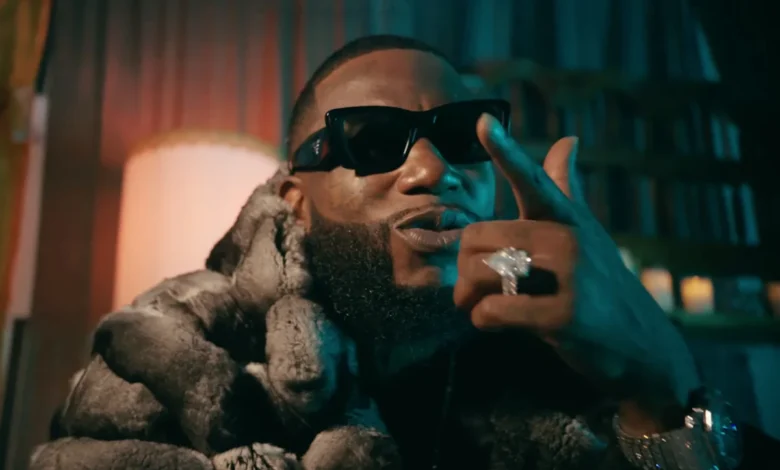
Veteran hip-hop artist and 1017 Records founder Gucci Mane has formally addressed the explosive legal and personal conflict involving his former label signees, releasing a blistering new single titled “Crash Dummy.” The track, dropped on Friday, April 10, serves as both a musical response and a factual recounting of an alleged armed ambush, kidnapping, and robbery that took place in Dallas earlier this year. The release of the song coincides with ongoing federal proceedings that have resulted in severe criminal charges, denied bonds, and intense public scrutiny regarding the relationship between major label executives and their rostered talent.
The Genesis of the Conflict: The Dallas Studio Incident
The friction between Gucci Mane, born Radric Davis, and Memphis rappers Lontrell "Pooh Shiesty" Williams and Lontrell’s frequent collaborator Big30 culminated in a violent confrontation on January 10. According to court records and testimonies presented by federal investigators, the incident unfolded during what Davis believed was a routine business meeting at a recording studio in Dallas, Texas.
Instead of a standard professional discussion, Davis and two accompanying music industry professionals were allegedly ambushed by a group numbering up to nine individuals. Investigators revealed that Pooh Shiesty allegedly brandished a firearm, forcing Davis to sign legal paperwork under extreme duress to terminate his 1017 Records recording contract. Concurrently, Big30 is accused of physically barricading the studio doors to prevent the victims from exiting or seeking assistance. During the ordeal, at least one of Davis’s associates was reportedly choked to the brink of unconsciousness, escalating the severity of the confrontation from a contractual dispute to violent felony offenses.
Chronology of Legal Developments
The unfolding legal battle has moved swiftly through the federal court system, marked by high-profile arrests and strict judicial rulings:
- January 10: The alleged armed robbery and forced contract termination take place at a Dallas recording studio. Security forces alert local law enforcement, initiating an immediate federal and local investigation.
- Early April: Federal authorities execute a sweep resulting in the arrest of nine individuals connected to the incident, including Pooh Shiesty, Big30, and Pooh Shiesty’s father, Lontrell Williams Sr.
- April 7–8: Initial bond hearings take place in federal court. Pooh Shiesty is officially denied bond by U.S. Magistrate Judge Renee Harries Toliver, who notes that the rapper was already on federal home confinement for a separate weapons conviction when the Dallas incident occurred. Big30 is granted a $100,000 bond, which is immediately stayed following an emergency motion by federal prosecutors.
- April 8: FBI Special Agent Pamela Hanson testifies that Gucci Mane and his associates cooperated fully with law enforcement, providing critical statements that shaped the federal indictment.
- April 10: Gucci Mane releases “Crash Dummy,” produced by veteran hitmaker Zaytoven, addressing the betrayal and the events of January 10 directly through his music.
Lyrical Breakdown and Artistic Response
On “Crash Dummy,” Gucci Mane utilizes the signature mid-2000s trap production style popularized by Zaytoven to deliver a stark, uncompromising narrative of the studio ambush. The veteran executive reflects on the personal betrayal of mentoring artists only to be targeted by them.
“Tell the truth, you went out like a real crash dummy / And after all that, boy, you still signed to me?” Davis raps, drawing a parallel to Cash Money Records executive Birdman. He continues by detailing the psychological pressure of the moment: “I thought it was a business meeting, but it was a set up / I walk in the room, you can feel the pressure building / N*gga dapped me up, the whole time they plotting against me.”
Davis also addresses the historical support he provided to Pooh Shiesty, pointing out his financial contributions to the Memphis rapper’s commissary during previous incarcerations. Pooh Shiesty had only recently returned to the public eye following his release from federal prison in October 2025, where he served time on unrelated firearms charges. Despite the gravity of the situation, Gucci Mane maintains a defiant stance regarding the legacy of his imprint, declaring that he built 1017 Records independently and will aggressively defend its integrity.
Federal Scrutiny and Witness Cooperation
While the release of “Crash Dummy” shifts the cultural conversation back to hip-hop’s traditional method of addressing grievances through records, the legal reality for those involved remains dire. The revelation by FBI Special Agent Pamela Hanson that Gucci Mane cooperated with federal authorities has introduced complex dynamics into the case. In the hip-hop community, executive cooperation with law enforcement frequently attracts debate, yet the violent nature of the charges—including kidnapping, armed robbery, and federal firearms violations—has shifted institutional focus heavily toward the preservation of public safety and prosecution of violent crime.
Both Pooh Shiesty and Big30 face substantial legal exposure, with potential sentences of up to life in federal prison if convicted on all counts. Because Pooh Shiesty committed these alleged offenses while on supervised release or home confinement from a prior federal sentence, his defense counsel faces an uphill battle in securing future pretrial release.
Broader Implications for the Music Industry
The situation highlights persistent vulnerabilities within the modern music industry, particularly concerning the safety of executives, artists, and studio personnel. As independent labels and major imprints alike navigate complex artist-management relationships, incidents involving physical coercion and armed disputes underscore the risks present within high-stakes entertainment environments.
For Gucci Mane, the event marks a painful chapter in his extensive career as a talent discoverer who has launched the careers of numerous multiplatinum artists. As “Crash Dummy” circulates across streaming platforms and garners widespread attention, the intersection of real-world criminal litigation and artistic expression ensures that this narrative will remain a focal point of both legal reporting and music industry analysis for the foreseeable future.