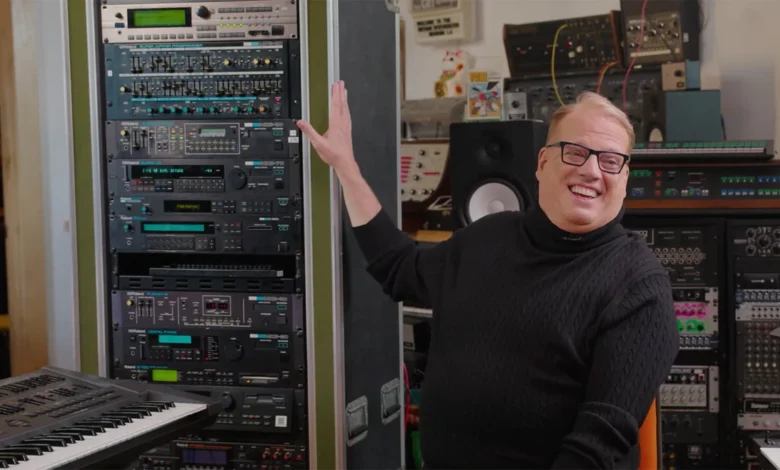
The landscape of modern electronic music is inextricably linked to the work of sound designer and software developer Eric Persing. Long before establishing Spectrasonics—a company widely recognized for producing some of the industry’s most sophisticated and commercially successful virtual instruments—Persing shaped the sonic identity of popular music through factory presets that have endured for decades. Serving as Roland’s Chief Sound Designer from 1984 through 2004, Persing engineered patches that defined entire genres, most notably the legendary "Hoover" sound, alongside enduring classics like "Fantasia" and "Soundtrack."
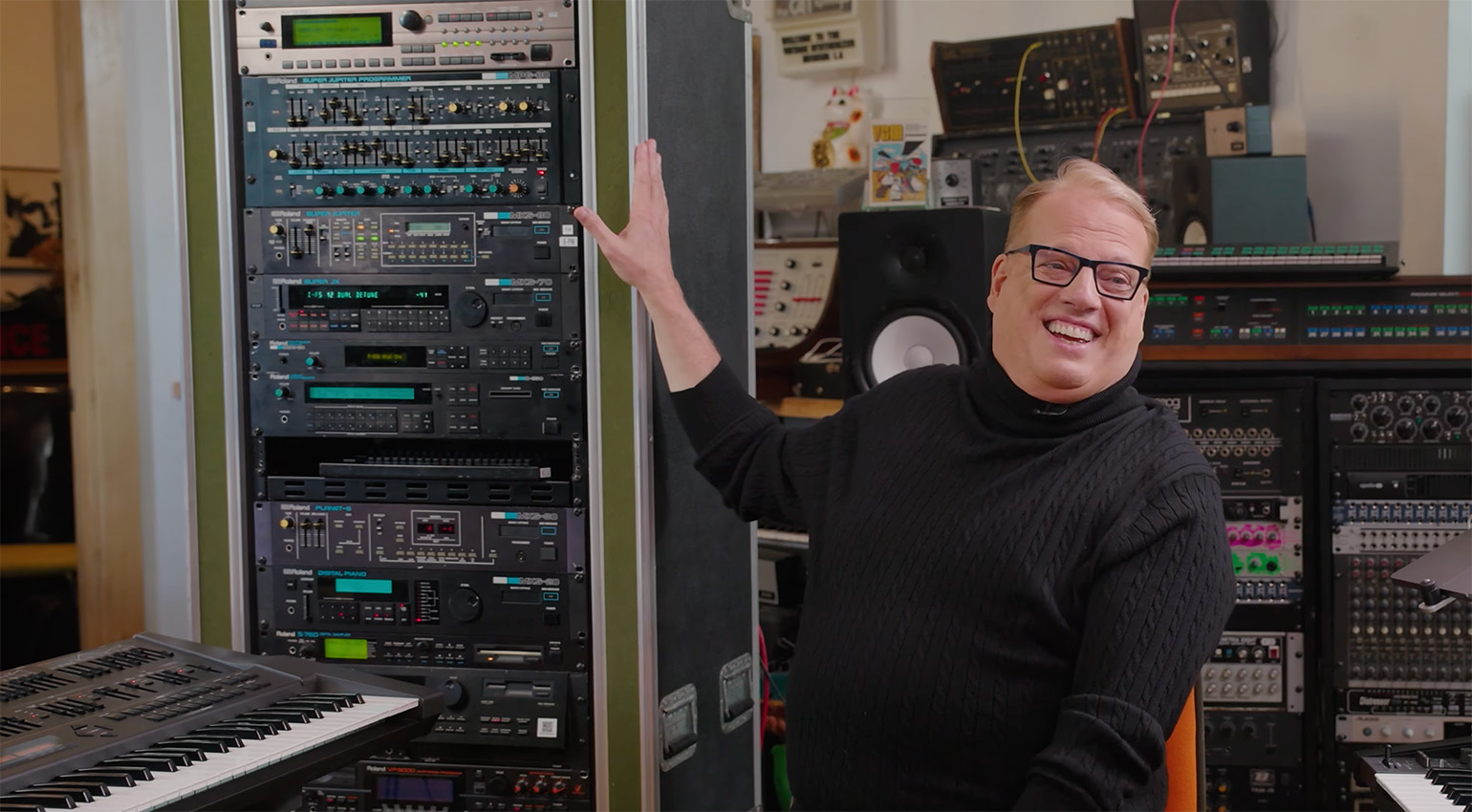
A newly released, in-depth interview conducted by fellow music technology veteran Anthony Marinelli offers a rare, comprehensive look into Persing’s storied career. Spanning an hour and a half, the conversation explores the creation of some of the most recognizable timbres in synthesizer history, shedding light on the accidental origins of cultural staples and the inner workings of a golden era in hardware synthesis.
The Genesis of a Sound Design Legacy
To understand the scope of Persing’s influence, one must examine the state of synthesizer technology in the mid-1980s. When Persing joined Roland Corporation, the industry was transitioning from monophonic analog circuits to polyphonic synthesizers and, eventually, the digital revolution catalyzed by frequency modulation (FM) and sample-playback architectures. As Chief Sound Designer, Persing was tasked with bridging the gap between complex engineering and practical usability for musicians worldwide.
His foundational work began manifesting in instruments such as the JX-8P and the groundbreaking Roland D-50, which utilized Linear Arithmetic (LA) synthesis—a hybrid of PCM sample attacks and synthesized sustaining waveforms. Persing’s factory patches for the D-50, including the shimmering "Fantasia" and the ethereal "Soundtrack," became immediate touchstones for producers across pop, film score, and ambient genres. These patches demonstrated that presets were not merely temporary demonstrations of hardware capability, but vital artistic mediums in their own right.
The Accidental Invention of the Hoover
Perhaps Persing’s most culturally significant contribution to electronic music emerged in 1985 with the release of the Roland Alpha Juno, an affordable analog polysynth that utilized digitally controlled oscillators (DCOs). While programming patches for the instrument, Persing crafted a thick, aggressive, detuned sawtooth wave lead intended as a tongue-in-cheek novelty sound. Originally given a different internal designation, the patch would eventually earn the colloquial moniker "What the…" due to its abrasive, cutting character.
More than a decade later, the patch achieved mythic status under a different name. As European distributors for Roland prepared to launch the JP-8000 virtual analog synthesizer in the late 1990s, they specifically requested that Persing recreate the iconic "Hoover" sound—a term coined by dance music producers who had obsessively sampled the Alpha Juno patch for early hardcore, rave, and techno tracks.
In the interview with Marinelli, Persing recounts his initial confusion upon hearing the request. Unfamiliar with the underground dance moniker, he investigated the term only to discover that the global electronic music community had appropriated his joke patch from the Alpha Juno and turned it into a foundational element of rave culture. Tracks by acts such as Mentasm and Second Phase cemented the patch in dance music history, proving that Persing’s sound design had transcended its hardware origins to influence global youth culture.
Chronology of a Sound Design Career
The trajectory of Eric Persing’s career mirrors the technological evolution of music production over the past forty years. A chronological overview highlights key milestones in his professional journey:
- 1984: Persing joins Roland Corporation as Chief Sound Designer, initiating an era of factory patch development that would define the company’s flagship instruments.
- 1985: The release of the Roland Alpha Juno introduces the patch colloquially known as "What the…", which later becomes universally recognized as the "Hoover" synth sound.
- 1987: Roland launches the D-50 Synthesizer. Persing’s factory presets, including "Fantasia" and "Soundtrack," set a new commercial standard for digital synthesis.
- Early 1990s: Persing contributes significantly to the architecture and sound libraries of Roland’s sample-based workstation era, including the JV and XP series, as well as the advanced digital programming of the JD-800.
- 1994: Persing launches Distorted Reality, a critically acclaimed sample library released under the Spectrasonics banner, which redefines cinematic and electronic music production through aggressive, processed acoustic and synthetic textures.
- 2004: Persing concludes his formal tenure as Chief Sound Designer for Roland to focus entirely on expanding Spectrasonics into a premier developer of virtual software instruments.
- Present Day: Spectrasonics continues to release industry-standard software instruments such as Omnisphere, Trilian, and Keyscape, maintaining Persing’s legacy of elite sound creation.
Transition from Hardware to Software: The Spectrasonics Era
While Persing’s tenure at Roland cemented his reputation in the hardware domain, his subsequent entrepreneurial venture, Spectrasonics, revolutionized the software instrument market. Founded in the 1990s initially as a sample library developer, the company transitioned into creating fully realized virtual instruments that combined massive sample libraries with advanced synthesis engines.
Products such as Stylus RMX, Trilian, and most notably Omnisphere have become staples in professional music production and film scoring studios worldwide. Omnisphere, in particular, serves as a spiritual successor to Persing’s work at Roland, offering thousands of patches that blend psychoacoustic sound design, granular synthesis, and vast multi-sampled acoustic sources. The ethos behind Spectrasonics reflects the principles Persing championed during his decades at Roland: prioritizing deep emotional resonance, playability, and sonic clarity.
Industry Impact and Wider Implications
The historical preservation of sound design methodologies—as highlighted by Marinelli’s interview—underscores a broader shift in how the music technology industry views its own heritage. For decades, factory presets were frequently dismissed by purists as commercial filler, distinct from "authentic" sound programming. However, interviews with architects like Persing validate the artistry involved in factory patch creation. These sounds provided millions of musicians with immediate access to complex sonic palettes, effectively democratizing advanced production techniques before the widespread adoption of digital audio workstations.
Furthermore, the conversation touches upon the behind-the-scenes realities of corporate product development, including lesser-known anecdotes regarding the launch of the D-50. By capturing these narratives, industry retrospectives preserve institutional knowledge that might otherwise be lost to time.
The comprehensive dialogue between Anthony Marinelli and Eric Persing serves as both an educational resource for contemporary producers and a historical archive for musicologists. It demonstrates how individual ingenuity, combined with specific technological constraints, can inadvertently spawn cultural phenomena that echo across decades of popular music history.
Related posts: