Emilie Mayer: Complete Surviving Orchestral Works Launch on Period Instruments With Volume One

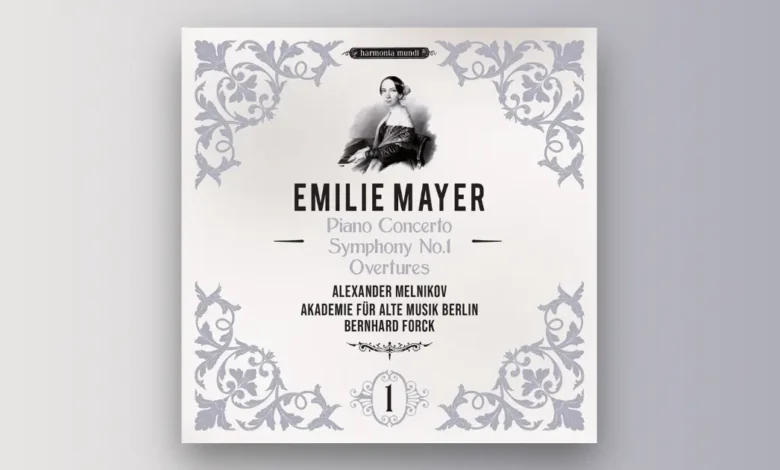
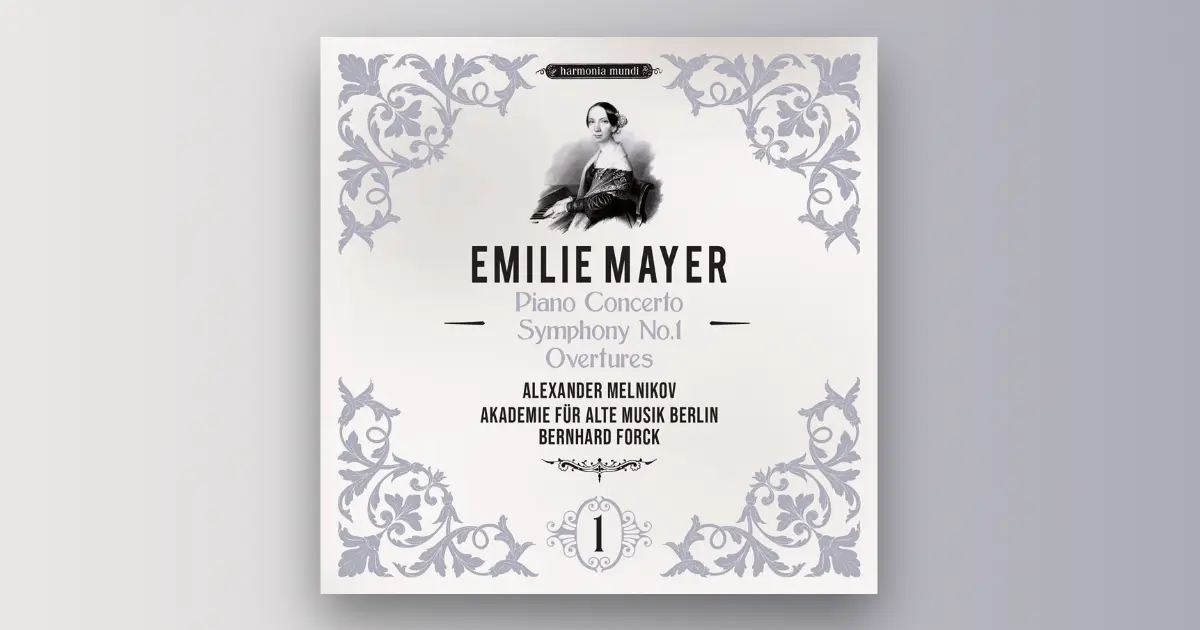
The revival of 19th-century composer Emilie Mayer has reached a significant milestone with the release of the first installment in a projected three-CD survey dedicated to her complete surviving orchestral oeuvre. Issued by Harmonia Mundi under the catalogue number HMM 905417, this inaugural album features the Akademie für Alte Musik Berlin (AAM Berlin), led by concertmaster Bernhard Forck, alongside renowned pianist Alexander Melnikov. The nearly 80-minute program includes Mayer’s Overtures in D minor and C major (No. 3), her singular Piano Concerto in B-flat major, and her First Symphony in C minor. This release arrives on the heels of a growing body of recorded evidence—most notably a four-volume series by CPO—underscoring a concerted international effort to re-evaluate Mayer’s substantial contribution to the classical music canon and elevate her standing within the Romantic orchestral tradition.
Background Context and Historical Significance
Often dubbed the "female Beethoven" during her lifetime, Emilie Mayer (1812–1883) occupied an unusual and formidable position in 19th-century German musical life. Born in Friedland, Mecklenburg, she did not begin formal, intensive composition studies until her late twenties, initially studying under Carl Loewe in Stettin and later with Marx in Berlin. Despite the systemic barriers facing women composers in the male-dominated sphere of large-scale symphonic music, Mayer cultivated a prolific output that included eight symphonies, numerous overtures, chamber music, and choral works. Her music was performed during her lifetime in major European cultural hubs such as Berlin, Munich, and Vienna. However, following her death, changing aesthetic tastes and patriarchal institutional curation led to the near-total eclipse of her scores, many of which languished in archives until late-20th and early-21st-century scholarship initiated a long-overdue reclamation project.
Chronology of the Modern Emilie Mayer Recording Movement
The contemporary reappraisal of Mayer’s orchestral catalog has accelerated dramatically over the past ten years, transforming her from an obscure historical footnote into a staple of adventurous programmatic curation:
- Early 2010s: Scholarly editions of Mayer’s manuscripts begin to circulate more widely, prompting regional German orchestras to test her symphonic works in concert halls.
- The CPO Cycle (Mid-to-Late 2010s): The CPO label releases a landmark four-CD series featuring all then-surviving orchestral music alongside a modern scholarly reconstruction of her fourth symphony, utilizing ensembles such as the NDR Radiophilharmonie and the Kölner Akademie.
- Present Day: Harmonia Mundi inaugurates a new performance paradigm by employing period instruments. The current release by AAM Berlin represents the first time Mayer’s orchestral writing has been systematically interpreted through the lens of historical performance practice.
Detailed Repertoire and Performance Analysis
The new Harmonia Mundi recording spans roughly eighty minutes of music, offering a comprehensive cross-section of Mayer’s stylistic evolution and command of large-scale forms.
The program opens with the Overtures in D minor and C major (No. 3). Both works demonstrate Mayer’s mastery of dramatic tension and concise structural architecture. While AAM Berlin delivers these overtures with technical precision, comparative listening reveals interesting interpretive divergences. Renditions of the same overtures by the Kölner Akademie under Michael Alexander Willens for the CPO label proceed at a slightly more propulsive tempo, extracting a degree of heightened theatricality from the score that edges out the period-instrument counterparts in sheer dramatic narrative.
The centerpiece of the album is Mayer’s Piano Concerto in B-flat major. Because Mayer did not date her autograph manuscripts, the precise chronology of the concerto remains a matter of scholarly debate. Nevertheless, it stands as her most overtly classical creation, heavily indebted to the structural clarity and spirited interplay associated with Wolfgang Amadeus Mozart.
In this movement, the AAM Berlin and soloist Alexander Melnikov adopt a remarkably brisk and agile approach. Clocking in as the fastest among the three existing recorded versions of the concerto, the performance showcases Melnikov dispatching the virtuosic outer movements’ filigree with deceptive, effortless lightness. The dynamic rapport between the piano and the ensemble projects an intimate joie de vivre, decisively surpassing the heavier, more earnest reading previously recorded by Ewa Kupiec with the Neubrandenburger Philharmonie under Stefan Malzew. Furthermore, Melnikov draws an extraordinary palette of colors from an 1867 Blüthner instrument, establishing a timbral authenticity that complements the period ethos of the orchestra. Yet, in the lyrical slow second movement, Kupiec’s recording retains a distinct advantage, plumbing a deeper, more resonant vein of expressive melancholy than either Melnikov or Tobias Koch on rival albums.
The Symphonic Challenge: Symphony No. 1 in C Minor
The disc concludes with Mayer’s First Symphony in C minor, a work that immediately signals a vivid and brooding compositional imagination. The opening movement commences with a solemn, slow introduction that functions as a funeral march in spirit, eventually breaking into an urgent Allegro energico.
AAM Berlin approaches the symphony with unflagging momentum and lean textures, maintaining a string complement of 7/7/4/4/3 that deliberately eschews vibrato in favor of silvery, focused articulation, paired with colorful, pungent woodwinds. However, the dry acoustic profile of the recording venue, combined with the modest numerical strength of the period string section, occasionally exposes a deficit in acoustic weight. Compared to the NDR Radiophilharmonie under Leo McFall on CPO—where the orchestral forces possess greater beef and body—AAM Berlin struggles to fully convey the terrifying emotional gulfs and dynamic turbulence built into Mayer’s scoring.
This discrepancy is particularly noticeable in the symphony’s third movement and the subsequent Adagio. While the lower strings of AAM Berlin play with admirable rhythmic vitality, they lack the sheer sonic heft of modern-instrument counterparts. Moreover, in the Adagio, conductor Leo McFall elicits a more flexible, emotionally yielding phrase structure from the NDR wind players. By permitting subtle rubato and expressive give-and-take—avenues largely restricted by concertmaster Bernhard Forck’s stricter adherence to period-informed meter—McFall draws out a profoundly melancholic strain that makes the modern-instrument interpretation ultimately more emotionally resonant.
Critical Implications and Scholarly Reception
Musicological commentary accompanying the release, written by Linus Bickmann and published by Harmonia Mundi, offers exceptional contextual framing that elevates the listening experience. The release of Volume 1 marks a critical juncture in performance practice: it tests whether 19th-century Romantic orchestral literature benefits from the historical instrument paradigm.
The findings from this recording suggest a nuanced reality. While period instruments grant Mayer’s woodwinds a distinct, fruity character and purge the textures of late-Romantic thickets, they can inadvertently compromise the dramatic gravity required by symphonic writing steeped in the Beethovenian tradition. Neither the period nor modern accounts have entirely captured the absolute pinnacle of the First Symphony’s dramatic potential, leaving room for future interpreters to bridge the gap between lean historical clarity and symphonic monumentalism.

Broader Industry Impact
The commercial viability and critical reception of Emilie Mayer: Symphonic Works, Vol. 1 point toward a broader structural shift within the classical music recording industry. Major labels are no longer treating female historical composers as tokenistic curiosities, but rather as foundational pillars worthy of multi-volume, premium-tier scholarly recordings. By committing to a complete survey on period instruments, Harmonia Mundi has validated Mayer’s craftsmanship, inviting performers and audiences alike to reassess the periphery of the 19th-century canon.
As subsequent volumes of this three-CD series are prepared for release, the benchmark has been set high. Collectors and music lovers now have multiple interpretive lenses—ranging from CPO’s sturdy modern-instrument traversals to Harmonia Mundi’s lithe, historical approach—through which to explore the enduring vitality of Emilie Mayer’s rescued legacy.