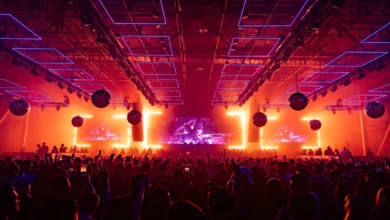
The electronic music landscape has officially expanded with the release of Durango, the long-awaited debut studio album from the Mexican producer Carlos Salame, better known by his creative alias, Trip Tease. Released through the esteemed independent label clipp.art, this 11-track collection marks a significant milestone in Salame’s career, serving as a comprehensive synthesis of his growth as an artist over the last half-decade. Durango is not merely a compilation of dance tracks; it is a sophisticated, genre-fluid exploration of sound that bridges the gap between high-energy club music and the nuanced textures of cinematic composition.
The release arrives as a culmination of years of meticulous studio work, during which Salame transitioned from the promise of his early EP releases to a fully realized sonic identity. By blending elements of house, melodic electronica, lo-fi pop, and organic soundscapes, Trip Tease has managed to curate an auditory journey that is as intellectually stimulating as it is rhythmically engaging.
A Chronology of Artistic Development
To understand the weight of the release of Durango, one must examine the timeline of Carlos Salame’s trajectory as Trip Tease. The project first gained critical attention five years ago with the release of the EP Shades. At that time, Salame was establishing a foundation in the underground electronic scene, characterized by a penchant for moody, atmospheric arrangements and a distinct attention to rhythmic detail.
Following the moderate success of Shades, the ensuing five years were defined by a period of rigorous professional development. Rather than rushing into a full-length project, Salame spent this time cultivating his craft through a series of strategic collaborations and high-profile remix projects. His work during this era saw him crossing paths with some of the most influential names in contemporary electronic and alternative music, including DJ Seinfeld, Ólafur Arnalds, Rhye, Poolside, Photay, Polo & Pan, and Kris Berle.
These collaborations provided Salame with a unique vantage point, allowing him to observe the production techniques of established industry veterans while simultaneously refining his own signature sound. This period of apprenticeship was essential, as it allowed him to transition from a producer who relied on singular, club-ready moments to an auteur capable of maintaining a cohesive narrative arc across an entire 11-track LP.
The Soundscape of Durango: A Structural Analysis
Durango is designed as a complete experience, intended to be heard from start to finish. The album opens with the track Jaguar, which establishes the record’s sonic vocabulary—a blend of polished, processed drums and warm, inviting synthesizer motifs. This opening sets a tone of anticipation, leading the listener through a landscape that is both familiar to fans of contemporary house music and elevated by experimental, organic textures.
As the album progresses, it reveals a deliberate duality between the dancefloor and the living room. Tracks like the titular pieces offer a rhythmic momentum that would feel at home in any major electronic venue, yet they are interspersed with moments of quiet introspection. Seahorse, for example, leans heavily into a nostalgic atmosphere, utilizing sweeping pads and delicate melodies to evoke a sense of longing. Conversely, Mina de Cobre delves into the hazier, more abstract corners of the record, prioritizing texture and mood over traditional structural tropes.
The album concludes with the ambient, ethereal tones of Lila. By ending the project on a meditative note, Salame underscores his desire for the listener to walk away with a lingering emotional impression. The technical composition of the album is consistent throughout; the listener encounters a recurring palette of hypnotically repeating arpeggios, layered percussive hits, and a warmth in the low-end frequencies that speaks to a high degree of audio engineering proficiency.
Strategic Context and Label Alignment
The choice to release Durango via clipp.art is a strategic move that aligns the producer with a label known for fostering experimental yet accessible electronic music. In an era where independent labels are struggling to maintain market share against major label distributors, clipp.art has carved out a niche by focusing on quality control and a highly curated artist roster.

Industry analysts suggest that the rise of independent electronic imprints like clipp.art is a direct response to the democratization of music production software. With more artists than ever before capable of producing professional-grade music from home studios, the value proposition of a label has shifted from distribution to brand building and A&R. By aligning with a label that shares his vision for sound design, Salame has ensured that Durango is presented within an ecosystem that values the nuances of his particular aesthetic.
Implications for the Mexican Electronic Scene
The release of this album also highlights the burgeoning vitality of the Mexican electronic music scene. For years, the region has been a focal point for international touring, but the emergence of producers like Salame, who are capable of producing world-class studio LPs, suggests a maturing domestic production industry.
The success of Trip Tease serves as a case study for artists in Latin America who are looking to break into the global market. By leveraging collaborations with international artists, Salame was able to gain exposure to diverse audiences, effectively building a global fanbase before his debut album was even released. This bottom-up approach to growth is increasingly common in the digital age, where social media and algorithmic discovery allow for the rapid scaling of niche projects.
Analyzing the Impact of Collaborative Production
One of the most notable features of the press release surrounding Durango is the emphasis on the producer’s previous collaborative efforts. In modern music, collaboration is often seen as a shortcut to relevancy, but in the case of Trip Tease, it appears to have been an educational process.
Working with artists as diverse as Ólafur Arnalds—a master of neoclassical piano and atmospheric electronic composition—and dance-heavy acts like Polo & Pan, provided Salame with a wide breadth of experience. This diversity is clearly audible on Durango. The album avoids the trap of monotony by incorporating elements of organic instrumentation—likely influenced by his work with Arnalds—while maintaining the driving percussion required by his background in club music.
Future Projections and Industry Reception
While the album has only recently been made available, initial industry reception suggests that Durango will likely become a touchstone for producers working within the "melodic electronic" sub-genre. The combination of lo-fi pop sensibilities with complex, processed sound design is a trend currently gaining traction in the global market, and Salame’s ability to execute this with precision positions him well for a successful touring cycle.
Furthermore, the longevity of this record will likely be measured by its streaming performance and its adoption by influential curators. Given the cinematic quality of the album’s ambient tracks, it is not unreasonable to speculate that these songs may eventually find their way into film and television licensing, further expanding the project’s reach beyond the traditional electronic music audience.
Concluding Remarks
Durango is an ambitious debut that rewards attentive listening. It is a work of patience, reflecting a five-year gestation period during which Carlos Salame grew from an aspiring producer into a refined artist with a clear sonic signature. By balancing the demands of the dancefloor with a desire for emotional depth, Trip Tease has delivered a project that stands as a testament to the current state of independent electronic music: experimental, collaborative, and globally conscious.
As the industry continues to evolve, the success of records like Durango will be vital in proving that there is still a significant audience for full-length albums that prioritize artistic cohesion over single-track virality. For those interested in the evolution of contemporary electronica, the 11 tracks contained within this release offer a compelling look at the intersection of modern production technology and classic songwriting values. Durango is currently available for digital purchase and streaming, marking the beginning of a new chapter for one of Mexico’s most promising electronic exports.