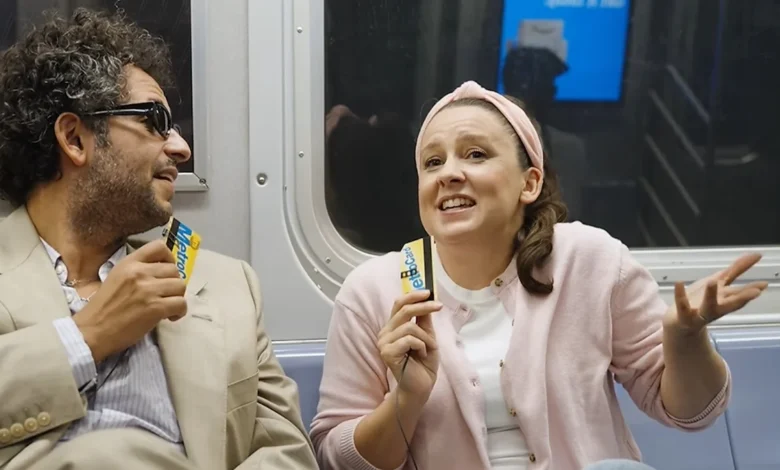
SubwayTakes with Kareem Rahma has established itself as a unique platform for high-profile figures to dispense unfiltered opinions while riding the New York City subway. The show’s most recent installment features Rachel Accurso, widely known as Ms. Rachel, the internet’s preeminent children’s educator. The episode represents a departure from her usual brand of gentle, educational programming, as Accurso leverages her platform to address systemic social issues, the historical legacy of children’s media, and, unexpectedly, the merits of urban wildlife.
The interview serves as a critical bridge for audiences who may recognize Accurso solely for her viral YouTube presence but are unaware of her background in activism and child development. Rahma, acknowledging her massive cultural footprint, framed the conversation by comparing her to the late Fred Rogers, an archetype of kindness and social conscience in children’s television.
The Evolution of Children’s Media and Nursery Rhymes
A significant portion of the discussion centered on the pedagogical and cultural responsibility inherent in children’s programming. Accurso argued for a critical re-evaluation of traditional nursery rhymes, suggesting that content creators have a duty to retire material rooted in racism or harmful tropes.
Accurso highlighted songs such as Jimmy Crack Corn, Oh! Susanna, and Eeny, meeny, miny, moe as examples of historical artifacts that contain derogatory origins and no longer align with contemporary standards of inclusivity. She emphasized that the preservation of these songs is not a requirement of cultural literacy, noting that the capacity for humanity to create new, positive, and educational music is limitless.
Beyond songs with problematic histories, Accurso challenged the narrative structure of classic nursery rhymes that model poor conflict resolution. She specifically critiqued Three Little Kittens, proposing that instead of shaming children for losing their belongings, caregivers should model collaborative problem-solving, such as retracing steps. This pedagogical shift reflects her broader philosophy: that children’s media should facilitate emotional regulation and proactive behavior rather than punitive reinforcement.
Historical Context: The Political Nature of Mr. Rogers
Accurso used the opportunity to dismantle the common, yet often ahistorical, criticism that she should avoid political discourse in favor of the model established by Fred Rogers. She provided a detailed historical analysis of Rogers’ work, arguing that his career was inherently and deeply political.
The most poignant example cited was the 1969 episode of Mister Rogers’ Neighborhood in which Rogers invited Officer Clemmons, portrayed by African American actor François Clemmons, to cool his feet in a plastic wading pool. In the context of the late 1960s, a period marked by intense civil rights struggles and the integration of public spaces, the simple act of sharing a pool was a radical statement against segregation.
Accurso further referenced Rogers’ 1969 testimony before the U.S. Senate Subcommittee on Communications. Facing a potential $10 million budget cut to the Corporation for Public Broadcasting—a move proposed by the Nixon administration—Rogers delivered a heartfelt appeal regarding the necessity of teaching children that feelings are "mentionable and manageable." His testimony is credited with securing $20 million in funding for the organization. By citing these examples, Accurso argued that the separation of "educational" content from "political" advocacy is a false dichotomy.
Advocacy for Global Children’s Rights
Accurso utilized the platform to draw attention to the severe humanitarian crises affecting children, specifically focusing on immigration detention centers in the United States and the ongoing conflict in Gaza.
Regarding U.S. detention centers, Accurso cited reports from the American Academy of Pediatrics to illustrate the psychological and physical toll of confinement on minors. She highlighted cases of medical neglect, characterizing the denial of basic hygiene and healthcare for children in custody as a violation of fundamental human rights. Her advocacy is rooted in the belief that the protection of children is a universal, non-negotiable obligation.
On the humanitarian catastrophe in Gaza, Accurso expressed frustration with the international community’s response to the reported death tolls and the systemic targeting of infrastructure, including hospitals and schools. She pointed to United Nations reports documenting the intentional harm inflicted upon children, including the deprivation of food and medical care. Her commentary emphasized that the responsibility to safeguard children transcends borders, echoing the sentiment of James Baldwin: "The children are always ours, every single one of them, all over the globe."
By engaging with these topics, Accurso is positioning herself within a lineage of educators who believe that silence in the face of human suffering is a form of complicity. Her remarks reflect an increasing trend among content creators to use their massive digital reach to influence public opinion on international policy.
Niche Interests: The Utility of Pigeons and Puppet-Run Cafes
Interspersed with these heavy topics were lighter segments that highlighted Accurso’s personality. Her defense of pigeons—an often-maligned bird species in urban centers—focused on their biological intelligence and complex social structures. She noted their ability to count, their shared parental responsibilities, and their role in urban hygiene.
This segment transitioned into a broader reflection on the decline of puppetry in modern entertainment. Accurso proposed the creation of an interactive, puppet-operated café in New York City. Beyond the novelty, she suggested that puppets offer a unique medium for communication, allowing for the delivery of social cues or boundaries in a way that is engaging for children and disarming for adults.
Analysis of Implications
The SubwayTakes interview signals a maturation of the "influencer" model, particularly within the niche of children’s education. Accurso is leveraging her audience’s trust not only to teach phonics and emotional vocabulary but to model civic engagement.
The reaction to her statements on Gaza and immigration, while polarizing in some segments of the internet, highlights a shift in how public figures manage their brands. Rather than adhering to a traditional, neutral PR strategy, Accurso is prioritizing her personal ethics. This approach carries significant risk—as seen in the backlash she has faced—but it also fosters a deeper, more authentic connection with a segment of her audience that views her activism as an extension of her educational mission.
From a media studies perspective, this interview highlights the blurred lines between entertainment, education, and activism. In an era where digital content is the primary source of information for many parents and children, figures like Accurso have become de facto community leaders. By drawing historical parallels to Fred Rogers, Accurso is effectively reframing her role as one that necessitates speaking truth to power, regardless of the potential for professional friction.
As she continues to influence the developmental trajectory of millions of children, her willingness to engage with complex, systemic issues suggests that her platform will remain a site of significant cultural contention and dialogue. The episode of SubwayTakes, while brief, serves as a comprehensive manifesto for her professional and personal values, cementing her reputation as an advocate who views the well-being of the next generation as an inextricable part of the global political landscape.