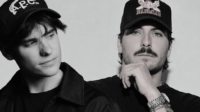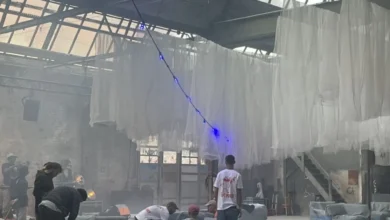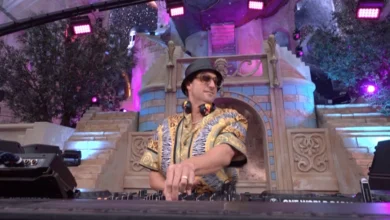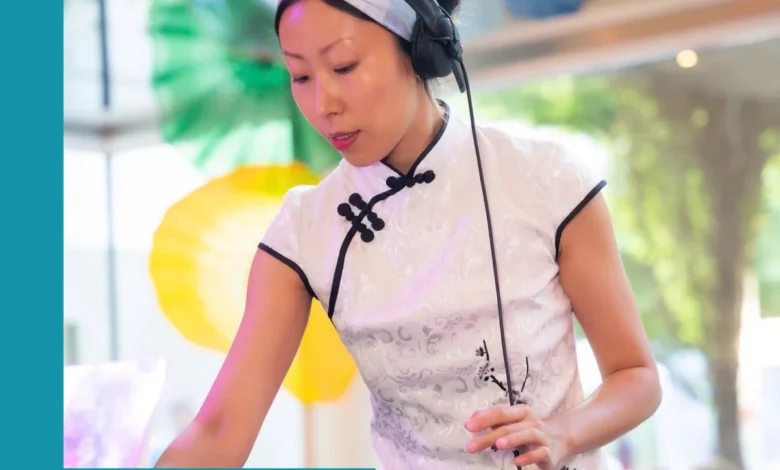
The release of EGLO.071 marks a significant addition to the Electronic Groove label’s long-running series, offering listeners a raw, unvarnished look into the soundscape of the forest rave Midnight in Nowhere. Recorded live on the event’s dedicated ambient stage, the session functions less as a conventional DJ mix and more as an immersive auditory journey. By opting for minimal post-production and editing, the artist known as Wild Wata has preserved the atmospheric nuances, environmental textures, and spontaneous energy inherent to a live outdoor performance.
Contextualizing the Midnight in Nowhere Event
Midnight in Nowhere has gained a reputation in recent years as a sanctuary for electronic music enthusiasts who prioritize deep listening experiences over high-tempo dancefloor engagement. Unlike traditional festival environments that focus on strobe lights and heavy basslines, the ambient stage at this event is curated specifically for altered states of consciousness and reflective introspection.
The forest setting acts as a natural acoustic buffer, allowing artists like Wild Wata to explore frequencies that might otherwise be lost in a high-density urban club environment. The decision to record this session live on-site serves to bridge the gap between the isolated, often ephemeral nature of forest raves and the permanent digital archive of the EGLO series.
A Chronology of Musical Synthesis
The structural integrity of EGLO.071 relies on a sophisticated sequencing strategy that bypasses standard dancefloor logic. The journey commences with the rich, modal textures of Lonnie Liston Smith, grounding the listener in a lineage of spiritual jazz that emphasizes melodic progression over percussive rigidity. This initial phase provides a meditative anchor, slowly evolving into the intricate, broken-beat rhythms favored by Atjazz and Kaidi Tatham.
As the recording enters its mid-point, the tempo and intensity shift. The inclusion of the Jazzanova remix of MJ Cole’s “Sincere” acts as a pivot point, introducing a more textured, soulful sensibility that prepares the audience for the heavier, dub-inflected rhythms of Prince Fatty, Kruder & Dorfmeister, and Tosca. This transition from jazz and soul into the deep, echoing soundscapes of dub and downtempo highlights Wild Wata’s mastery of genre-fluidity.
The final act of the session is perhaps its most distinct. In a move that defies conventional categorization, the mix shifts from contemporary electronic compositions into a passage of traditional Chinese Kunqu opera. This segment serves as a deliberate disruption of the preceding flow, leading directly into Sade’s “Cherish the Day.” The juxtaposition of classical operatic vocal techniques with the smooth, iconic delivery of Sade creates an unexpected emotional resonance, illustrating a willingness to bridge centuries and continents within a single sixty-minute window.
Data and Tracklist Composition
The diversity of the session is underscored by an extensive list of contributors, representing a wide spectrum of the global music landscape. The tracklist includes:
- Spiritual and Jazz Foundations: Lonnie Liston Smith
- Contemporary Electronic and Broken Beat: Atjazz, Kaidi Tatham, MJ Cole featuring Nova Casper and Jay Dee, and the Jazzanova remix.
- Global and Dub Influences: Srirajah Sound System featuring Molam Inteng Keawbuala, Mondo Grosso, Audiomontage, Dub Addiction, Prince Fatty, Puman featuring DJ DSK, Kruder & Dorfmeister, Gregory Isaacs, Reggae Disco Rockers, and Tosca.
- Traditional and Vocal Closures: Traditional Chinese Kunqu opera performed by Li-Ling and Sade.
This selection process reveals a commitment to what musicologists often term "global soul"—a synthesis of disparate cultural artifacts that find common ground through shared emotional registers rather than common beats-per-minute (BPM) values.

Artistic Philosophy and Official Stance
In a statement regarding the release, Wild Wata noted that the session was designed with a specific intent: “Recorded live on the ambient stage at the forest rave Midnight in Nowhere, with minimal editing and post-production. This mix is for the moon and the forest, lost souls, and those in altered states of consciousness.”
This framing highlights the importance of the environment in the creation of the mix. By resisting the temptation to "clean up" the performance, the label and the artist have validated the imperfections of a live set—the ambient noise of the forest, the subtle shifts in volume, and the raw transitions—as essential components of the work’s authenticity.
Analysis: Implications for Modern DJing
The success of EGLO.071 highlights a growing trend within the electronic music community: the shift away from hyper-produced, compressed studio mixes toward "live-capture" formats. This movement suggests that audiences are increasingly seeking transparency in production. In an era where AI-generated transitions and algorithmic playlists have become the norm, a live, unedited recording offers a form of human connection that is difficult to replicate through software.
Furthermore, the integration of Kunqu opera and traditional reggae alongside modern downtempo electronic music signals a broadening of the "ambient" genre. Historically, ambient music was defined by minimalism and textural stasis. However, recent developments in curation, as seen here, suggest that ambient music is evolving into a more inclusive category that prioritizes the effect of the music on the listener—specifically the ability to induce a trance-like or contemplative state—rather than adherence to a specific instrumental style.
Broader Impact on the EGLO Series
The EGLO label has historically been associated with a high standard of rhythmic and melodic innovation. By incorporating this live ambient session into its catalog, the label is signaling a diversification of its editorial mandate. It moves beyond the dancefloor-centric releases that characterize much of the label’s history, positioning itself as a platform for experimental and archival sound design.
For listeners, EGLO.071 provides a rare opportunity to engage with a set that demands full attention. The lack of conventional transitions means that the listener must navigate the shifts in genre themselves, mirroring the experience of being physically present in the forest. It is a work that rewards repeat listens, as the intricate layering of the diverse tracklist reveals new details with each iteration.
Concluding Reflections
As the industry continues to grapple with the tension between digital convenience and the need for authentic, grounded experiences, releases like EGLO.071 serve as a necessary counterweight. By stripping away the polish of the studio, Wild Wata has created a document that feels both ancient and futuristic.
Whether one is listening from the comfort of a home or attempting to recreate the atmosphere of the forest, the session succeeds in its primary objective: to provide a sonic space for the "lost souls" and the "altered states" that reside at the heart of the ambient music movement. The recording stands as a testament to the idea that a truly cohesive mix does not require a singular tempo or genre, but rather a singular vision—a narrative arc that begins in the spiritual jazz of the past and ends in the timeless, emotive vocals of the present, with the wind and the trees of the forest acting as the silent, ever-present co-producers of the entire event.