Family Row Breaks Out Over George Michael Items Up for Auction Including Faith Guitar

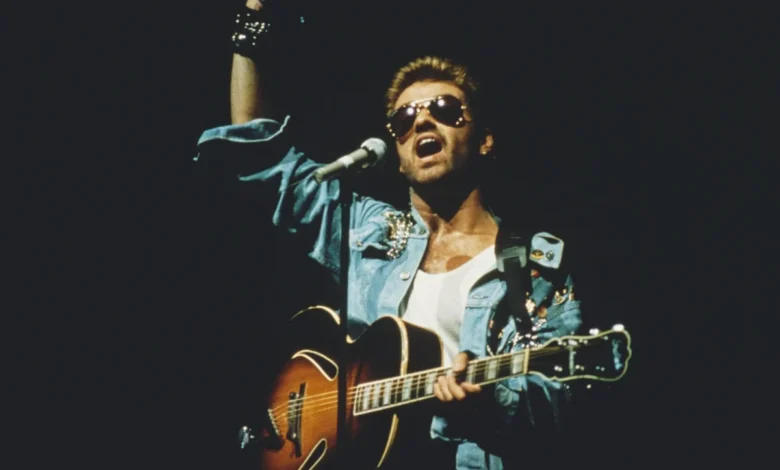
A bitter family dispute has emerged surrounding the high-profile auction of personal memorabilia belonging to the late pop icon George Michael, headlined by the guitar used in his iconic 1987 music video for "Faith." The collection, which went under the hammer at Sworders Fine Art Auctioneers, has ignited a fierce ethical and legal debate between the estranged husband of Michael’s long-serving personal assistant and her surviving biological family. The controversy underscores the complex legal vulnerabilities surrounding estates left intestate, as well as the emotional and commercial value attached to the personal artifacts of twentieth-century music legends.
The contested collection comprises an array of deeply personal and historically significant items, including gold and platinum certified records, exclusive tour programmes, personal correspondence, and the centerpiece of the sale: the Gretsch guitar gifted to Michael’s personal assistant, Siobhan Bailey, following the monumental success of his debut solo album. Bailey worked closely with the British singer-songwriter for two decades, beginning her tenure in 1984 during the height of Wham!’s global dominance and remaining a trusted confidante through the transition into his celebrated solo career.
Chronology of the Dispute and Intestacy Complications
The roots of the current controversy trace back to the sudden and unexpected death of Siobhan Bailey in 2014. According to records and family statements, Bailey passed away without leaving a valid last will and testament. At the time of her death, Bailey was in the active process of dissolving her marriage to Ian Belcher through formal divorce proceedings. However, because the legal dissolution of the marriage had not been finalized before her untimely passing, Belcher remained her legal spouse under English law.
Consequently, in the absence of a will or surviving children of her own, Belcher was designated as Bailey’s statutory next of kin. Under the strict rules of intestacy governing the jurisdiction, the entirety of her personal estate—including the priceless cache of George Michael memorabilia entrusted to her over twenty years of employment—automatically devolved to her estranged husband.
The division between Belcher and Bailey’s biological relatives crystallized when plans for the Sworders auction were made public. Siobhan’s brother, Gerard Bailey, spearheaded an aggressive campaign to halt the sale, arguing that the monetization of his sister’s private collection constituted a profound betrayal of her memory. Gerard contended that his sister would have been utterly horrified to see her cherished personal possessions commercialized, maintaining that had she anticipated her sudden death, she would have legally assigned the collection to her nieces and nephews rather than her estranged spouse.
In a formal letter directed to Sworders auction house prior to the sale, Gerard Bailey condemned the proceedings as a blatant breach of his late sister’s personal privacy and a misuse of her name for financial gain. He implored the auction house to remove her name entirely from the promotional materials and substitute it with Belcher’s, framing the decision to sell the items as an opportunistic attempt to cash in on the enduring market value of George Michael’s legacy.
Auction House Defense and Valuation Data
Defending the decision to proceed with the auction, Sworders auctioneer Guy Schooling offered a pragmatic rationale on behalf of the consignor. Schooling explained to trade publications that the memorabilia had remained stored in a domestic garage for over a decade following Bailey’s death. According to Schooling, Belcher felt compelled to part with the collection because the items could not remain indefinitely in a non-climate-controlled environment where they faced a genuine risk of environmental degradation and physical deterioration.
Despite the ethical cloud cast by the familial rift, the auction drew intense international interest from collectors, investors, and die-hard fans eager to acquire tangible pieces of pop music history. The market appetite proved exceptionally robust, with several lots significantly outperforming pre-sale estimates set by Sworders specialists.
The undisputed pinnacle of the auction was the Gretsch guitar famously wielded by George Michael in the groundbreaking music video for "Faith," which defined the visual and sonic landscape of late 1980s pop culture. Prior to the event, auction specialists projected that the instrument would command between £60,000 and £120,000. When the guitar went under the hammer, competitive bidding rapidly drove the price upward, ultimately realizing a staggering £180,000.
Other notable lots in the catalogue included a gold presentation disc commemorating Wham!’s global smash hit "Wake Me Up Before You Go-Go," which fetched £4,500; a special commemorative award presented to Michael by the Malaga City Council, selling for £1,300; and a rare, autographed copy of Queen’s collaborative "Five Live" EP once owned by the singer, which achieved a final sale price of £7,000.
Broader Context of George Michael’s Enduring Legacy
The controversy surrounding the auction arrives at a time of heightened activity and public interest regarding George Michael’s artistic legacy. The singer, who tragically passed away on Christmas Day in 2016 at the age of 53, continues to command immense cultural reverence and commercial viability within the global music industry.
Earlier this year, Michael’s former Wham! bandmate, Andrew Ridgeley, accepted the prestigious Academy Fellowship on Michael’s behalf at the Ivor Novello Awards. Speaking with media outlets, Ridgeley reflected on the timeless quality of Michael’s songwriting, emphasizing that his work resonates across generations because it engages directly with fundamental human emotions and the complexities of the human condition. Whether capturing the vibrant, youthful vitality of early Wham! hits or exploring the deeper, more introspective emotional queries of his mature solo material, Michael’s catalogue remains a cornerstone of modern pop history.
The estate and brand management teams representing George Michael have also pursued several high-profile archival and collaborative projects. Whispers of a previously unfinished duet recorded by Michael and Sir Elton John have circulated within the industry, raising hopes for a posthumous release. Meanwhile, contemporary pop artists including RAYE, Adam Lambert, Teddy Swims, and Sombr recently united on international television stages to deliver expansive, reverent musical tributes to the late icon.
Furthermore, commercial archives continue to unearth rare audiovisual material for public consumption. A newly restored concert film documenting Michael’s historic 1988 tour stop in Paris—meticulously remastered by directors Andy Morahan and David Austin—is scheduled for a widespread theatrical release, accompanied by an 18-track live album featuring previously unheard concert performances.
Analytical Implications of Intestate Memorabilia Sales
The legal and familial battle over Siobhan Bailey’s estate highlights a recurring vulnerability within the entertainment memorabilia market: the legal ambiguity surrounding personal gifts given to staff members by high-profile employers. Because high-end memorabilia is frequently transferred through informal channels—such as verbal gifts, personal tokens of appreciation, or undocumented handovers between artists and their inner circles—recipients often fail to formalize the ownership history through legally binding documentation or comprehensive estate planning.
When individuals like Bailey pass away intestate, the legal mechanisms governing marital status and next-of-kin priority routinely override informal understandings of personal intent. In this case, the lack of a documented testament left the disposition of irreplaceable cultural artifacts entirely exposed to matrimonial inheritance laws, overriding the moral claims of biological relatives who believed they were the rightful guardians of the singer’s history.
As the market for 1980s pop memorabilia continues to appreciate exponentially—evidenced by the six-figure sum commanded by the "Faith" guitar—legal experts and estate planners increasingly advise individuals closely associated with legendary artists to formalize their wishes in writing. Without proactive legal safeguards, the private tokens of musical history will continue to serve as flashpoints for estranged families, turning intimate moments of pop culture heritage into contentious courtroom and auction house battles.