Dropkick Murphys Frontman Ken Casey Slams Ed Sheeran Over Macklemore’s Tour Removal Amid Palestine Controversy

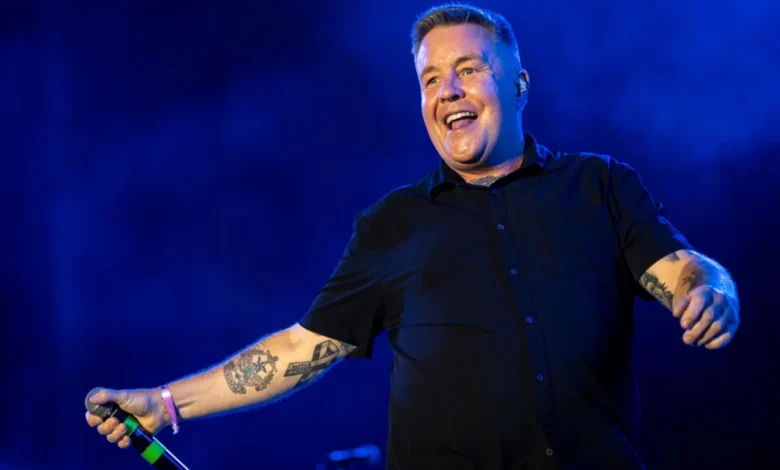
The global music industry finds itself deeply polarized following a high-profile controversy involving British pop star Ed Sheeran, American rapper Macklemore, and a cascading wave of artist boycotts stemming from geopolitical commentary on stage. The latest industry figure to weigh in is Ken Casey, frontman of the Celtic punk band Dropkick Murphys. During a recent appearance on Boston Public Radio, Casey criticized Sheeran’s handling of the situation, expressing solidarity with Macklemore and questioning the ethics of dropping a tour partner over political expression.
The controversy has ignited a broader debate about artistic freedom, corporate influence in live entertainment, and the responsibilities of headlining acts toward their supporting personnel. As multiple support acts continue to withdraw from Sheeran’s upcoming concerts, the fallout highlights the complex intersection of global politics and the multi-billion-dollar touring industry.
Chronology of Events and the Catalyst at Gillette Stadium
The controversy originated during Ed Sheeran’s ongoing tour stop at Gillette Stadium in Foxborough, Massachusetts. Macklemore, serving as the opening act, delivered an impassioned speech from the stage explicitly declaring "Free Palestine" and decrying the ongoing humanitarian crisis and military campaign in Gaza.
The remarks immediately polarized the audience and triggered swift institutional backlash. Figures such as pop star Pink and the Israeli American Council voiced public criticism of the rapper’s comments. Furthermore, Robert Kraft, the billionaire owner of Gillette Stadium and the New England Patriots, publicly condemned the speech, describing it as deeply offensive and hurtful to the Jewish community.
In response to the mounting pressure and pressure from venue ownership, Macklemore was removed from the remainder of the tour. The decision to drop the rapper set off an immediate chain reaction across the music community, leading to unprecedented pushback from other artists scheduled to appear on the bill.
Artist Boycotts and Support for Macklemore
Following Macklemore’s dismissal, Ed Sheeran’s upcoming "Loop" shows experienced a mass exodus of supporting talent. A growing roster of artists and bands opted to pull out of the tour in solidarity with the rapper.
Among those withdrawing were FINNEAS, Lukas Graham, Aaron Rowe, Beoga, BIIRD, and Myles Smith. Irish trad-folk band BIIRD released a statement asserting that they stood unequivocally behind every word Macklemore uttered. Similarly, Myles Smith emphasized the devastation witnessed by Palestinians, stating that the humanitarian toll was impossible to ignore.
The backlash extended far beyond the immediate tour lineup. Veteran acts such as Pink Floyd co-founder Roger Waters and trip-hop pioneers Massive Attack criticized Sheeran’s neutrality. Massive Attack argued that neutrality in the face of widespread civilian casualties fails to constitute true neutrality, while Waters praised Macklemore for taking a principled stance.
Ken Casey and the Dropkick Murphys Perspective
Adding his voice to the growing chorus of industry critics, Ken Casey used his interview on Boston Public Radio to articulate the code of camaraderie traditionally upheld in rock and punk touring circles. Having fronted the Dropkick Murphys for three decades, Casey emphasized that bands on the road operate as an interconnected family.
"I know that, as a musician for 30 years, anytime we’ve gone on tour we’ve selected the bands that have opened for us — that’s brotherhood, sisterhood, that’s family," Casey stated. "You live or die with the people you bring on the road. They’re your people."
Casey criticized Sheeran for failing to stand by his tour partner, regardless of the underlying controversy. "And the fact that Ed Sheeran took the knee, no matter what the cause is, and not stood with his fellow tour partner, just doesn’t, you know, sit right with me. And that’s not how Dropkick Murphys would operate."
Drawing parallels from his own career, Casey recalled instances where the Dropkick Murphys faced professional repercussions for political statements. He noted a recent performance at the Rocklahoma Festival where outspoken criticism of the Trump administration prompted a walkout by approximately half the audience. Despite being informed afterward that the remarks angered site management and jeopardized future bookings, Casey maintained that standing by artistic convictions remains paramount.
"All the artists I loved as a kid, no matter what, it was that they stand by what they sing about," Casey said. "Once you let that go, then you don’t have any worth in your music if you ask me."
Ed Sheeran’s Response and Financial Fallout
As pressure mounted, Ed Sheeran issued a public statement addressing the controversy. The singer-songwriter stated that he was "not complicit" and expressed being "appalled by the conflict between Israel and Palestine," viewing the suffering and pain experienced on both sides as an absolute tragedy.
Despite his clarification, the fallout heavily impacted his public profile and digital presence. Analytics following the incident revealed that Sheeran lost over 200,000 Instagram followers in the immediate aftermath, while Macklemore experienced a surge of over 1.6 million new followers. Sheeran has not yet issued a formal response to the decisions made by his former support acts to pull out of the tour.
Financial Donations and Philanthropic Reactions
Financial dimensions of the dispute also emerged, marked by significant charitable contributions tied to the controversy. Macklemore announced that he would donate his entire $1 million earnings from the Ed Sheeran tour directly to Palestinian relief efforts.
In response, Gillette Stadium owner Robert Kraft pledged to match the contribution with a $2 million donation aimed at providing humanitarian aid in the region. These financial maneuvers underscored the immense financial stakes and polarized philanthropic responses surrounding public figures taking political stances during major commercial tours.
Broader Implications for the Live Music Industry
The clash between Ed Sheeran, Macklemore, and the wider music community serves as a watershed moment for the live entertainment industry, illuminating the delicate balance between commercial interests and free expression.
Historically, touring acts, venue operators, and corporate sponsors have navigated political commentary with caution to avoid alienating segments of the consumer base. However, the events surrounding the "Loop" tour demonstrate that contemporary artists and audiences increasingly expect transparency and ideological consistency.
When headliners or venue stakeholders penalize artists for expressing political viewpoints, the ensuing solidarity networks—as evidenced by the departure of multiple support acts—can disrupt major commercial operations entirely. The willingness of artists like Macklemore to forfeit tour revenue, coupled with vocal rebukes from established figures like Ken Casey, Roger Waters, and Massive Attack, suggests that political discourse within the arts is becoming a central battleground.
Furthermore, the incident raises systemic questions regarding contractual obligations, the autonomy of opening acts, and the degree of influence venue owners hold over artistic content. As the music industry continues to grapple with global humanitarian crises, the precedent set by this tour cancellation may permanently alter how booking contracts, rider agreements, and artist relations are managed in the future.
Conclusion
The ongoing controversy surrounding Ed Sheeran’s tour illustrates the profound complexities of modern celebrity activism and live event management. While Ed Sheeran maintains his stance of neutrality and laments the broader tragedy of the conflict, the artistic community remains deeply divided over the obligations of solidarity. Through the pointed criticisms of veterans like Ken Casey, the decisive actions of boycotting support acts, and the unprecedented public mobilization around Macklemore, the episode cements itself as one of the most divisive cultural flashpoints of the contemporary touring era.