Catalonia Pardons Hundreds of Women Executed for Witchcraft as Region Seeks to Address Historical Gender Violence

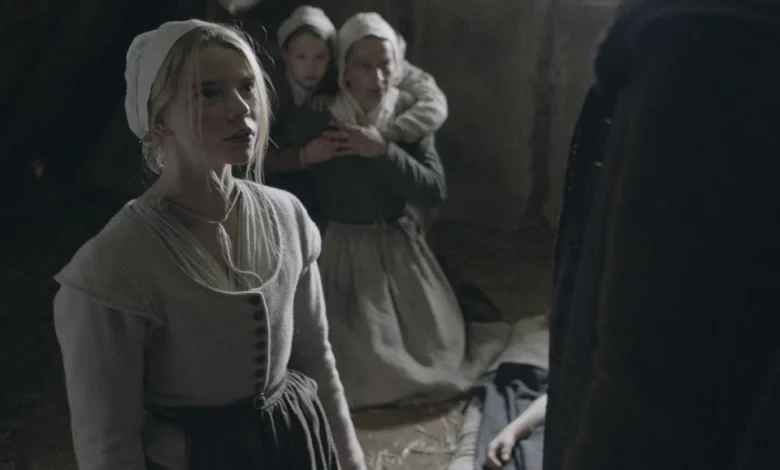
In a landmark move intended to reconcile with a dark chapter of its medieval and early modern history, the Parliament of Catalonia has passed a resolution to posthumously pardon more than 700 individuals—the vast majority of them women—who were prosecuted, tortured, and executed for the crime of witchcraft between the 15th and 18th centuries. The measure, which was approved in late 2021 with an overwhelming majority of 114 votes in favor and 21 against, represents one of the most comprehensive efforts by a European government to acknowledge the systemic nature of the witch hunts that once plagued the continent. Beyond the formal pardon, the resolution encourages local municipalities across the northeastern Spanish region to rename streets and public squares in honor of the victims, effectively shifting the historical narrative from one of "sorcery" to one of institutionalized femicide.
This legislative action is the culmination of years of historical research and advocacy by feminist groups and historians who argue that the witch trials were not merely the result of superstition, but a targeted campaign against women who challenged social norms. The "No eran brujas, eran mujeres" (They weren’t witches, they were women) campaign served as a catalyst for the parliamentary debate, highlighting that those executed were often healers, midwives, or women who lived independently of traditional patriarchal structures.
The Historical Context of Catalan Witch Hunts
While the Salem witch trials of 1692 are perhaps the most famous in the popular imagination, Catalonia holds the grim distinction of being one of the first regions in Europe to carry out organized witch hunts. Historians have identified the "Ordinacions d’Àneu," a set of laws enacted in the Pyrenean valley of Àneu in 1424, as the first legal text in Europe to formalize the crime of witchcraft. These laws laid the groundwork for a period of intense persecution that predated the more widespread European "Great Witch Hunt" of the 16th and 17th centuries.
Unlike other parts of Spain, where the Spanish Inquisition often viewed accusations of witchcraft with skepticism, Catalonia’s trials were frequently conducted by secular, local courts under the jurisdiction of feudal lords. The Spanish Inquisition, centralized and bureaucratic, often demanded a higher burden of proof and tended to view witchcraft as a delusion rather than a pact with the devil. In contrast, rural Catalonia’s local justice systems were susceptible to community hysteria and the whims of local authorities. In these secular courts, a confession obtained through torture was often the only evidence required for a death sentence.

The geography of Catalonia also played a role. The mountainous regions of the Pyrenees were isolated, allowing local superstitions and feudal power to go unchecked by the moderating influence of the central church or state. Between 1618 and 1622 alone, a period of extreme social stress due to crop failures and disease, more than 100 women were executed in the region.
The Profile of the Persecuted
The individuals targeted during these centuries were rarely the "witches" depicted in folklore. Instead, they were typically members of the community who occupied specific social niches. Many were practitioners of traditional folk medicine, utilizing herbal remedies to treat ailments in villages where professional physicians were non-existent. Others were midwives, whose proximity to the mysteries of birth and the tragedy of infant mortality made them easy targets for blame when things went wrong.
Data suggests that between 1580 and 1630, the height of the hysteria across Europe, approximately 50,000 people were sentenced to death for witchcraft. Roughly 80 percent of these victims were women. In Catalonia, the profile was consistent: the accused were often elderly women, widows, or those without a male protector.
The triggers for an accusation were almost always rooted in environmental or social catastrophe. A sudden frost that killed the grapevines, a plague among livestock, or the unexplained death of a child would lead a community to seek a scapegoat. Once a woman was accused, she was often subjected to "tests" such as dunking in water or searching for "the devil’s mark" on her skin—physical abnormalities that were used as proof of her guilt.
The Legal and Economic Mechanics of Execution
The method of execution in Catalonia also reflected the secular and practical nature of the trials. While the popular image of a witch trial ends with a burning at the stake, many victims in Catalonia were hanged. This was not a gesture of mercy, but rather one of economic efficiency. Secular courts found that hanging was significantly cheaper than burning, as it did not require the procurement and transport of large quantities of firewood, which was a valuable commodity.

The legal process was heavily weighted against the accused. Once the "witch hunters"—often professional itinerants who were paid for each conviction—arrived in a village, the atmosphere of fear made it difficult for anyone to speak in defense of the accused. The Inquisition, when it did intervene, often acted as a surprising source of leniency. In 1610, following the infamous Logroño trials, the Inquisition issued a decree of silence, suggesting that the more people talked about witchcraft, the more "witches" appeared to exist. However, because Catalonia’s trials were largely local and secular, these moderating decrees were often ignored.
Political and Social Reactions
The 2021 pardon has sparked significant debate within Catalonia and across Spain. Jenn Díaz, a member of the Catalan Parliament for the ERC (Republican Left of Catalonia) party, has been a vocal proponent of the measure. Speaking to various news outlets, Díaz emphasized the connection between historical witch hunts and modern violence against women.
"We are the heiresses of the witches, the poisoners, and the healers," Díaz stated during the parliamentary session. She argued that the same impulses that drove the witch hunts—misogyny, the fear of female autonomy, and the need to control women’s bodies—persist in the modern era. "Today they call us ‘feminazis’ for defending our rights. There is a direct line between the witch hunts of the 17th century and the femicides of the 21st century."
While the measure passed with a large majority, the 21 votes against it came primarily from right-wing and far-right parties, who argued that the parliament should focus on contemporary issues rather than "re-litigating" the distant past. Critics of the measure suggested that posthumous pardons for events that occurred 400 years ago are a form of "symbolic politics" that does little to address the region’s current economic or social challenges.
A Growing Global Movement for Reparation
Catalonia is not alone in its quest to address the injustices of the witch trials. The region joins a small but growing list of territories seeking to make amends.

- Switzerland (2008): The Swiss canton of Glarus posthumously pardoned Anna Göldi, often referred to as "the last witch in Europe," who was executed in 1782. The pardon was the first of its kind in Europe.
- Norway (2011): In the town of Vardø, the Steilneset Memorial was erected to commemorate the 91 victims of the Finnmark witch trials. The memorial, designed by artist Louise Bourgeois and architect Peter Zumthor, serves as a stark reminder of the state-sanctioned violence of the 17th century.
- Scotland (2022): Following a long campaign by the "Witches of Scotland" group, First Minister Nicola Sturgeon issued a formal apology on International Women’s Day to the estimated 4,000 people (mostly women) who were accused of witchcraft in Scotland between 1563 and 1736.
These efforts represent a shift in how Western societies view their own history. Rather than dismissing the witch hunts as a bizarre anomaly of a "superstitious age," there is an increasing recognition that these events were a form of structural violence used to enforce social conformity and gender hierarchies.
Implications for the Future
The pardoning of Catalonia’s witches is more than a symbolic gesture; it is an act of historical "reparation" that seeks to restore dignity to the victims and educate the public. By renaming streets and investigating the specific stories of the 700 victims, local governments are ensuring that these women are remembered as individuals rather than as anonymous monsters of folklore.
The move also has academic implications. It has spurred a renewed interest in Catalan archives, leading to the discovery of trial transcripts and personal accounts that provide a clearer picture of rural life in the 1600s. Historians like Pau Castell, who has extensively researched the Catalan trials, note that these records reveal a society under immense pressure, where the "witch" served as a vital social safety valve for collective anxiety.
In a broader sense, the resolution serves as a warning about the dangers of scapegoating and the fragility of justice in the face of mass hysteria. By acknowledging that the state and the courts were responsible for the mass murder of innocent women, the Catalan government is making a statement about the importance of protecting human rights and due process in any era. As the region moves forward with renaming its streets, the names of the "witches" will stand as a testament to the resilience of those who were silenced by history, and a reminder that the past, as Jenn Díaz noted, is often not as distant as it seems.