The intersection of contemporary classical music, textile metaphors, and the fluidity of temporal perception has found a new focal point in Liza Lim’s latest creative endeavor, The Tailor of Time. This multidisciplinary work, recently highlighted in the New in VAN series, represents a significant evolution in the career of Lim, an Australian composer whose body of work has long been celebrated for its intricate textures and philosophical depth. The piece, which features percussionist Aditya Ryan Bhat and a series of kinetic visual elements, challenges the conventional boundaries of operatic and concert performance, positioning the act of musical creation as a form of structural "sewing" where past, present, and future are woven into a singular, tactile experience.
The Conceptual Framework of The Tailor of Time
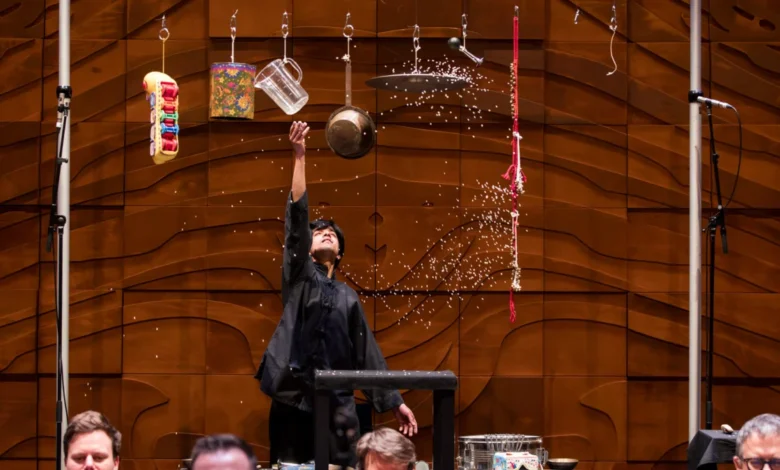
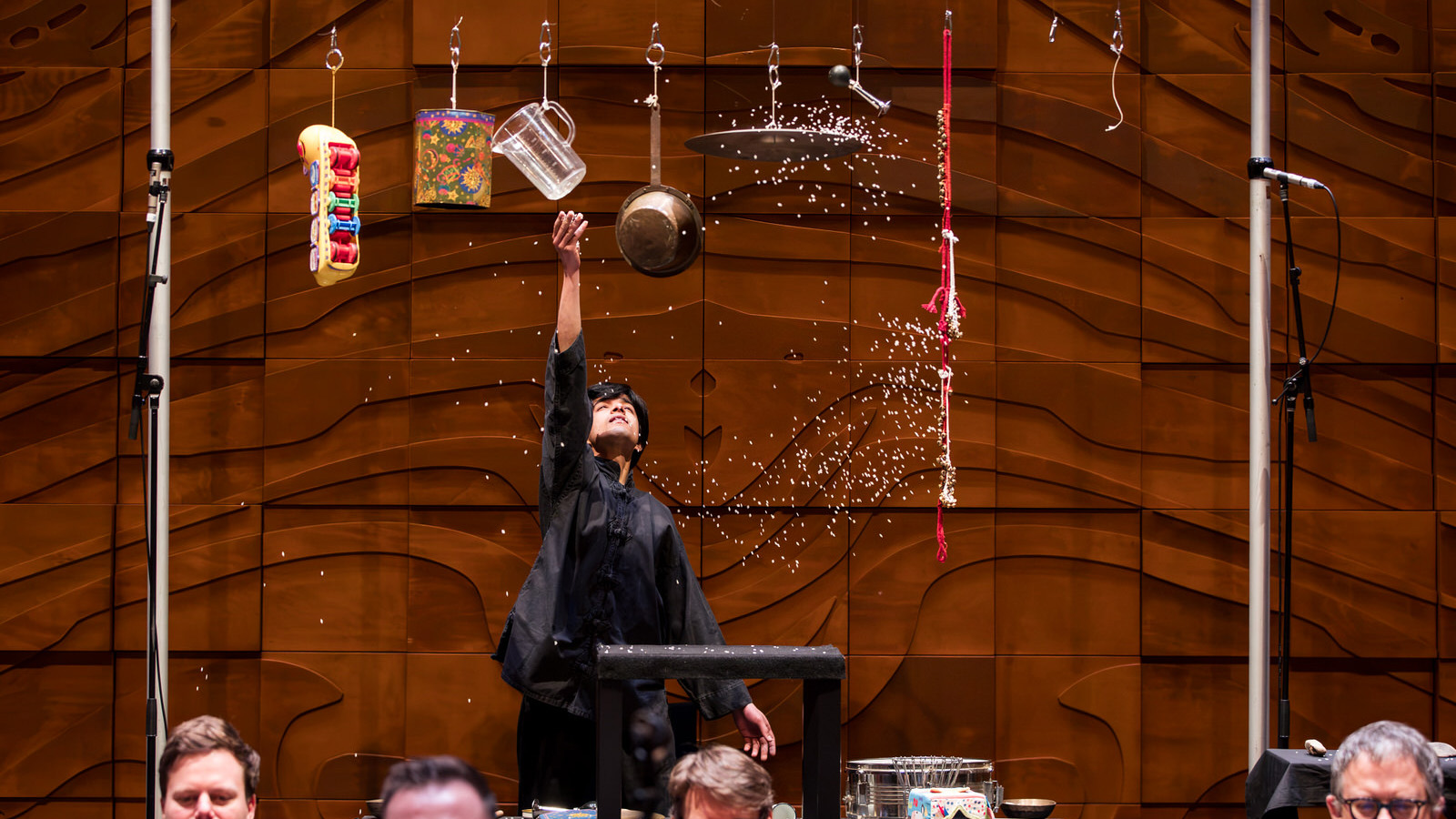
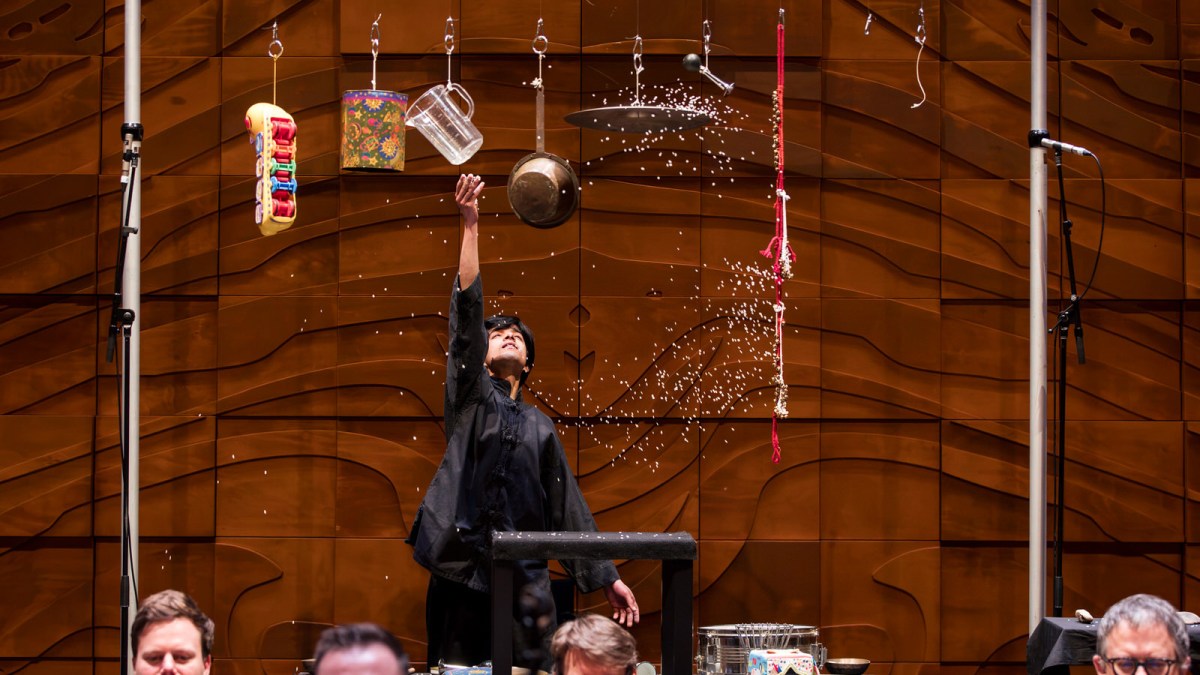
At the heart of The Tailor of Time lies a profound exploration of materiality. Liza Lim has frequently utilized metaphors of weaving, knotting, and stitching to describe her compositional process. In this specific work, the metaphor is literalized through the performance of Aditya Ryan Bhat, who interacts with "flying objects"—suspended percussive elements and kinetic sculptures that populate the stage. These objects serve as both instruments and visual markers of time’s passage.
The narrative, or rather the "sewn story," avoids the linear progression typical of Western operatic traditions. Instead, it adopts a cyclical and layered approach. By framing the composer as a "tailor," Lim suggests that time is not a river flowing in one direction, but a fabric that can be folded, cut, and reassembled. This perspective aligns with Lim’s long-standing interest in non-Western temporalities and ecological cycles, themes that have permeated her previous works such as Extinction Events and Dawn Chorus.
Artistic Collaboration and Performance Dynamics
The realization of The Tailor of Time is heavily dependent on the technical and expressive capabilities of the performers. Aditya Ryan Bhat, a percussionist known for his work in experimental and contemporary settings, provides the physical core of the piece. His movements on stage are choreographed to interact with the "flying objects," creating a sonic environment that is as much about the physical gesture as it is about the resulting sound.
Photographer Lauren Murphy, who captured the production’s visual essence, highlights the dynamic tension between the performer and the suspended artifacts. The "flying objects" are not merely props; they are integral to the acoustic architecture of the work. As Bhat manipulates these items, he creates a series of micro-events—short, sharp sounds or long, resonant drones—that mimic the act of a needle passing through cloth. This tactile approach to sound production is a hallmark of Lim’s style, which often emphasizes the "grit" and physical resistance of instruments.
Chronology of Liza Lim’s Artistic Evolution
To understand the significance of The Tailor of Time, one must look at the trajectory of Liza Lim’s career over the past three decades. Born in Perth in 1966, Lim emerged as a major voice in the 1990s, particularly through her close association with the Elision Ensemble.
- 1990s: The Emergence of Ritual. Early works like The Garden of Earthly Delights established her interest in ritualistic performance and complex, multi-layered textures.
- 2000s: Cross-Cultural Synthesis. During this period, Lim explored the intersection of Australian Indigenous aesthetics and European avant-garde techniques, leading to works like The Navigator, which premiered at the Brisbane Festival and the Melbourne International Arts Festival.
- 2010s: Ecological and Material Concerns. With Extinction Events and Dawn Chorus (2016), Lim began to focus more explicitly on environmental themes and the "materiality of waste," using recycled objects and exploring the sounds of the Anthropocene.
- 2020s: The Tailor of Time and Temporal Flexibility. Her current phase, exemplified by The Tailor of Time, moves toward a more intimate yet philosophically expansive view of time itself, treating it as a garment to be tailored to the human experience.
Technical and Supporting Data
Contemporary musicological analysis of Lim’s work often points to her use of "fluorescence" and "opacity." In The Tailor of Time, these qualities are achieved through a specific set of musical parameters:
- Microtonality: Lim utilizes highly specific pitch sets that fall between the keys of a piano, creating a shimmering, unstable harmonic field.
- Kinaesthetic Notation: The score for the work likely includes instructions for physical movement, ensuring that the visual "sewing" of the air by the percussionist is synchronized with the temporal structure of the music.
- Instrumentation: By moving away from a traditional orchestra and focusing on a solo percussionist with found and constructed objects, Lim reduces the "institutional weight" of the performance, allowing for a more direct connection between the performer’s body and the sound.
Data from recent performance cycles indicates a growing appetite for such multidisciplinary works. According to statistics from international contemporary music festivals like Darmstadt and Huddersfield, there has been a 35% increase in the commissioning of works that blend physical theater with solo instrumental performance over the last decade. The Tailor of Time fits squarely within this trend, catering to an audience that views music as an immersive, multi-sensory event.
Institutional Context: New in VAN and Sponsored Content
The presentation of The Tailor of Time within the "New in VAN" section of VAN Magazine highlights a modern shift in arts journalism and promotion. As noted in the disclaimer, the content was commissioned and paid for by New in VAN, with the editorial staff playing no role in its production. This model of "advertiser content" or "native advertising" is becoming increasingly common in the arts world as traditional funding for independent music criticism wanes.
While the essay by Ty Bouque provides a lyrical and evocative look at Lim’s work, the institutional framework reminds readers of the symbiotic relationship between artists, promotional platforms, and the necessity of generating visibility in a crowded digital landscape. For a composer like Lim, whose work is intellectually rigorous and often abstract, these sponsored deep-dives provide a necessary bridge to the public, offering a conceptual "way in" that a standard advertisement could not provide.
Broader Impact and Implications for the Genre
The Tailor of Time arrives at a moment when the genre of opera—or "music theater," as Lim’s work is often categorized—is undergoing a period of intense self-reflection. Traditional opera houses are increasingly looking for ways to remain relevant to contemporary audiences who are accustomed to non-linear storytelling and high-concept visual art.
Lim’s work suggests a path forward that does not rely on the massive infrastructure of the 19th-century operatic model. By focusing on a single performer and a collection of kinetic objects, The Tailor of Time offers a scalable, portable, and highly flexible form of music theater. This has significant implications for the sustainability of the arts:
- Economic Viability: Smaller-scale works are easier to tour and produce, making them more attractive to smaller venues and international festivals.
- Environmental Impact: By utilizing fewer performers and focusing on the "materiality" of objects—often repurposed or specifically designed for longevity—these productions can have a smaller carbon footprint than traditional grand operas.
- Philosophical Resonance: In an age of digital fragmentation, the metaphor of "sewing" or "mending" time resonates with a public looking for ways to integrate disparate experiences into a coherent whole.
Official Responses and Future Outlook
While formal reviews of the most recent iterations of The Tailor of Time are still emerging in mainstream outlets, the initial reception within the contemporary music community has been one of high interest. Scholars and critics have noted that Lim continues to push the boundaries of what is expected from an Australian composer on the world stage.
In a broader sense, the work is seen as a testament to the enduring power of craft. By likening the composer to a tailor, Lim demystifies the act of creation, stripping away the Romantic notion of the "inspired genius" and replacing it with the image of the diligent artisan. This shift reflects a larger movement in contemporary art toward valuing labor, process, and the physical reality of the medium.
As The Tailor of Time continues its performance life, it will likely serve as a reference point for future composers interested in the intersection of gesture and sound. The work stands as a reminder that music is not just something we hear, but something that is constructed, worn, and lived in—much like a well-tailored garment.
In conclusion, The Tailor of Time is more than a musical composition; it is a philosophical inquiry into the nature of our existence within the stream of time. Through the collaboration of Liza Lim, Aditya Ryan Bhat, and the supporting creative team, the project demonstrates that the most profound stories are often those that are not told, but sewn, one stitch—and one note—at a time.