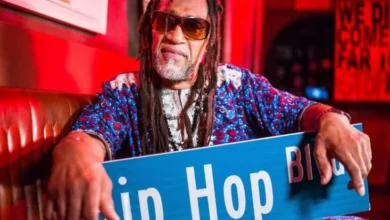
Vic Mensa Compares Netanyahu to Nazis Amidst Push for ICC Warrant Enforcement Over Gaza War Crimes

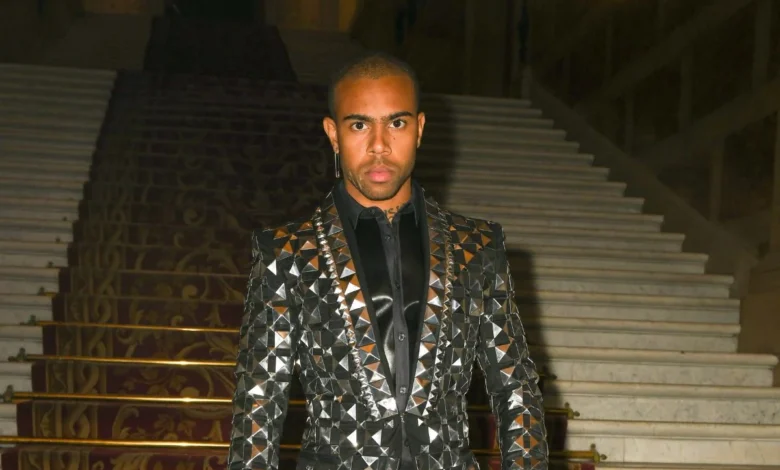
Chicago rapper Vic Mensa has ignited a fresh wave of controversy by drawing a stark comparison between Israeli Prime Minister Benjamin Netanyahu and historical Nazi figures, specifically referencing their potential flight to Argentina. This provocative statement came in the immediate wake of Spanish soccer prodigy Lamine Yamal displaying a Palestinian flag during a World Cup parade, a gesture that Mensa used as a springboard to connect global political dissent with local efforts to enforce international law. His commentary directly supports New York City Councilman Zohran Mamdani’s recent push for the enforcement of an International Criminal Court (ICC) arrest warrant against Netanyahu, stemming from alleged war crimes in Gaza.
The Genesis of Mensa’s Commentary: A Global Stage and a Political Statement
The catalyst for Vic Mensa’s outspoken remarks was a moment of athlete activism that resonated across international platforms. During a parade celebrating Spain’s recent World Cup victory, 16-year-old soccer sensation Lamine Yamal was seen holding a Palestinian flag. This public display, by an athlete of significant global renown, instantly transformed a sporting triumph into a political statement, drawing widespread attention and commentary. Mensa, a vocal advocate for Palestinian rights and a frequent commentator on social justice issues, seized upon this moment to amplify his concerns regarding the ongoing conflict in Gaza and the accountability of its leaders.
In a video post that quickly circulated online, Mensa praised Yamal’s gesture before making a direct, unfiltered pivot to the situation surrounding Prime Minister Netanyahu. His statement, "Well, if he ever had to go on the run, he could escape to Argentina with the rest of the loser Nazis," was a direct and highly charged analogy. This comparison was not random but a deliberate invocation of a dark chapter in history, alluding to the post-World War II exodus of some Nazi officials and collaborators who sought refuge in South American nations, particularly Argentina, to evade prosecution for their crimes. The implication, clearly intended by Mensa, was to equate Netanyahu’s alleged actions in Gaza with historical atrocities, thereby calling for similar accountability.
The International Criminal Court and Charges Against Netanyahu
Vic Mensa’s commentary gains significant context from the ongoing legal actions by the International Criminal Court. In May 2024, ICC Prosecutor Karim Khan announced his application for arrest warrants for Israeli Prime Minister Benjamin Netanyahu and then-Defense Minister Yoav Gallant, alongside three Hamas leaders. The charges against Netanyahu and Gallant include war crimes and crimes against humanity, specifically citing "extermination, murder, persecution, and other inhumane acts" as well as "starvation as a method of warfare."
The ICC’s jurisdiction stems from the Rome Statute, which established the court in 2002 to prosecute individuals for the most serious international crimes: genocide, war crimes, crimes against humanity, and the crime of aggression. While Israel is not a signatory to the Rome Statute, the ICC asserts jurisdiction over the Palestinian territories, including Gaza, based on Palestine’s accession to the statute in 2015. This assertion of jurisdiction has been a contentious point, with Israel vehemently rejecting the court’s authority and accusing it of antisemitism and political bias. The United States, while generally supportive of the ICC’s mission, has historically opposed its jurisdiction over Israeli and American citizens, maintaining that Israel has a robust legal system capable of investigating and prosecuting alleged crimes.
The humanitarian situation in Gaza, which forms the backdrop for these ICC charges, has deteriorated drastically since the conflict escalated in October 2023 following Hamas’s attacks on Israel. According to Palestinian health authorities, the death toll in Gaza has surpassed 44,000 people, a figure that continues to rise. The vast majority of these casualties are civilians, including a disproportionately high number of women and children. Beyond direct fatalities, the region faces an unprecedented humanitarian crisis, with widespread displacement, severe food insecurity leading to famine warnings, and the near-total collapse of healthcare and infrastructure. United Nations agencies and numerous international aid organizations have repeatedly warned of the dire conditions, highlighting the severe restrictions on humanitarian aid access and the devastating impact of ongoing hostilities on the civilian population. The ICC’s specific charge of "starvation as a method of warfare" directly addresses these devastating humanitarian realities.
Mamdani’s Municipal Push for International Justice
The practical implications of the ICC warrants, and the subsequent efforts to enforce them, were brought to the forefront by New York City Councilman Zohran Mamdani. Mamdani, a progressive politician representing parts of Astoria, Queens, announced his intention to explore "every legal avenue" to execute the ICC arrest warrant should Prime Minister Netanyahu visit New York City for the United Nations General Assembly in September. Mamdani’s stance reflects a growing sentiment among some progressive lawmakers and activists who believe that international legal frameworks must be upheld, even against leaders of allied nations, when allegations of severe crimes are made.
His declaration sparked immediate debate and controversy. Legally, a municipal authority like the New York City Council lacks the power to enforce international arrest warrants. The authority for such actions typically rests with national governments, specifically federal agencies like the Department of Justice or the State Department in the United States. Recognizing this limitation, Mamdani later clarified his position, stating that while New York City itself could not make an arrest, he was explicitly calling on the federal government to fulfill its obligations under international law. He explicitly labeled Netanyahu a "war criminal," further underscoring his conviction and the moral imperative he perceived.
The reaction to Mamdani’s statements was swift and varied. Supporters lauded his courage in attempting to hold international figures accountable, viewing it as a principled stand against impunity. Critics, however, dismissed his efforts as grandstanding, legally unfeasible, and potentially damaging to diplomatic relations. The Israeli government and its supporters strongly condemned Mamdani’s remarks, echoing their broader rejection of the ICC’s legitimacy in this context.
Trump’s Intervention and the US Stance on ICC Jurisdiction
Adding another layer of complexity to the unfolding situation was the intervention of former U.S. President Donald Trump. Following Mamdani’s initial statements, Trump took to his Truth Social platform to declare emphatically that Netanyahu "will not be arrested, in any way, shape, or form, while in the United States of America." Trump’s statement underscored the historical and ongoing US position regarding the ICC’s jurisdiction over Israeli and US officials.
The United States has a nuanced and often contradictory relationship with the International Criminal Court. While the U.S. has supported the ICC in certain contexts, particularly concerning atrocities committed by adversaries, it has consistently resisted the court’s jurisdiction over its own citizens or those of close allies like Israel. This stance is rooted in concerns about national sovereignty and the potential for politically motivated prosecutions. During his presidency, Trump went further, imposing sanctions on ICC officials who investigated alleged war crimes by Americans in Afghanistan. While the Biden administration reversed those sanctions, it has maintained the general position that the U.S. does not recognize the ICC’s jurisdiction over non-signatory states like Israel or the U.S. itself. Trump’s immediate and forceful declaration served to reinforce this long-standing policy, signaling strong political protection for Netanyahu from any potential arrest on U.S. soil.
Historical Context: Nazi Fugitives in Argentina
Vic Mensa’s specific comparison of Netanyahu potentially fleeing to Argentina "with the rest of the loser Nazis" is a direct reference to a well-documented historical phenomenon. Following the defeat of Nazi Germany in World War II, a number of high-ranking Nazi officials, SS officers, and collaborators successfully escaped justice by fleeing to various countries, with a significant number finding refuge in South America, particularly Argentina. Figures like Adolf Eichmann, one of the principal organizers of the Holocaust, and Josef Mengele, the infamous "Angel of Death" doctor from Auschwitz, lived for years in Argentina before some were eventually hunted down by Israeli intelligence (Mossad) or died before capture.
Argentina, under the presidency of Juan Perón, had a complex relationship with these fugitives, with some historians suggesting a degree of complicity or at least tolerance in their entry and settlement. This historical episode remains a potent symbol of evasion of justice for grave crimes against humanity. By invoking this specific historical parallel, Mensa aimed to place Netanyahu’s situation within a framework of leaders accused of severe atrocities attempting to escape accountability, thereby intensifying the moral weight of his criticism.
Broader Implications: Celebrity Activism, International Law, and Political Discourse
Vic Mensa’s commentary, coupled with Lamine Yamal’s gesture and Mamdani’s efforts, highlights several broader implications for international law, political discourse, and the role of celebrity activism.
Firstly, it underscores the increasing pressure on international bodies like the ICC to assert their authority and enforce their mandates, even when it involves politically powerful nations or their leaders. The controversy surrounding the ICC warrants for Netanyahu and Gallant tests the limits of the court’s reach and its ability to act independently of geopolitical pressures. The lack of a global enforcement mechanism means that the ICC relies heavily on the cooperation of member states, and the pushback from the US and Israel significantly complicates any potential arrests.
Secondly, the episode reflects the growing trend of athletes and artists using their platforms to engage in political statements, particularly concerning global human rights issues. From the Black Lives Matter movement to environmental activism, public figures are increasingly leveraging their visibility to advocate for causes they believe in. While this can raise awareness and mobilize public opinion, it also often leads to controversy and criticism, particularly when the issues are as sensitive and polarizing as the Israel-Palestine conflict. Mensa’s invocation of "artists using their platforms for political statements" explicitly frames his actions within this broader movement.
Thirdly, the stark language used by Mensa, particularly the "Nazi" comparison, illustrates the escalating intensity of rhetoric surrounding the Gaza conflict. While such comparisons are deeply offensive to many, especially those who remember the Holocaust, they are increasingly employed by some critics to convey the perceived severity of the actions being condemned. This raises questions about the boundaries of political speech and the effectiveness of highly charged analogies in fostering constructive dialogue.
Finally, the entire sequence of events—from a soccer player’s flag display to a rapper’s incendiary comments, a city councilman’s legal push, and a former president’s intervention—demonstrates the interconnectedness of global events, local politics, and cultural commentary. It reflects a world where international conflicts are not confined to diplomatic chambers but spill over into sports arenas, social media feeds, and municipal debates, constantly reshaping public opinion and challenging established norms of accountability. Mensa also broadened his commentary to praise African representation at the World Cup, highlighting how "Black brilliance remains absolutely unavoidable" despite historical subjugation, linking his political critique to a broader celebration of resilience and achievement against historical oppression.