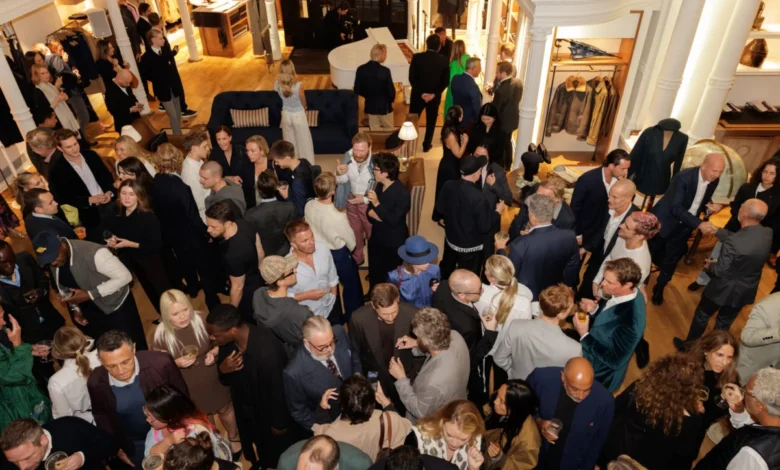
The heart of British tailoring beat with a renewed rhythm on September 15, as Gieves & Hawkes officially marked the grand reopening of its iconic historic flagship at No. 1 Savile Row. Following an extensive, meticulously planned interior and exterior refurbishment designed by Argent Design, the venerable tailoring institution welcomed a star-studded guest list of fashion industry elites, long-standing patrons, cultural figures, and international press for an exclusive evening cocktail celebration. The event served not merely as a showcase for a newly remodeled 7,000-square-foot retail space, but as a definitive statement of confidence in the enduring viability and luxury appeal of traditional Mayfair tailoring in the modern era.
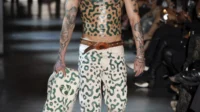
The evening’s festivities bridged centuries of British heritage with contemporary artistic expression. Proceedings commenced in grand theatrical style outside the Grade II-listed building, where the British Imperial Military Band delivered a stirring marching performance down the length of Savile Row, drawing crowds and setting a regal tone for the night. Inside the freshly curated, light-filled rooms, live models presented the Gieves & Hawkes Autumn/Winter 2026 collection, conceived by Design Director Joshua Scacheri. Guests moved freely through the expansive multi-story environment, sipping fine Gusbourne sparkling wine and partaking in artisanal canapés before acclaimed musician Tokio Myers took center stage for a mesmerizing live performance that encapsulated the blend of classical discipline and modern creativity defining the brand today.
A Legacy Preserved: The Architecture and Design of No. 1 Savile Row
The September 15 cocktail party followed the soft reopening of the flagship on September 1, which unveiled the completed overhaul of the sprawling 7,000-square-foot headquarters. Tasked with modernizing the retail and fitting experience while fiercely protecting the historical integrity of the property, Argent Design approached the Grade II-listed structure with profound reverence. The architectural and interior design strategy focused on striking a delicate balance: honoring the storied past of a firm that has dressed British monarchs, military heroes, and international statesmen for generations, while creating an inviting, contemporary atmosphere for today’s sophisticated clientele.
The resulting space is both a museum of sartorial history and a state-of-the-art luxury emporium. Every corner of the flagship has been optimized to house the complete spectrum of the Gieves & Hawkes offering. Clients navigating the newly laid-out floors will find dedicated zones for Bespoke tailoring—the ultimate expression of handmade craftsmanship—alongside Made-to-Measure, Ready-to-Wear collections, and the house’s historic Military uniform division. This comprehensive layout reinforces the brand’s deep-seated connection to its military roots, a heritage that separates Gieves & Hawkes from many of its contemporary counterparts on the famous row.
Managing Director Jason Gerrard, who has overseen much of the brand’s recent strategic realignment, emphasized during the evening that the renovation was designed to be an organic evolution rather than a jarring reinvention. Addressing attendees, Gerrard expressed his gratitude to the extensive network of British suppliers, craftspeople, commercial partners, and the parent company whose collaborative efforts brought the ambitious project to fruition. "No. 1 Savile Row has been the home of Gieves & Hawkes for generations, so it was important that this refurbishment felt like an evolution rather than a reinvention," Gerrard stated, highlighting the commitment to continuity that underpins the house’s corporate philosophy.
A Gathering of Cultural and Fashion Luminaries
The significance of the grand reopening extended far beyond the confines of the tailored menswear community, drawing prominent figures from across fashion, entertainment, and the creative industries. The guest list read as a who’s who of British cultural influence, featuring notable actors such as William Franklyn-Miller and Harrison Osterfield, alongside industry veterans and media heavyweights like Stephen Libby, Caroline Rush, and legendary fashion journalist Suzy Menkes. They were joined by Teo van den Broeke, Reuben Larkin, and Phoebe Saatchi Yates, all of whom engaged deeply with the newly unveiled collections and toured the historic workshops where master cutters and tailors continue to practice their ancient craft.
The presence of such diverse creative talent underscored the growing cross-pollination between traditional bespoke tailoring and modern youth culture. As streetwear and casual attire have dominated much of the global fashion discourse over the past decade, Savile Row has faced the ongoing challenge of remaining relevant to younger generations of luxury consumers. Events like the No. 1 Savile Row reopening—featuring live musical performances by Tokio Myers and a guest roster heavily populated by rising screen and art stars—demonstrate a concerted, successful effort to position bespoke tailoring as desirable, dynamic, and culturally plugged-in.
Chronology of an Institution: The History Behind No. 1 Savile Row
To fully appreciate the scope of the recent refurbishment, one must examine the monumental history embedded within the walls of No. 1 Savile Row. The history of Gieves & Hawkes is actually a fusion of two distinct, illustrious tailoring dynasties: Gieves, founded in 1785 by Thomas Gieve in Portsmouth, and Hawkes, established in 1771 by Samuel Hawkes in the heart of London. Both firms built their early reputations on outfitting the British Armed Forces, particularly the Royal Navy and the British Army, earning multiple Royal Warrants over the centuries.
The two companies merged in 1974 to form Gieves & Hawkes, consolidating their operations at No. 1 Savile Row, a building that had previously served as the headquarters of Hawkes since 1912. Over the decades, the address has witnessed history being made. The firm has counted among its clientele Lord Nelson, the Duke of Wellington, Winston Churchill, and countless members of the British royal family, including King Charles III and Prince William. The fitting rooms at No. 1 Savile Row have played host to prime ministers, Hollywood icons, and captains of industry, making the building a veritable monument of British soft power and sartorial excellence.
The recent 7,000-square-foot renovation is merely the latest chapter in a long history of physical adaptation. As retail habits shifted toward experiential luxury in the 21st century, the management team recognized that the historic building required a infrastructural and aesthetic update to meet the expectations of an international clientele that demands both heritage and high-tech convenience.
Economic and Industry Implications of the Flagship Transformation
The multi-million-pound investment in No. 1 Savile Row carries significant economic and strategic implications for the broader British luxury sector. In the wake of post-pandemic economic shifts, inflationary pressures, and the controversial abolition of tax-free shopping for international tourists in the United Kingdom, London’s luxury retail district—particularly Mayfair—has faced a challenging operational landscape. High-end retailers have increasingly had to justify their physical footprints through immersive storytelling, superior customer service, and exclusive in-store experiences that cannot be replicated online.
By doubling down on a massive, beautifully appointed flagship, Gieves & Hawkes is sending a bullish signal to the market. The strategy relies on the premise that global luxury consumers—particularly from the United States, the Middle East, and Asia—are increasingly seeking authenticity, heritage, and personalized craftsmanship. The seamless integration of the Autumn/Winter 2026 collection within a modernized historic framework proves that traditional tailoring houses can innovate without losing their soul.
Furthermore, the emphasis on British suppliers and local manufacturing during the refurbishment process highlights a growing industry-wide commitment to sustainability and supply chain transparency. By supporting local artisans, interior designers, and material producers, Gieves & Hawkes reinforces the circular economy of Savile Row, ensuring that the specialized skills required to maintain a bespoke house are passed down to new generations of apprentices.
Looking Ahead: The Future of Savile Row Tailoring
As the dust settles on the grand reopening cocktail and normal trading operations resume at No. 1 Savile Row, the leadership team at Gieves & Hawkes is already looking toward the future. The successful fusion of Design Director Joshua Scacheri’s modern aesthetic vision with the time-honored techniques of the house’s master tailors provides a clear blueprint for sustainable growth.
The revived flagship is expected to serve as a cultural hub for the neighborhood, hosting private client dinners, art exhibitions, and educational workshops aimed at demystifying the bespoke process for a younger generation of clientele. In an era where digital noise often overwhelms physical substance, Gieves & Hawkes has anchored its future in the tangible luxury of a perfectly fitted suit, crafted in a building that breathes history.
With the British Imperial Military Band’s brass notes having faded from the cobblestones of Mayfair and the flash photography of Heather Shuker captured for posterity, No. 1 Savile Row stands ready for its next century. Through a careful blend of architectural preservation, visionary retail design, and unwavering dedication to the sartorial arts, Gieves & Hawkes has not only celebrated its past but firmly secured its place at the pinnacle of global menswear for decades to come.