Blues People by Le Roi Jones: A Historical Retrospective on the Seminal Critique of American Jazz

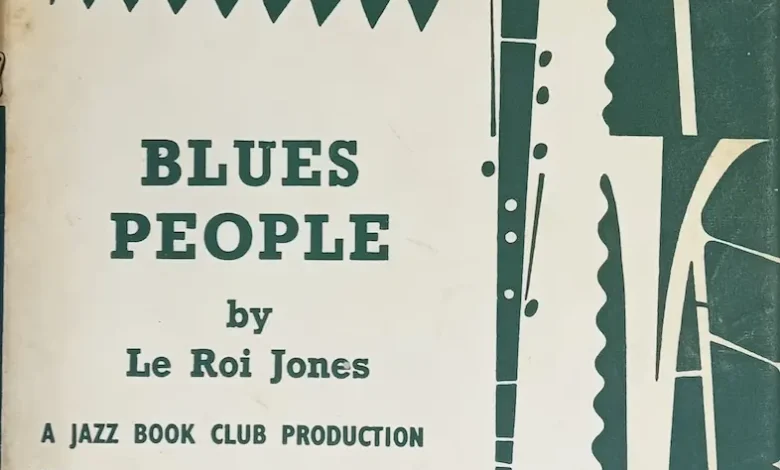
Sixty years ago, the landscape of jazz criticism was irrevocably altered by the publication of Blues People: Negro Music in White America. Authored by Le Roi Jones—who would later change his name to Amiri Baraka—the book remains a foundational text that bridged the gap between musicology and sociopolitical analysis. When Don Lindon reviewed the work for Jazz Journal in September 1966, he acknowledged the discomfort the text caused among the era’s established critics, noting that Jones’s provocative stance on white participation in jazz, the role of the Black middle class, and the feasibility of racial integration demanded a level of intellectual engagement previously unseen in the genre.
The Genesis of a Controversial Intellectual
To understand the impact of Blues People, one must place it within the context of the mid-1960s, a period defined by the peak of the Civil Rights Movement and the emerging Black Arts Movement. Jones, at the time, was a polarizing figure in the New York literary and theater scene. His trilogy of plays—The Slave, The Toilet, and Dutchman—had premiered in 1964 to intense public debate. These works were noted for their aggressive stance against systemic racism and their critique of white liberal complicity.
The irony of Jones’s professional success during this period was frequently highlighted by his detractors; his theatrical productions were partially funded by Federal grants under the Anti-Poverty Bill, a fact that drew fire from conservative circles who viewed his militant rhetoric as antithetical to the government’s goals. Yet, within the pages of Blues People, Jones shifted his focus from stage dramatics to a rigorous historical inquiry, asserting that jazz was not merely an aesthetic evolution but a direct byproduct of the Black American experience under the crushing weight of slavery and subsequent segregation.
A Chronology of Socio-Musical Evolution
Jones structured Blues People as a historical progression, tracing the music from the functional, field-holler roots of the enslaved population to the avant-garde "Free Form" movement of the early 1960s. His thesis was radical for the time: he argued that the music of Black Americans is a reflection of their social condition and that the evolution of jazz is intrinsically linked to the changing status of the Black person in the United States.
- 18th & 19th Century Roots: Jones meticulously documented the transition from African rhythmic sensibilities to the blues, framing the blues not just as a musical genre but as a psychological response to the trauma of enslavement.
- The Early 20th Century: The book chronicles the transition into urban environments, where the blues became secularized and formalized into what would eventually become the foundational language of jazz.
- The Post-War Era (1945–1960s): Jones’s critique of the "Swing Era" and white big bands remains one of the most controversial aspects of the work. He contended that as jazz became commercialized for white audiences, it was stripped of its authentic, visceral, and subversive character.
Supporting Data and Critical Perspectives
The significance of Blues People lies in its status as the first major history of jazz written by a Black author from a strictly Black perspective. Prior to this, the historiography of the genre was dominated by European and white American writers, whose focus often centered on formal musical structure, discography, and the accumulation of "matrix numbers."
Jones’s departure from this traditional methodology invited pushback. Critics of the era, particularly those entrenched in the status quo, often struggled to reconcile Jones’s venomous disdain for the white swing bands with the prevailing narrative of jazz as a "universal language" that fostered racial harmony.
Statistically, the impact of the book can be measured by its longevity. While mainstream jazz history books from the mid-60s have largely faded into obscurity, Blues People continues to be assigned in university curricula across the United States. It forced a re-evaluation of the "melting pot" theory, with Jones arguing that the Black middle class had attempted to assimilate into white culture by suppressing the very musical and cultural expressions that defined their unique heritage.
Official Reactions and Contemporary Discourse
The reception of Blues People in 1966 was indicative of the broader American divide. While white critics like Don Lindon recognized the book’s intellectual rigor, they were often hesitant to endorse its conclusions regarding separation. Lindon’s 1966 review explicitly highlighted the tension between the liberal hope for integration and Jones’s growing disillusionment with that prospect.
"It is dangerous and also presumptuous for me, a white English liberal, to dare to question the opinions of an American Negro on the problems of race relations," Lindon wrote. This sentiment captured the hesitation of the era’s intelligentsia, who found themselves forced to confront the validity of a narrative that dismissed their own contributions to the jazz canon as either peripheral or co-opted.
Broader Impact and Implications
The long-term implications of Blues People are profound. By insisting that Black music must be understood through the lens of Black socio-cultural history, Jones effectively birthed the field of African American musicology. He challenged the "colorblind" approach to jazz criticism, suggesting that ignoring the race of the creator was a disservice to the music itself.
Furthermore, his disdain for the "assimilationist" tendencies of the Black middle class served as a precursor to the Black Power movement’s later rhetoric. Jones argued that by seeking to conform to white middle-class standards, Black musicians and thinkers were effectively silencing the "blues people"—the working-class Black Americans whose lives remained the authentic engine of the culture.
As the jazz community moved toward the late 1960s, the "Free Form" or "New Thing" jazz scene began to dominate the experimental landscape. Jones was a vocal proponent of this movement, viewing it as a reclamation of the music from the commercial interests of white record labels and promoters. This shift brought about a permanent divide in the jazz world: those who viewed the music as an art form tied to Western harmonic tradition and those who viewed it as an irrepressible expression of Black struggle.
Conclusion: A Legacy of Necessary Dissonance
In retrospect, Blues People was never intended to be a comfortable read for the casual jazz enthusiast. As Lindon aptly noted in 1966, the book was not for those who treated jazz as "Good Time Music." It was a foundational, often abrasive, but always essential contribution to the American literary canon.
The transition of Le Roi Jones into Amiri Baraka, and his subsequent career as a poet, playwright, and activist, served to reinforce the urgency of the questions he posed in Blues People. The book stands as a testament to the idea that art is never separate from the politics of its time. For the modern reader, it remains an obligatory text, not merely for its historical documentation of jazz, but for its uncompromising insistence on the agency and distinct cultural identity of the Black American experience. While the arguments presented in 1963 may have been considered "disturbing" at the time of their publication, they now serve as a crucial roadmap for understanding the evolution of American art and the enduring power of music as a vehicle for social critique.