Cross-Disciplinary Artistry Explored in Patience for the Ride: The Art and Life of Will Johnson


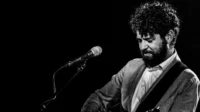
Linda Ronstadt once reflected that during recording sessions, she would keep an open art book positioned on her music stand. The printed reproductions of paintings served as a vital catalyst, offering expansive visual interpretations of the human experience that informed her vocal phrasing and emotional delivery. These visual worlds continuously opened new creative vistas for her music. This intersection of artistic mediums forms the core philosophical foundation of Patience for the Ride: The Art and Life of Will Johnson, a comprehensive new biographical tribute penned by fellow singer-songwriter John Krajicek. The publication examines the multifaceted career of Texas-based creator Will Johnson, whose body of work spans acclaimed songwriting, visual art, and fiction writing.
Through a meticulously curated collection of 28 interviews, essays, and critical sketches contributed by Johnson’s peers, musical collaborators, and lifelong friends, Krajicek constructs a detailed portrait of a modern Renaissance man. As Krajicek summarizes within the text, Will Johnson occupies a rare space in contemporary American culture, functioning fundamentally as a songwriter’s songwriter, a musician’s musician, and an artist’s artist.
Main Facts and the Architecture of a Tribute
At its core, Patience for the Ride serves as both a retrospective and a critical examination of an artist who has consistently prioritized creative integrity over mainstream commercial visibility. The book compiles firsthand accounts from individuals who have shared recording studios, tour buses, and gallery spaces with Johnson over the course of three decades.
Rather than following a rigid linear narrative, Krajicek utilizes a mosaic approach, allowing different voices to illuminate various facets of Johnson’s career. Contributors discuss his distinctive baritone voice, his poignant and literary lyricism, his prolific output as a visual artist whose paintings have gained a dedicated following, and his understated approach to storytelling in prose. The volume underscores how these distinct disciplines do not merely coexist in Johnson’s life; rather, they inform and elevate one another in a continuous feedback loop of creative expression.
Chronology and Evolution of an Artist
The trajectory of Will Johnson’s life is deeply rooted in the cultural landscapes of Missouri and Texas. Born in Missouri in 1971, Johnson experienced a foundational relocation at the age of 11, moving with his newly remarried mother to Austin, Texas. This shift placed him within one of the nation’s most vibrant and musically fertile metropolitan environments during a formative period of his youth.
Music was an early and pervasive presence in Johnson’s upbringing. He began playing the drums at the age of four, developing an innate sense of rhythm and timing. His early musical education expanded through participation in church choirs, where he learned the nuances of vocal harmony, and through formal piano lessons. Notably, his early piano instruction came courtesy of Bernice Crow, the mother of future Grammy Award-winning artist Sheryl Crow, establishing an early, albeit indirect, connection to the upper echelons of the music industry.
The Denton Years and the Academic Detour
By 1989, Johnson had relocated to Denton, Texas, to enroll at the University of North Texas. Initially, his ambitions pointed toward academia rather than the stage. He harbored intentions of earning a Ph.D. in English literature and eventually pursuing a career as a collegiate educator. However, the magnetic pull of North Texas’s legendary underground music scene proved irresistible.
Denton in the late 1980s and early 1990s was a crucible for independent rock and alternative music. Immersing himself in this environment, Johnson made a decisive career detour. He abandoned his doctoral aspirations, choosing instead to channel his analytical literary training into songwriting and performance.
Centro-Matic, South San Gabriel, and Prolific Solo Work
This musical immersion culminated in the formation of Centro-matic, a band that would become a cornerstone of the American indie rock landscape for nearly two decades. Alongside his work in Centro-matic, Johnson launched South San Gabriel, a project that allowed him to explore more atmospheric, acoustic, and orchestrally textured compositions.
Johnson’s creative output during these years was characterized by an astonishing work ethic. Even while maintaining rigorous recording and touring schedules with his primary bands, he continuously pursued solo projects. Following the formal conclusion of Centro-matic’s run, marked by their final album release in 2014, Johnson’s solo career accelerated rather than slowed. He has released six solo studio albums since 2014, culminating in the 2025 release of Diamond City.
Furthermore, Johnson has established a reputation as a sought-after collaborator. Over the years, he has worked alongside notable figures in the American roots and indie rock communities, including Jason Molina, Jay Farrar, and Jim James. His ability to seamlessly integrate his talents into diverse musical configurations has made him a trusted utility player and creative partner for some of the most respected songwriters of his generation. In a testament to his ongoing relevance and peer respect, Johnson currently performs as a touring and recording member of Jason Isbell’s acclaimed band, the 400 Unit.
Supporting Data and Creative Output
To fully understand the significance of Patience for the Ride, one must examine the sheer volume and scope of Will Johnson’s artistic catalog. Across his career with Centro-matic, South San Gabriel, various collaborative projects, and his extensive solo discography, Johnson has contributed to more than two dozen full-length studio albums.
In addition to his musical recordings, Johnson’s visual art has steadily gained critical and commercial traction. His paintings, which frequently explore themes of isolation, memory, and the stark beauty of American landscapes, have been exhibited in galleries across the United States. This dual-track career is supported by data showing a dedicated, highly engaged niche audience that spans traditional record buyers, fine art collectors, and literary enthusiasts.
Krajicek’s book quantifies this impact not through cold sales figures, but through the depth of testimonial evidence. The 28 essays and interviews featured in Patience for the Ride represent a cross-section of the American independent music community, providing qualitative data on how a singular artist can sustain a long-term, multi-medium career entirely on the merits of his craft and the strength of his professional relationships.
Perspectives from Collaborators and Peers
While Johnson himself remains characteristically modest about his achievements—often deflecting praise onto his bandmates and visual art mentors—the contributors to Krajicek’s volume offer unvarnished appreciation for his influence.
Peers frequently cite Johnson’s unwavering commitment to authenticity as his defining characteristic. In an era where commercial pressures often force artists to chase transient stylistic trends, Johnson has maintained a consistent aesthetic. His lyrics often read like micro-fiction, reflecting his early academic studies in English literature, while his visual art employs a raw, expressionistic palette that mirrors the emotional resonance of his songs.
Collaborators note that Johnson’s presence in the studio or on stage elevates the work of everyone around him. Whether providing harmony vocals, driving rhythm guitar, or conceptualizing album artwork, his contributions are marked by a deep respect for the collaborative process. This cooperative spirit is precisely what enabled John Krajicek to assemble such a diverse and enthusiastic roster of contributors for the book, ranging from legendary alt-country pioneers to contemporary indie rock standard-bearers.
Broader Impact and Industry Implications
The publication of Patience for the Ride: The Art and Life of Will Johnson arrives at a critical juncture for the modern creative economy. In an entertainment landscape increasingly dominated by algorithm-driven distribution, rapid content consumption, and homogenized pop production, Johnson’s career offers an alternative blueprint for artistic longevity.
By examining an artist who successfully bridges the worlds of music, literature, and visual arts without capitulating to mainstream commercial demands, Krajicek’s book provides a valuable case study in sustainable creativity. It challenges the conventional industry wisdom that specialization is required for success, demonstrating instead that cross-disciplinary pollination can enrich an artist’s primary medium—much in the way Linda Ronstadt utilized visual art books to inform her vocal performances.
Furthermore, the book underscores the vital role of regional music scenes in shaping American culture. The artistic ecosystems of Austin and Denton, Texas, provided the soil in which Johnson’s unique voice could take root and flourish. By documenting this history through the collective memory of Johnson’s peers, Patience for the Ride preserves an essential chapter of modern American independent music history.
Ultimately, Will Johnson’s ongoing journey—highlighted by recent milestones such as his tenure with the 400 Unit and the release of Diamond City—demonstrates that true artistry is not defined by chart positions or commercial peaks, but by an unyielding dedication to exploration. Through John Krajicek’s appreciative lens, readers are invited to witness the mechanics of a truly integrated creative life, one that continues to push boundaries across canvases, pages, and vinyl grooves.