Catalonia Reckons with its Dark Past by Posthumously Pardoning Hundreds of Victims of Historic Witch Trials

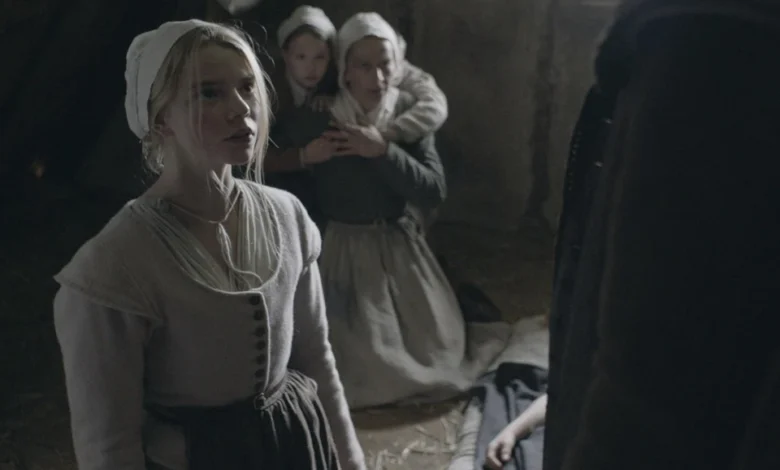
While the 1692 Salem witch trials in Massachusetts remain the most iconic manifestation of early modern hysteria, the phenomenon of witch-hunting was far from confined to the North American colonies. Across Europe, between the 15th and 18th centuries, a localized but brutal campaign against perceived practitioners of witchcraft decimated communities, targeting primarily women who existed on the fringes of societal norms. In a significant effort to reconcile with this traumatic history, the government of Catalonia, Spain, recently passed a legislative measure to posthumously pardon over 700 individuals who were executed for witchcraft during this dark period.
This legislative milestone, enacted in late 2021, represents a deliberate attempt by the Catalan government to acknowledge the systemic violence that defined the region’s early modern era. With a decisive vote of 114 to 21, the parliament signaled that these historical executions were not acts of justice, but rather instruments of gender-based oppression and social control. Beyond the pardons, the measure includes recommendations for local municipalities to rename public streets and squares in honor of these victims, effectively weaving their names back into the public memory of the region.
The Anatomy of European Witch Hysteria
To understand the scale of the tragedy in Catalonia, one must first look at the broader European context. Historians estimate that between 1580 and 1630—a period often characterized by profound religious conflict, climate instability, and economic transition—roughly 50,000 individuals were executed for witchcraft across Europe. Of these victims, approximately 80 percent were women.

The witch trials were not a monolithic phenomenon. In many parts of Europe, the process was governed by the Inquisition, which often operated with a level of bureaucratic skepticism that ironically acted as a safeguard against the most extreme forms of mob violence. However, in rural Catalonia, the dynamic was markedly different. Feudal lords often held sway over judicial proceedings in isolated villages, far from the oversight of central authorities. In these communities, local villagers frequently hired private "witch hunters" to investigate perceived supernatural threats.
These accusations were rarely random. They typically followed environmental or social stressors: a failed harvest, a sudden disease outbreak, the death of livestock, or the unexplained passing of an infant. In a society that lacked modern scientific understanding of medicine or agriculture, the "witch" became a convenient scapegoat for the incomprehensible. Independent women, those who lived alone, or those who possessed knowledge of traditional herbal medicine were the most frequent targets of these accusations.
A Chronology of Persecution
The timeline of these trials spans several centuries, though the intensity peaked during the late 16th and early 17th centuries.
- 15th Century: Early instances of witchcraft accusations emerge as a byproduct of shifting religious doctrines and the demonization of folk magic practices.
- 1580–1630: The "Great Witch Hunt" period in Europe. During this half-century, thousands of trials occur across the Pyrenees and the Catalan countryside.
- 17th Century: The height of the Catalan trials. The secular courts, rather than the Inquisition, become the primary venue for sentencing.
- 18th Century: The practice gradually declines as the Enlightenment begins to permeate the legal and philosophical frameworks of European society.
- 2008–2011: Modern-day European nations, including Switzerland and Norway, begin the process of formally acknowledging and memorializing their specific histories of witch-hunting.
- 2021: The Catalan Parliament approves the measure to pardon the 700 victims, setting a new precedent for historical restorative justice.
The Legal Mechanics of Injustice
One of the most chilling aspects of the Catalan trials was the low threshold for conviction. In secular courts, a confession—often extracted through torture or the threat of it—was considered sufficient evidence to secure a death sentence. Unlike the Inquisition, which required substantial physical evidence and often conducted thorough investigations that led to acquittals, the local feudal courts were motivated by a desire to "cleanse" the community.

Execution methods were also dictated by economics. Hanging was the standard method of execution in Catalonia because it was significantly cheaper than burning a subject at the stake, which required large quantities of wood. This grim cost-benefit analysis highlights the transactional nature of the persecution: the lives of these women were treated as expendable commodities in a system designed to reinforce the power of local elites.
Perspectives from the Catalan Parliament
The decision to pardon the victims was driven by a modern understanding of the underlying causes of the trials. Jenn Díaz, a member of the Catalan parliament, has been a vocal advocate for this historical recognition. In her communications regarding the measure, she emphasized that the violence of the past remains relevant to contemporary society.
"We are the heiresses of the witches, the poisoners, and the healers," Díaz remarked during the debates. Her assessment draws a direct line between the historical targeting of women who challenged patriarchal norms and modern instances of gender-based violence. She noted that the terminology has evolved—from "witches" to derogatory slurs used against women in public life today—but the objective remains the same: the suppression of female agency. By framing the witch hunts as a form of early "femicide," the Catalan government is attempting to connect the dots between historical social structures and the current struggle for gender equality.
Restorative Justice and Global Trends
Catalonia’s initiative is part of a growing movement across Europe to address historical human rights abuses related to the witch hunts. The region is not acting in isolation. In 2008, Switzerland took a major step by pardoning Anna Göldi, a woman who was executed in 1782 for the alleged poisoning of a child. Her case is widely recognized as the last witch trial in Europe. Similarly, in 2011, the Norwegian government inaugurated a memorial in Vardø, a site that honors the victims of the Finnmark witch trials, acknowledging the profound loss of life that occurred in that remote northern region.

These acts of reconciliation serve multiple purposes. First, they provide a sense of closure for the descendants of victims and the communities where these atrocities occurred. Second, they serve as a powerful educational tool, forcing a critical examination of the societal mechanisms—such as fear-mongering, the scapegoating of marginalized groups, and the failure of legal systems—that allowed such violence to proliferate.
Socio-Political Implications
The decision to honor the victims by renaming streets has significant symbolic weight. Public spaces are the bedrock of communal memory; by naming a street after a woman once branded a witch, a municipality reclaims her identity as a neighbor, a healer, or a citizen. It challenges the historical narrative that the victims were "other" or "evil" and replaces it with the understanding that they were members of the community who were failed by the institutions meant to protect them.
Moreover, the legislative process in Catalonia demonstrates the impact of political representation. The high support for the measure suggests a shifting cultural consciousness in Spain, one that is increasingly willing to interrogate its national history. By acknowledging that the past is "not as distant as we think," the government is encouraging its citizens to recognize the cyclical nature of moral panic and the importance of due process.
As academic historians continue to uncover more records from the Catalan archives, the true scope of the trials will become clearer. It is likely that the 700 victims identified are only a fraction of those who suffered at the hands of the feudal courts. However, the importance of this legislative act lies not just in the numbers, but in the precedent it sets. By formally denouncing the trials, Catalonia has taken a stand against the normalization of violence against women and reaffirmed its commitment to the principles of human rights and historical truth, ensuring that the victims of the past are finally granted the dignity that was denied to them for centuries.