Jeff Mills Live at Knockdown Center, Mar 14, 2026, Part one is now available via Apple Music, with the second installment arriving on October 9.

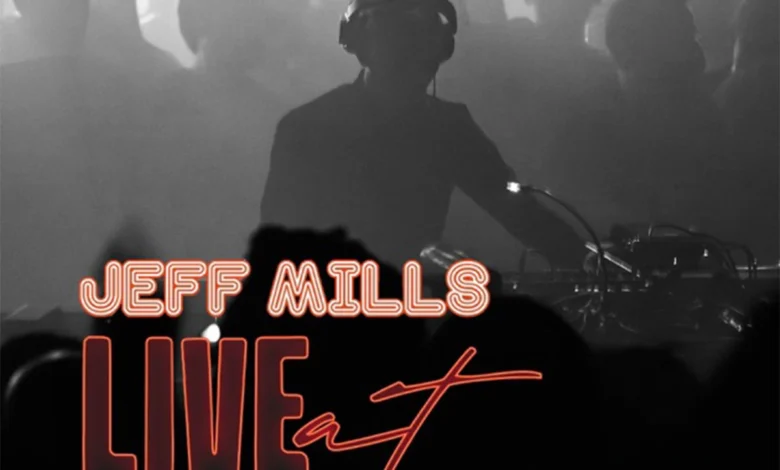
The release of this live recording marks a significant milestone in the preservation of electronic music history, bridging the gap between the analog ambition of the 1990s and the sophisticated spatial audio technologies of the present day. Techno pioneer Jeff Mills, widely regarded as a founding father of the Detroit sound, has officially unveiled the first installment of his performance at the Knockdown Center in New York. This recording serves as the centerpiece of his ongoing Live at Liquid Room 30th Anniversary Tour, a global trek celebrating the enduring legacy of his seminal 1995 live album.
The Evolution of the Liquid Room Concept
To understand the technical gravity of the Knockdown Center recording, one must look back to the origins of the project. In 1995, Jeff Mills performed at Tokyo’s Liquid Room, a show that would eventually be immortalized in a live album that redefined the expectations for DJ sets. At the time, Mills sought to capture the visceral, physical presence of the dancefloor—the collective energy of the crowd, the reverberation of the walls, and the specific sonic texture of the room. He famously placed between six and eight microphones throughout the Tokyo venue to document this atmosphere. However, due to the technical limitations of the era and the standard distribution formats of the mid-90s, the final release was constrained to a traditional stereo mix, sacrificing much of the three-dimensional "room sound" that Mills had meticulously attempted to capture.
Thirty years later, the technological landscape has shifted. The collaboration between Mills and Apple Music represents a successful attempt to fulfill the original vision of the 1995 experiment. By utilizing modern Spatial Audio and Dolby Atmos standards, the Knockdown Center project transcends the limitations of the past.
Technical Precision: Capturing the 20,000-Square-Foot Hall
The technical execution of the March 14, 2026, performance was a logistical undertaking of significant scale. The Knockdown Center, known for its expansive 20,000-square-foot main hall and industrial acoustic profile, provided a challenging environment for audio engineering. To overcome this, the recording team deployed a sophisticated array of 14 microphones positioned strategically across the venue.
This multi-point capture allowed for a granular documentation of the event. The audio engineers balanced the direct feed from the DJ mixer—ensuring that the precision of Mills’ technical mixing remained crisp and undistorted—with the ambient output of the venue. By layering the crowd response and the unique acoustic decay of the hall, the final Spatial Audio mix creates an immersive experience that allows listeners to move through the soundstage, effectively recreating the sensation of standing in the center of the crowd at the Knockdown Center.
A Chronology of the 30th Anniversary Tour
The performance on March 14, 2026, was a highlight of the broader anniversary tour, which has seen Mills revisit key geographical locations that have shaped his career. The event was curated not merely as a solo showcase, but as a night of collaborative electronic music history. The lineup featured sets from Ken Ishii, a longtime associate of Mills and a pillar of the Japanese techno scene, and Joey Beltram, a seminal figure in the development of American techno and house.
The release schedule for the recording is split into two distinct parts, reflecting the two-part nature of the evening’s programming:
- September 25, 2026: The release of Part 1. This installment includes the opening phase of the performance, accompanied by the set from Ken Ishii.
- October 9, 2026: The release of Part 2. This installment features the remainder of the performance, accompanied by the set from Joey Beltram.
By providing these sets alongside the primary recording, Apple Music offers a comprehensive archival look at the night, preserving not just the headlining set, but the contextual narrative of the supporting artists who contributed to the evening’s sonic identity.
Musical Selections and Stylistic Scope
Across the two-part mix, Mills demonstrates the breadth of his influence and his capacity for sonic curation. The performance is characterized by a blend of his own legendary catalogue and pivotal tracks from contemporary and peer artists. Listeners will encounter definitive Mills tracks such as "The Bells," "i9," "Utopia," and "Life Cycle." These are interspersed with contributions from influential figures in the global techno circuit, including Robert Hood, Surgeon, DJ Funk, Marcel Dettmann, and Steve Bicknell.

The inclusion of these tracks acts as a historical thread. By weaving together his own work with that of artists like Joey Beltram, Mills provides a sonic genealogy of techno, tracing the evolution from the early industrial sounds of the 90s to the more polished, atmospheric production techniques of the current decade.
Implications for the Industry
The release of this recording has sparked a broader conversation regarding the preservation of electronic music. Traditionally, DJ sets have been ephemeral—meant to be experienced in the moment and lost to time, with only low-fidelity bootleg recordings left behind. The shift toward high-fidelity, immersive archival releases suggests a change in how the electronic music industry views its own history.
Industry analysts suggest that this project could set a new benchmark for live performance documentation. If artists can effectively translate the "in-room" experience to a home listening environment through spatial audio, it creates a new value proposition for digital streaming platforms. It also elevates the status of the DJ set from a functional piece of entertainment to a work of art worthy of formal, high-resolution documentation.
Furthermore, the collaboration highlights the ongoing relevance of the Knockdown Center as a premier venue for experimental audio-visual presentations. By hosting an event that prioritizes technical fidelity alongside artistic expression, the venue continues to solidify its reputation as a site for significant cultural moments in the New York music scene.
Official Context and Reception
While Jeff Mills has remained characteristically focused on the technical aspects of the performance, his team has acknowledged that the 30th Anniversary Tour is intended to be a reflection on the resilience of the genre. The original 1995 tour was a pivotal moment in the globalization of Detroit techno, and by revisiting the "Liquid Room" concept, Mills is closing a thematic loop.
In the wake of the announcement, industry peers have noted that the 14-microphone setup utilized at the Knockdown Center is a rare level of investment for a live DJ recording. Typical concert recordings often rely on a single soundboard feed or a limited number of ambient mics, which often results in a "flat" sound. By prioritizing the audience experience in the mix, the production team has successfully avoided the common pitfalls of live dance music recordings, where the crowd noise often overwhelms the intricacies of the music.
Future Perspectives
As the music industry continues to lean into high-fidelity streaming, the release of the Knockdown Center performance serves as a blueprint for future live albums. It suggests that the future of the live concert recording lies not just in capturing the music, but in capturing the environment in which the music lives.
The successful deployment of this recording underscores the importance of technological partnerships in the music sector. By working directly with Apple Music, Mills has leveraged global infrastructure to ensure that a performance that took place in one room in New York can be heard with near-identical spatial characteristics by listeners across the world.
For those interested in the technical and cultural progression of electronic music, the two-part release of Jeff Mills Live at Knockdown Center represents a rare opportunity to witness a master of the craft engaging with the evolution of his own history. Whether one is a long-term devotee of the Detroit sound or a newcomer to the genre, the recordings offer a definitive document of one of the most influential figures in music, captured with the level of detail that his thirty-year legacy demands.