John Mayall with Eric Clapton Blues Breakers: A Retrospective Analysis of a Watershed Moment in British Blues History

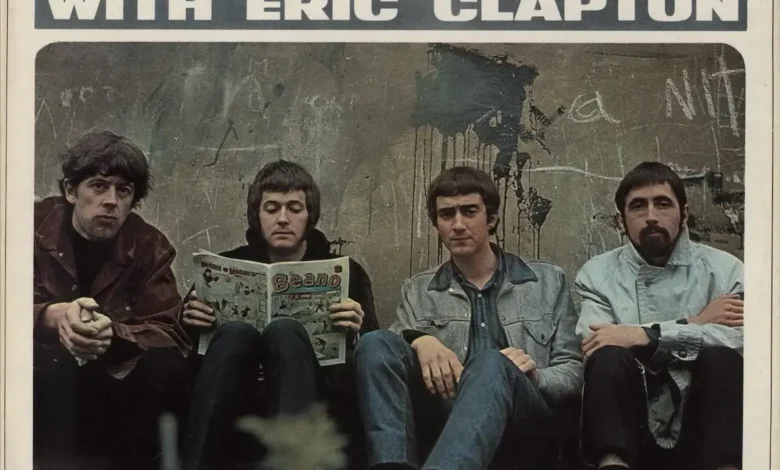
Sixty years ago, David Illingworth, keen to compare Blues Breakers to its inspirations, couldn’t have known that it would become a seminal album, highly regarded for Clapton’s playing and guitar tone. When Blues Breakers with Eric Clapton—often referred to as the "Beano" album due to the comic Eric Clapton is reading on the cover—hit the shelves in July 1966, the British music scene was in a state of rapid transformation. The record, released on Decca Records, served as a lightning rod for the burgeoning blues-rock movement, acting as both a bridge between the Delta masters and the burgeoning London club scene, and a catalyst for the "guitar hero" phenomenon that would define the late 1960s.
The Historical Context of 1966
To understand the significance of the Blues Breakers album, one must consider the cultural climate of mid-1960s Britain. The post-war generation was increasingly turning away from the polished pop of the early Beatles and toward the raw, emotive power of American rhythm and blues. John Mayall, a multi-instrumentalist who had migrated from the North of England to London, had become the self-appointed custodian of the blues in the capital. His band, the Bluesbreakers, functioned as a revolving door for some of the most talented musicians of the era.
In 1965, Eric Clapton had famously left the Yardbirds, citing their move toward commercial pop as a departure from his commitment to the blues. His arrival in Mayall’s band provided the artistic rigor he sought. By the time the quartet entered West Hampstead’s Decca Studios in March 1966, the chemistry between Mayall, Clapton, bassist John McVie, and drummer Hughie Flint had been honed through rigorous live residencies at clubs like The Flamingo and The Marquee.
The Original Critical Reception
When David Illingworth penned his review for Jazz Journal in October 1966, the context was vastly different from the reverent retrospectives written today. Illingworth’s assessment was one of a critic deeply entrenched in the jazz tradition, looking at the blues through the lens of authenticity. He noted, "So, confining our comparisons to the better white bands in this idiom, we find that the Blues Breakers lack the originality and jazz sense of Alexis Korner’s group on one hand and the plain guts of the Butterfield band on the other."
Illingworth’s critique highlights a fundamental tension of the era: the struggle of British musicians to emulate their American idols—Otis Rush, B.B. King, and Buddy Guy—without being dismissed as mere imitators. The review pointedly noted that while Clapton’s guitar work was a "creditable, if overamplified, synopsis" of his influences, it remained secondary to the original 78s and 45s that the British youth were just beginning to discover. This perspective, while harsh by modern standards, accurately reflects the skepticism held by purists who felt that the "white blues" movement was inherently diluted.
Technical Innovations and the "Beano" Sound
Despite contemporary reservations, the technical impact of the album was seismic. The recording is widely credited with establishing the "Les Paul through a Marshall" sound. Clapton’s decision to plug his 1960 Gibson Les Paul Standard into a Marshall JTM45 combo amplifier, pushed to its absolute limits, created a thick, sustaining, and overdriven tone that had rarely been captured on record.
Producer Mike Vernon was tasked with capturing this intensity. The resulting audio landscape was stark and immediate, prioritizing the interplay between the rhythm section and the lead guitar. This sonic blueprint would influence a generation of guitarists, from Peter Green and Mick Taylor to Jimmy Page and beyond. The album did not merely mimic American blues; it synthesized it into a louder, more aggressive format that suited the cavernous concert halls and burgeoning festival stages of the era.
Chronology of the Blues Breakers Era
- 1963: John Mayall forms the Bluesbreakers in London, establishing a residency at the Marquee Club.
- April 1965: Eric Clapton joins the band, leaving the Yardbirds to pursue a more traditional blues direction.
- March 1966: The band enters Decca Studios in West Hampstead to record the album.
- July 22, 1966: Blues Breakers with Eric Clapton is released in the United Kingdom.
- August 1966: The album climbs the UK charts, peaking at number six.
- Late 1966: Eric Clapton departs to form the power trio Cream, signaling the end of the band’s most famous lineup.
Comparative Analysis: The "Authenticity" Debate
The debate over whether British bands could legitimately play the blues was a major theme in 1966 music journalism. Supporters argued that Mayall and Clapton were performing a vital educational service, introducing a wider audience to the works of Freddie King ("Hideaway") and Robert Johnson ("Ramblin’ on My Mind"). Critics, however, pointed to the lack of "jazz sense" and the perceived superficiality of the arrangements.
Looking back, the "imitation vs. innovation" argument appears somewhat binary. The Bluesbreakers were not attempting to recreate the social conditions of the Mississippi Delta or the electrified urgency of the South Side of Chicago; they were creating a new iteration of the music that spoke to a suburban British audience. The album’s inclusion of brass sections, arranged by Alan Skidmore, added a layer of complexity that pushed the band beyond the standard four-piece blues structure, contradicting the notion that the music was purely primitive.
Broader Impact and Industry Implications
The success of the album had immediate industry consequences. Decca Records, which had initially been hesitant to commit to a pure blues project, realized that there was a massive, untapped market for "heavy" blues-rock. This led to a scramble to sign similar acts, effectively fueling the British Invasion’s second wave.
Furthermore, the personnel on the record became the backbone of the British rock establishment. John McVie would go on to join Fleetwood Mac, where his rhythm section work remained a constant. Eric Clapton’s subsequent career—spanning Cream, Blind Faith, Derek and the Dominos, and a prolific solo tenure—can be traced directly back to the musical philosophy he developed under Mayall’s tutelage.
Legacy and Historical Re-evaluation
While Illingworth’s 1966 review correctly identified the band as an act that needed to be heard in clubs, he underestimated the staying power of the recording. Today, the album is studied not for its proximity to the original blues masters, but for the clarity with which it defines the transition from traditional blues to modern rock.
The inclusion of tracks like "All Your Love" and "Double Crossing Time" showcases a band at the peak of their collaborative powers. The production, though viewed as "crudely exciting" in 1966, is now recognized as a masterpiece of minimalism. By avoiding the temptation to overproduce, the record remains an honest document of a specific time and place.
In the final assessment, Blues Breakers with Eric Clapton serves as a textbook example of how a work can be perceived as an derivative experiment by its contemporaries while simultaneously functioning as a cornerstone of musical evolution. It remains an essential artifact, documenting the precise moment when the blues was electrified, amplified, and handed over to a new generation of global listeners. The "mean and loud" sound that David Illingworth championed in his 1966 review did more than shake the foundations of the Albert Hall; it laid the bedrock for the next five decades of rock music.