John Stamos Unveils California Sound as Mike Love’s Health Issues Cloud The Beach Boys’ Future

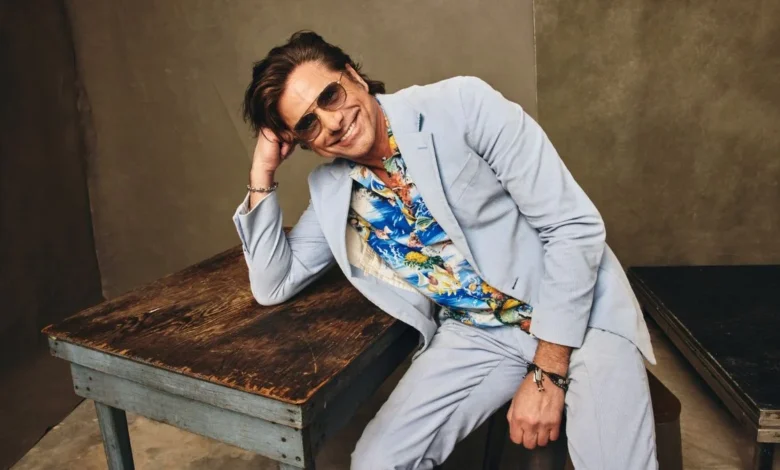
The landscape of classic rock touring is undergoing a significant shift as the long-standing infrastructure surrounding The Beach Boys faces its most precarious period in decades. Disney has officially confirmed that actor and longtime collaborator John Stamos will lead a new ensemble dubbed "John Stamos and the California Sound" for two high-profile performances at the EPCOT International Food & Wine Festival on November 11th and 12th. This pivot replaces previously scheduled appearances by The Beach Boys, highlighting the growing uncertainty regarding the future of the legendary group’s touring operations as frontman Mike Love continues to navigate serious health complications.
The emergence of the California Sound moniker serves as a potential blueprint for the survival of the band’s repertoire in an era where the original touring entity, long anchored by Love, finds itself unable to fulfill performance obligations. While the industry waits for further updates on the octogenarian singer’s recovery, this administrative change at Disney World provides a glimpse into how the musical legacy of The Beach Boys might be preserved if the current touring vehicle is forced to remain sidelined.
A Chronology of Recent Disruptions
The decision to rebrand these specific performances follows a tumultuous period for The Beach Boys’ touring schedule. Throughout 2026, the group has been forced to cancel or postpone a series of dates, a direct result of Mike Love’s declining health.
The timeline of this instability intensified during the late summer and early autumn of 2026. In October, prior to a scheduled show in Nashville, John Stamos—who has maintained a symbiotic relationship with the band since the mid-1980s—publicly addressed the gravity of the situation. Stamos characterized Love’s condition as involving "serious health challenges," tempering fan expectations by noting that while there is hope for a return to the stage, the long-term outlook for the band’s current touring configuration remains fluid.
Following these comments, Mike Love issued a statement confirming his commitment to a rehabilitation process. The 85-year-old musician expressed a desire to return to the road, yet the reality of the touring circuit demands a level of physical endurance that is currently unattainable. This necessitated the pivot for the EPCOT dates, transforming what was meant to be a guest appearance by Stamos into an entirely new, albeit temporary, musical project.
The Legal and Structural Constraints
To understand the necessity of the "California Sound" rebranding, one must look at the legal architecture governing The Beach Boys’ name. Since 1998, Mike Love has held the exclusive license to tour under the name "The Beach Boys." This legal arrangement has provided a level of consistency for the brand, ensuring that audiences attending a show under that banner receive a performance overseen by Love.
However, this exclusivity creates a significant bottleneck. Under the terms of the current licensing agreement, the backing musicians and longtime collaborators who have served as the backbone of the band’s live shows are effectively barred from performing under the official Beach Boys name in Love’s absence. This is not merely a logistical hurdle but a restrictive legal reality that prevents the group’s seasoned professionals from capitalizing on the band’s intellectual property when the primary license holder is incapacitated.
The "California Sound" acts as a workaround, allowing the music to reach audiences without violating the intellectual property constraints of the Beach Boys brand. Whether this project is intended as a temporary placeholder or a strategic pivot for future touring remains the subject of industry speculation.
The Role of John Stamos in the Band’s Legacy
John Stamos has occupied a unique space in the history of The Beach Boys. His involvement dates back over 40 years, beginning as a fan and evolving into an occasional guest drummer and percussionist. His role has provided the band with a bridge to younger generations, and his advocacy for the group’s catalog has been consistent.
Stamos’s transition into the role of a front-facing leader for the EPCOT shows represents an evolution of his relationship with the band. By stepping forward, he is effectively acting as a steward of the material. Analysts suggest that if the current touring operation for The Beach Boys remains stalled, the industry may see more instances where secondary performers utilize distinct project names to keep the music in the public sphere, thereby maintaining the visibility of the catalog while respecting the trademarked entity of the original band.
Market Implications and Fan Reception
The cancellation of The Beach Boys’ dates in favor of a curated performance by Stamos and his new ensemble presents a test case for audience loyalty. The Beach Boys brand is historically tied to the presence of its original or long-tenured members. Replacing that name with a project like "California Sound" carries inherent risks, particularly regarding ticket sales and consumer perception.
However, the EPCOT International Food & Wine Festival environment is uniquely suited for this transition. The venue’s "Eat to the Beat" concert series caters to a demographic that values the music of the era as much as it values the specific branding of the act. If these two shows are successful, it could signal to the industry that legacy acts can survive leadership transitions by focusing on the "sound" rather than the "brand."
Broader Context: The Future of Legacy Touring
The situation involving The Beach Boys is emblematic of a broader trend affecting legacy rock bands from the 1960s and 70s. As founding members reach advanced ages, the viability of touring under historic band names becomes increasingly complex.
Several factors contribute to this growing complexity:
- Insurance and Liability: The physical toll of international and domestic touring is immense. As performers age, the insurance premiums associated with high-profile tours increase, and the likelihood of sudden cancellations due to health issues rises.
- The Licensing Economy: Many classic rock acts have sold or franchised their names to limited liability companies or individual members. This creates a rigid structure that often fails to account for the sudden health-related departure of a key license holder.
- Audience Expectations: There is a growing divide between purists who insist that a band name should be retired when the primary members depart, and a segment of the audience that is satisfied with high-quality tribute or legacy performances.
Industry experts note that the strategy currently being employed by the Stamos team may become the standard for bands facing similar crossroads. By establishing a neutral but descriptive title like "California Sound," the musicians involved can continue to work and provide content to fans without becoming entangled in the legal battles that often accompany the dissolution or renaming of famous entities.
Official Responses and Future Outlook
While neither Mike Love nor his representatives have provided extensive commentary on the specific formation of "California Sound," the general consensus from the Beach Boys’ camp is one of support for any initiative that keeps the music alive. The focus remains, for the moment, on Love’s rehabilitation.
The November 11th and 12th shows at the America Gardens Theatre are being treated as a distinct, isolated project. No announcements have been made regarding a tour or subsequent recordings under the California Sound name. Nevertheless, the situation remains fluid. Should the health challenges facing the primary Beach Boys touring operation persist into 2027, the industry may look back at these two dates at Disney World as the moment the paradigm for the band’s future was established.
For those concerned with the preservation of the American musical canon, the focus remains on the longevity of the songs themselves. Whether performed under the banner of The Beach Boys or a project like California Sound, the enduring popularity of the group’s mid-century hits remains a cornerstone of the live music industry.
Conclusion
The evolution of The Beach Boys’ touring status reflects the inevitable intersection of aging rock icons and the rigid legal structures of modern music commerce. As the industry watches the development of the "California Sound" project, the broader takeaway is the resilience of the music itself. Whether this represents a permanent change or a brief detour, it highlights the importance of adaptability in an industry that is increasingly defined by the necessity of sustaining legacy acts well beyond their traditional touring years.
As of now, all eyes are on the EPCOT performances. The success of these shows may provide the definitive answer to whether the music of The Beach Boys can successfully transition into a post-Love touring model, or if the band’s identity is too inextricably linked to its historical name to exist in any other form. For now, the legacy continues—if only in a new and experimental capacity.