Three Latin Music Power Players on Being Managers in Today’s Industry: ‘It’s The Work That Goes Unseen’

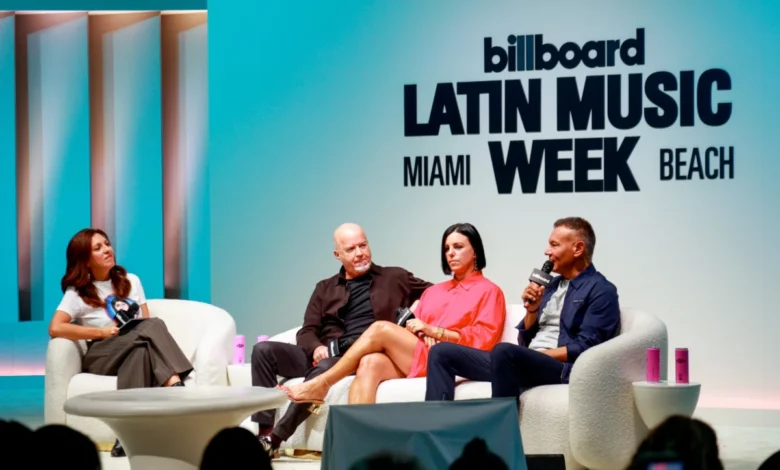
The Evolution of the Modern Manager
The role of the artist manager has undergone a seismic shift over the last decade. As Latin music has transitioned from a regional powerhouse to a dominant global genre, the infrastructure supporting these artists has had to adapt. During the panel, the participants emphasized that the current era demands more than just booking agents or publicists; it requires a holistic "architect" of an artist’s brand.
Jorge “Pepo” Ferradas, president and CEO of FPM Entertainment, noted that the industry often suffers from a misunderstanding of what occurs behind the scenes. For his roster, which includes international icons like Camilo, Evaluna Montaner, Rauw Alejandro, and Rels B, the work is a continuous cycle of preparation that often goes unnoticed by the public. "It is the work that goes unseen," Ferradas explained. "It is clear that it is not magic; the locomotive of the train is the music, the song, and the artist. But everything that happens around it seems like magic—it seems like no one is doing it. There is a team behind the scenes planning the strategy."
Strategic Vision and the Discipline of Growth
Walter Kolm, founder and CEO of WK Entertainment, offered a pragmatic perspective on the relationship between manager and artist. Representing a roster that includes Carlos Vives, Morat, Emilia, and Xavi, Kolm argued that the primary value of a manager lies in their ability to provide objective, often difficult, feedback.
"I always tell artists: ‘You pay us to tell you what we think, not what you want to hear,’" Kolm stated. This philosophy underscores the tension that often defines the manager-artist dynamic. According to Kolm, the manager serves as the "strategist" who understands the market through years of experience, observation, and data analysis. He stressed that a manager’s role is not merely to secure dates or shows, but to design a roadmap that ensures long-term sustainability rather than short-term gains.

Rebeca León, CEO and co-founder of Lionfish Entertainment, echoed the sentiment regarding the intensity of the profession. León, whose career is marked by the global success of artists such as Juanes, Rosalía, and currently Anitta, Danny Ocean, Tokischa, and Aria Vega, described management as a process of constant foresight. "Being a manager is having vision," León said. "Visualizing how the artist will grow, how that will develop. Always thinking months, years ahead; if you are in the here and now, you are late."
The Emotional and Professional Cost
The panel discussion touched heavily on the personal sacrifices inherent in the music management industry. León highlighted the "selfless" nature of the work, noting that a manager must often set aside their own path to facilitate the dreams of another. The ability to remain detached from personal rejection is, according to León, a professional necessity. "You have to be able to get rejected by somebody and have dinner with them the same day," she observed. This requires a level of emotional discipline that she believes is not suited for everyone.
Ferradas added that the pressure managers exert on their artists is not a form of antagonism, but a necessary component of professional success. "When we ask for discipline and work time, it is because we know it works—it is not about pressure," he clarified. He suggested that there is a mutual, ongoing negotiation of trust: the artist questions why they have hired the manager, while the manager questions the efficacy of their own persistent guidance.
Data-Driven Success in the Latin Market
The insights provided by the panelists occur against the backdrop of an explosive period for Latin music globally. According to industry data, the consumption of Latin music has grown at an exponential rate, fueled by the rise of streaming platforms and a more interconnected global touring market. In 2026, the "Spanish-Speaking Touring Corridor" has become one of the most profitable sectors in the music industry, with major arenas in North America, Europe, and Latin America consistently selling out for artists managed by the trio on stage.
This growth, however, has made the role of the manager significantly more complex. Managers must now navigate cross-border licensing, digital marketing algorithms, and the integration of artificial intelligence in content creation. The panel touched upon these issues, emphasizing that while the tools of the trade have evolved, the core requirement—the quality of the music—remains constant.

Kolm reiterated that everything in the music business originates from the repertoire. "Everything starts with the music—let’s not forget that this is a business of music and songs," he said. He emphasized that the "product" must be developed with care, utilizing the best producers and writers available, before an artist can be effectively pushed into new, competitive markets.
Implications for the Future of the Industry
The discussion at the Faena Forum serves as a microcosm for the broader state of the music industry in 2026. As the lines between independent and major-label production continue to blur, the power of the manager as an independent authority has grown. The panelists’ emphasis on "discipline" and "strategy" signals a move away from the chaotic, high-risk strategies of the past toward a more clinical, business-oriented approach to artist development.
This shift has significant implications for aspiring artists and managers alike. The consensus among the panel was that the industry is moving toward a more professionalized standard. The era of the "accidental" hit is being replaced by calculated, data-informed campaigns. However, the panelists cautioned that no amount of data can replace the human element of mentorship and the courage required to make difficult, strategic decisions.
A Legacy of Guidance
The Billboard Latin Music Week 2026 panel not only provided a platform for industry veterans to share their wisdom but also underscored the vital role of the manager in preserving the integrity of the artist’s vision. Whether it is through the meticulous planning of a global tour or the careful curation of a new album’s sound, the work of Ferradas, León, and Kolm highlights that behind every chart-topping star is a dedicated team of professionals committed to the long-term viability of the artist’s career.
As the industry looks forward, the lessons shared during this panel will likely continue to influence how the next generation of managers approaches their craft. By balancing the cold realities of market dynamics with the deeply personal nature of artistic support, these managers have defined the standards for excellence in a rapidly changing global musical landscape. Their testimony serves as a reminder that while the music may be the heartbeat of the industry, the managers are the ones who ensure that heart continues to reach audiences around the world.