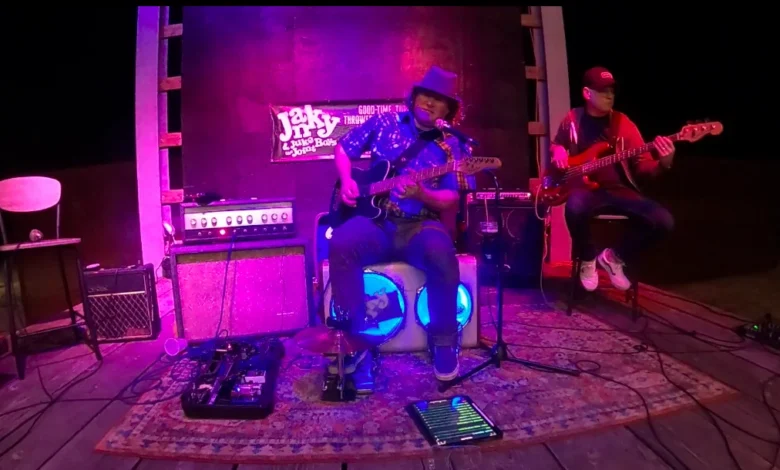
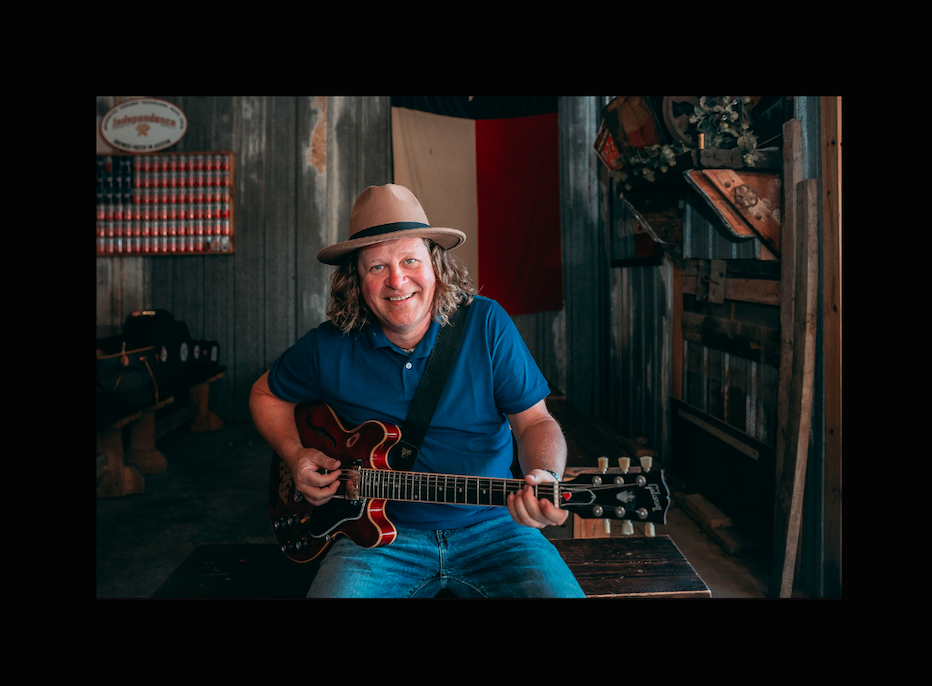
In the sprawling, humid landscape of the American South, the North Mississippi Hill Country blues stands as a distinct musical monolith, separate from the structured, formulaic traditions of Chicago or the Delta. At the center of this movement’s modern preservation is Scott "Janky" Lindsey, a veteran guitarist and producer whose journey from a suburban upbringing in Shreveport, Louisiana, to the heart of the Holly Springs music community serves as a case study in cultural stewardship. For Janky, the Hill Country sound is not merely a genre; it is a rhythmic, hypnotic tradition rooted in the church, defined by the "gospel 1-2" beat, and sustained by a tight-knit family of musicians who view their craft as a communal, living legacy.
The genesis of Janky’s musical identity began in the shadow of giants. Growing up in Shreveport, he resided just doors away from James Burton, the legendary guitarist known for his work with Elvis Presley. However, it was a 1980s introduction to the theatrical rock of KISS that first ignited his creative spark at age 15. The formative years were marked by a struggle for resources; a youthful request for a guitar resulted in an entry-level instrument from a retail catalog. His father’s subsequent challenge—to prove his commitment for one year—led him to Max’s Pawn Shop, where he acquired a "Laser" Stratocaster copy. This modest beginning propelled him into the local band circuit, where he would eventually pivot toward the raw, percussive sounds of R.L. Burnside and the trance-inducing rhythms that would define his career.
Chronology of a Musical Education
Janky’s trajectory shifted significantly when he discovered the open-tuning techniques of R.L. Burnside. His early foray into punk-blues with the band The 1969s allowed him to experiment with the high-energy, distorted edges of the Hill Country style. The turning point occurred at a major industry event where he shared a bill with Reverend K.M. Williams, a Dallas-based bluesman known for his mastery of the cigar box guitar.
Recognizing a kindred spirit, Janky spent the next six years serving as Williams’ bassist. This tenure proved to be an exhaustive education in the philosophy of "simple" music. Williams famously instructed him to "listen to your feet," urging him to study Side 4 of John Lee Hooker’s Hooker ‘n Heat—a recording that isolates the percussion of the artist’s own feet against the floorboards. This period was critical; it stripped away the ego of the soloist and forced Janky to understand the foundational importance of rhythm in the Hill Country tradition.
The Mechanics of the Hill Country Sound
The Hill Country style is fundamentally distinct from the 12-bar, I-IV-V progression that dominates mainstream blues. While critics often mistake the genre for repetitive, Janky notes that its complexity lies in the deliberate, prolonged use of the "one" chord and the avoidance of conventional structural transitions.
Data-driven analysis of the genre reveals why it persists in a "vacuum" while other blues forms have been commodified. Unlike the musicians of the Mississippi Delta who migrated to urban centers like Chicago, the Hill Country practitioners in Holly Springs, Como, and Clearwater remained geographically isolated. This isolation preserved a trance-like aesthetic that relies on percussive right-hand techniques, effectively turning the guitar into a drum.
Janky explains that the "Cotton Patch Soul Blues" and Hill Country styles are often mischaracterized as simply "sad." In reality, they are centered on the juke joint experience—a trance-induced, communal celebration. "It’s about the beat," Janky notes. "You can feel it in your bones." This is a sentiment shared by contemporaries like Terry "Harmonica" Bean, who observed that in historical regional "battles of the bands," the Hill Country groups consistently drew larger crowds specifically because the gospel-infused, driving beat was impossible for audiences to ignore.
The Blues Fund and Economic Advocacy
Beyond his performance career, Janky has emerged as an advocate for the economic viability of the genre through his nonprofit, The Blues Fund. The organization addresses a systemic failure in the music industry: the lack of legal and financial infrastructure for independent, legacy blues artists.
The fund’s operations are multifaceted, covering:
- Production and Archiving: Providing high-quality recording services to artists who would otherwise lack the capital to document their work.
- Estate and Royalty Management: Assisting families in navigating the complexities of music rights, a recurring issue where descendants of legendary performers receive no compensation for the ongoing use of their relatives’ catalogs.
- Emergency Assistance: Facilitating funeral expenses for musicians who died in poverty, a sobering reality of the industry’s lack of a social safety net.
Janky’s work with artists like Robert Kimbrough, Peggie "Lady Trucker" Hemphill, and the late Little Joe Ayers highlights a transition from pure artistic pursuit to active preservation. His efforts to help Queen Ireta regain control of her own recordings—previously held by an ex-husband—underscores the broader, structural inequities that The Blues Fund seeks to dismantle.
The Modern Juke Joint and Future Prospects
Despite the decline of the traditional juke joint, Janky points to "Red’s" in Clarksdale as the standard-bearer for authenticity. These venues are characterized by a lack of stage separation, limited amenities, and an atmosphere that prioritizes the communal "party" over the performative concert. For Janky, these spaces are not relics but active classrooms.
The future of the genre appears to rest with a new generation of musicians who are being mentored within this ecosystem. Artists such as Ryan Washington of Spit Cup and the Jukes represent the continuity of the tradition. Janky’s role in producing Washington’s debut album, Spit Cup’s Juke Joint, was less about dictating sound and more about encouraging the artist to synthesize the influences of mentors like Junior Kimbrough into original, authentic material.
Implications of Cultural Preservation
The broader impact of Janky’s work lies in the rejection of "formulaic" blues. By pushing back against the 12-bar standardization that has defined the post-Stevie Ray Vaughan era of Texas blues, he argues for a return to the visceral, unpolished roots of the genre.
His ongoing, yet-to-be-published work—a dystopian novel theorizing music as a viral, resonant force—mirrors his real-world perspective: that music is an intangible but essential element of human physiology. When he speaks of his collaborations with the Kimbrough, Hemphill, and Burnside families, he frames his role not as an outsider but as an adopted member of a lineage.
"I don’t want music to be perfect," Janky stated during a recent reflection on his production philosophy. "I want it to have the grittiness." This philosophy is the cornerstone of his approach to the studio. By treating imperfections as markers of authenticity rather than errors, he ensures that the recordings he produces capture the live, "juke joint" energy that defines the Hill Country.
As the industry continues to consolidate and the original masters of the Hill Country style pass on, the work of figures like Janky becomes increasingly vital. Whether through the digital dissemination of albums that were previously trapped in physical-only formats or through the legal defense of artist rights, the objective remains clear: to ensure that the music remains "real." In the context of American music history, this represents a shift from passive listening to active stewardship—an attempt to keep the flame of the Hill Country sound burning in an era that often favors polished, mass-produced commodities over the raw, syncopated heartbeat of the Mississippi hills.