Afrika Bambaataa, A Foundational Architect of Hip-Hop and Global Cultural Pioneer, Dies at 68

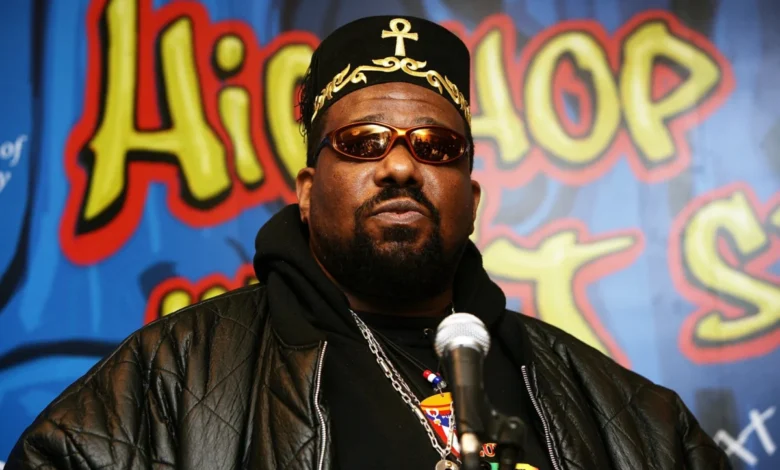
The global music community is mourning the loss of Afrika Bambaataa, a seminal figure widely acknowledged as one of the founding fathers of hip-hop culture, who has passed away at the age of 68. Born Lance Taylor, the visionary rapper, DJ, and producer died on Thursday, April 9, in Pennsylvania. According to confirmation provided by his legal counsel to the Associated Press, the cause of death was complications related to prostate cancer.
Bambaataa’s death closes the chapter on a life deeply intertwined with the birth, international expansion, and evolution of hip-hop. Alongside contemporaries such as DJ Kool Herc and Grandmaster Flash, Bambaataa helped author the blueprint for a cultural movement that grew from the marginalized neighborhoods of the South Bronx into a dominant global force over the past five decades. However, his passing also brings renewed focus to a deeply polarized legacy, one irrevocably complicated by severe allegations of sexual abuse that surfaced during the later decades of his life.
The announcement of his death prompted reflections from across the entertainment industry, balancing reverence for his artistic contributions with acknowledgment of the controversies that shadowed his final years. As the hip-hop community processes the news, historians and cultural critics alike are examining the full spectrum of a complex life that helped shape modern music history.
From the South Bronx to Global Prominence: The Rise of a Pioneer
Born in the South Bronx, New York, Lance Taylor’s early life reflected the socio-economic turbulence of inner-city America during the 1960s and 1970s. Before he adopted the moniker Afrika Bambaataa—named after a 19th-century Zulu chief, a persona inspired by the film Zulu—Taylor was a prominent member of the Black Spades, one of the most notorious street gangs in New York City.
However, influenced by the turbulent political and social consciousness of the era, as well as the nascent block parties energized by early pioneers like DJ Kool Herc, Bambaataa redirected his leadership capabilities away from gang violence and toward community organization and artistic expression. In the 1970s, he founded the Universal Zulu Nation, an international hip-hop awareness group and art collective designed to promote peace, unity, love, and community building through creative arts.
Bambaataa is widely credited with helping to codify and institutionalize the four foundational pillars of hip-hop culture: DJing (turntablism), MCing (rapping), breakdancing (b-boying), and visual graffiti art. By channeling the energies of local youth into these creative disciplines, he transformed the cultural landscape of New York City, establishing a platform for marginalized voices to be heard on a global scale.
Musical Innovation and the Impact of Planet Rock
While Bambaataa’s cultural contributions through the Universal Zulu Nation were immense, his impact as a recording artist permanently altered the trajectory of modern music. In 1982, Bambaataa and his backing group, the Soulsonic Force, released the groundbreaking track "Planet Rock."
"Planet Rock" was a watershed moment in electronic and hip-hop music production. Produced by Arthur Baker and featuring an innovative fusion of synthesized beats, the track famously sampled elements from German electronic pioneers Kraftwerk, specifically blending melodies from their compositions "Trans-Europe Express" and "Numbers." The resulting sound birthed the electro-funk and electro-rap genres, influencing countless dance-pop, techno, and hip-hop records for decades to come.
The song cracked the top 50 of the Billboard Hot 100, proving that underground hip-hop sounds could achieve commercial viability and mainstream crossover appeal. It demonstrated the genre’s expansive sonic potential, encouraging producers to experiment with cross-genre sampling and futuristic soundscapes. For his pioneering work, Bambaataa earned a revered status among musicians, producers, and fans worldwide.
Industry Reactions and the Weight of a Complex Legacy
Following news of his passing, figures within the music industry offered measured tributes that reflected the dual nature of Bambaataa’s public standing. Kurtis Blow, serving as the executive director of the Hip Hop Alliance, issued a statement addressing the milestone and its associated complexities.
"Today, we acknowledge the transition of a foundational architect of Hip Hop culture, Afrika Bambaataa," Blow stated. "[He] helped shape the early identity of Hip Hop as a global movement rooted in peace, unity, love, and having fun. His vision transformed the Bronx into the birthplace of a culture that now reaches every corner of the world. At the same time, we recognize that his legacy is complex and has been the subject of serious conversations within our community."
This sentiment captures the overarching dilemma faced by cultural historians, peers, and fans. Bambaataa’s contributions to the arts are historically indelible, yet they exist in stark contrast to the serious allegations that emerged against him later in life, casting a long shadow over his historical standing.
Chronology of Allegations and Legal Battles
While Afrika Bambaataa enjoyed decades of uninterrupted reverence as a cultural ambassador, his reputation fractured significantly in the mid-2010s following a series of public accusations.
In 2016, public allegations against Bambaataa surfaced when a man named Ronald Savage claimed that the musician had sexually abused him during the 1980s when Savage was a young teenager. The accusations sent shockwaves through the hip-hop community, prompting widespread debate and leading Bambaataa to step down from his leadership position within the Universal Zulu Nation. Bambaataa consistently denied these initial allegations. Years later, in 2024, Savage walked back portions of his claims in an interview with AllHipHop, stating that the interactions were consensual with someone he believed was of age, though the initial disclosure had already opened the floodgates for other accusers.
Following Savage’s public statements, several other men came forward with similar accusations, alleging that Bambaataa had abused them while they were underage teenagers involved with his community programs or social circles.
The legal consequences culminated in 2021 when an anonymous plaintiff filed a civil lawsuit against Bambaataa. The plaintiff alleged that the musician had sexually abused and trafficked him for a period of four years, beginning in 1991 when the victim was 12 years old and Bambaataa was in his 30s. Bambaataa failed to respond to the legal filings or make court appearances as the litigation progressed. Consequently, in 2025, a civil court judge ruled against him by default, awarding a judgment in favor of the alleged victim. Bambaataa’s legal team never mounted a substantive defense against these civil charges, leaving the default judgment as the final legal determination in the matter.
Broader Cultural Implications and Historical Assessment
The death of Afrika Bambaataa forces the hip-hop community—and the broader entertainment industry—to confront an increasingly common modern dilemma: how to appropriately memorialize and evaluate historical figures whose immense cultural achievements are matched or overshadowed by severe personal misconduct.
As an architect of hip-hop, Bambaataa’s placement in the historical narrative of American music is secure. His creation of the Universal Zulu Nation provided a framework of self-determination and artistic expression for generations of youth, and his production work on "Planet Rock" remains a masterclass in musical innovation. Institutions, documentaries, and music history textbooks will forever record his role in bringing hip-hop from park jams to international prominence.
Simultaneously, the civil judgments and multiple allegations against him ensure that his narrative will not be remembered through a purely celebratory lens. Observers, cultural analysts, and survivors’ advocates emphasize that the preservation of music history must coexist with accountability, ensuring that the experiences of victims are not erased by the monumental status of the artist.
As tributes pour in from around the world, the discourse surrounding Afrika Bambaataa’s passing encapsulates the broader evolution of contemporary cultural accountability. The duality of his legacy serves as a permanent reminder that artistic genius and personal integrity do not always align, leaving future generations to grapple with the multifaceted reality of one of music’s most influential figures.