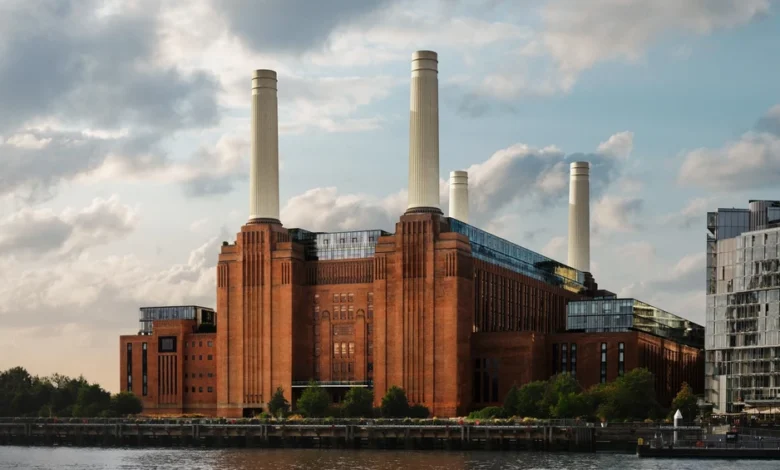
The iconic skyline of London is set to witness a historic fusion of industrial heritage and cutting-edge audio technology as Apple prepares to unveil the Apple Music Hall. Located within the recently redeveloped Battersea Power Station, the new 600-capacity venue represents a significant strategic pivot for the technology giant. Scheduled to open its doors on September 28, the space is designed not merely as a concert hall, but as a sophisticated multimedia hub intended to bridge the gap between live performance and global digital streaming.
A Convergence of Industrial Heritage and Modern Audio Engineering
The choice of Battersea Power Station—a Grade II* listed building that once served as a primary source of electricity for London—provides a symbolic backdrop for Apple’s new venture. The venue’s design has been meticulously crafted to echo the aesthetic of the original architecture while concealing a high-tech infrastructure that is, according to Apple executives, unparalleled in the industry.
Central to the venue’s technical specifications is an immersive 48-speaker spatial audio system. This configuration is designed to provide an acoustically precise environment that envelops the audience, simulating the depth and clarity often associated with high-end studio recordings. Furthermore, the hall is equipped with a grid of 16 professional-grade cameras capable of capturing high-fidelity video footage, allowing for seamless global livestreams. These performances can be recorded directly in Spatial Audio, ensuring that the legacy of each concert is preserved with the same sonic fidelity experienced by those physically present in the room.
Operational Infrastructure and Technical Ambition
Beyond the primary performance space, the Apple Music Hall facility includes two dedicated professional recording and mixing studios, alongside a specialized broadcast production room. This infrastructure effectively creates an end-to-end production pipeline: artists can rehearse, record, mix, and perform live in the same facility, with the output optimized for the Apple Music ecosystem.
The facility also marks a significant operational shift for the company’s broadcasting arm. Apple Music Radio has relocated its London-based production teams to new, state-of-the-art studios within the Battersea complex. This move centralizes the platform’s European broadcast operations, allowing for a more cohesive integration between live programming, artist interviews, and on-site event coverage.
Oliver Schusser, Apple’s vice president, emphasized the intent behind the venue’s scale during a recent briefing with the BBC. "We have really no interest in trying to be in the way of anyone else, and that’s one of the main reasons it’s a smaller space," Schusser noted. He further asserted that the integration of audio and video recording equipment makes the Apple Music Hall home to "more cameras and speakers than any venue of its size, anywhere in the world."
Strategic Implications for the Music Industry
The establishment of this venue arrives at a complex time for the digital music sector. Apple Music has recently navigated a shifting economic landscape, having announced its first subscription rate increase in four years this past July. The company cited "rising licensing costs" as the primary driver for this adjustment, a move that reflects the broader financial pressures facing major streaming platforms as they contend with demands from rights holders and record labels.
Furthermore, the venue arrives as the industry grapples with the rapid integration of artificial intelligence into creative workflows. Apple has recently implemented a system of "Transparency Tags" to identify music and art that has been generated or assisted by AI. While currently optional, the company has indicated that it intends to move toward a mandatory disclosure framework. The Apple Music Hall could serve as a vital testing ground for these policies, offering a space where human-led, "authentic" live performances are prioritized and showcased in an era of increasing digital automation.
The Vision: Connecting Artists and Fans
Zane Lowe, Apple Music’s global creative director, positioned the venue as an extension of the platform’s core mission. In a press statement, Lowe emphasized that the initiative is rooted in a desire to deepen the relationship between creators and their audiences.
"At Apple Music, we care deeply about music, the artists who make it, and their life stories," Lowe stated. "We’re always looking for new opportunities to connect the artists and the fans because we are fans. What better way to celebrate this relationship than a new music venue where we get to experience amazing music in an amazing space and share it with the world."
The venue is intended to serve as a bridge, transforming the traditional concert experience into a global event. By utilizing the facility’s broadcast capabilities, Apple aims to make the "Battersea experience" accessible to millions of subscribers who may never set foot in London, effectively turning a localized physical venue into a global digital platform.
A Timeline of Transformation
The Battersea Power Station project has been over a decade in the making. Once a derelict industrial site, the area underwent a multi-billion-pound regeneration effort that transformed the decommissioned coal-fired power station into a mixed-use development comprising retail, residential, and office spaces. Apple’s arrival in this space is a significant milestone for the development, which has sought to position itself as a hub for technology and media companies.
- 2012: The Battersea Power Station Development Company begins the master plan for the site’s regeneration.
- 2021: Apple relocates its London headquarters to a sprawling office space within the power station, signaling a long-term commitment to the area.
- July 2023: Apple announces its first subscription price hike in four years, signaling a shift in monetization strategies.
- Mid-2024: Apple introduces Transparency Tags for AI-generated content on its platform.
- September 2024: The Apple Music Hall is scheduled to officially open its doors to the public.
Analytical Perspective: The Future of Hybrid Venues
Industry analysts suggest that the creation of the Apple Music Hall reflects a broader trend among "Big Tech" firms to move beyond pure distribution and into the creation of proprietary content experiences. By controlling the venue, the recording process, and the distribution platform, Apple is creating a vertically integrated ecosystem that provides a distinct competitive advantage over rivals like Spotify or Amazon Music.
The focus on "Spatial Audio" is also significant. Apple has been a vocal proponent of Dolby Atmos and spatial audio technology, attempting to standardize high-fidelity listening as the premium tier for the modern consumer. A venue purpose-built to showcase this technology serves as a powerful marketing tool, demonstrating the capabilities of the hardware (such as AirPods and HomePods) to a live audience in a way that digital demos cannot match.
However, the limited 600-person capacity suggests that Apple is not looking to compete with massive arenas or stadium tour venues. Instead, the focus appears to be on exclusivity, intimacy, and high-quality production. The venue is likely to host "special event" programming, album launch showcases, and curated live series that prioritize the quality of the broadcast over the sheer volume of ticket sales.
Looking Ahead: The Programming Challenge
While the technical specifications of the Apple Music Hall have been well-documented, the programming strategy remains the next major variable. Industry observers are waiting to see how Apple balances its corporate interests with the need for organic, culturally relevant music programming.
The schedule for the opening season, which is expected to be announced in the coming weeks, will likely serve as an indicator of the venue’s long-term artistic direction. If the hall can attract high-profile artists who utilize the recording and broadcast tools to produce unique, one-off performances, it could establish itself as a premier destination for musicians looking to leverage Apple’s global reach.
As the industry watches the September 28 launch, the Apple Music Hall stands as a testament to the ongoing evolution of the concert experience. By marrying the legacy of London’s industrial past with the digital potential of the future, Apple is betting that the key to the next phase of the music business lies in creating spaces where the physical and the virtual are no longer distinct, but rather, one singular, immersive experience. Whether this strategy will redefine live entertainment or remain a niche showcase for premium audio remains to be seen, but the sheer technical ambition of the project ensures it will be a focal point for the global music community for years to come.