EarthQuaker Devices Unveils Limited-Run Plumes Jr. and Blumes Jr. Pedals Featuring New MOSFET Clipping Modes

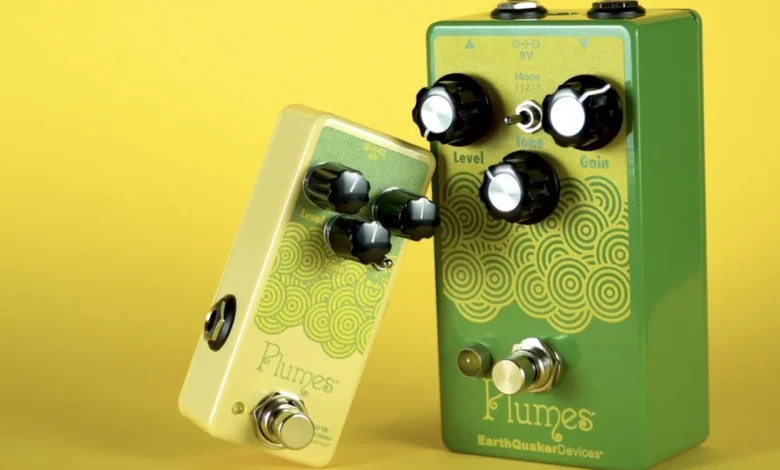
EarthQuaker Devices, a prominent independent boutique guitar pedal manufacturer based in Akron, Ohio, has announced the official release of a special, limited-run series featuring two of its most celebrated stompboxes: the Plumes Small Signal Shredder and the Blumes Low Signal Shredder. Available now in downsized "Jr." enclosures, these updated iterations introduce a highly anticipated addition to their clipping architecture—a dedicated MOSFET (Metal-Oxide-Semiconductor Field-Effect Transistor) stage. This modification expands the sonic versatility of both pedals, giving guitarists, bassists, and synthesizer enthusiasts new avenues for tonal exploration without sacrificing the core characteristics that made the original full-sized circuits industry staples.
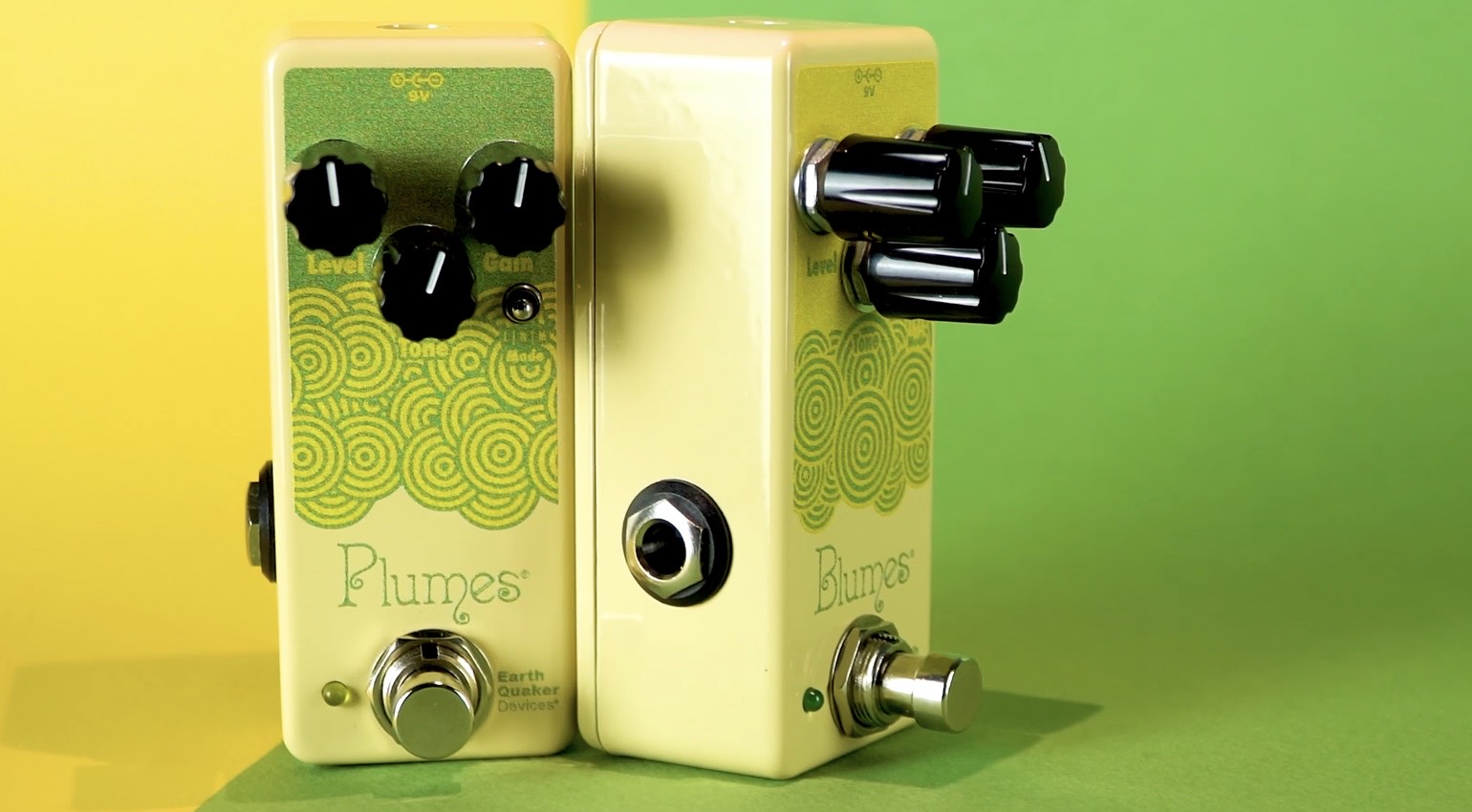
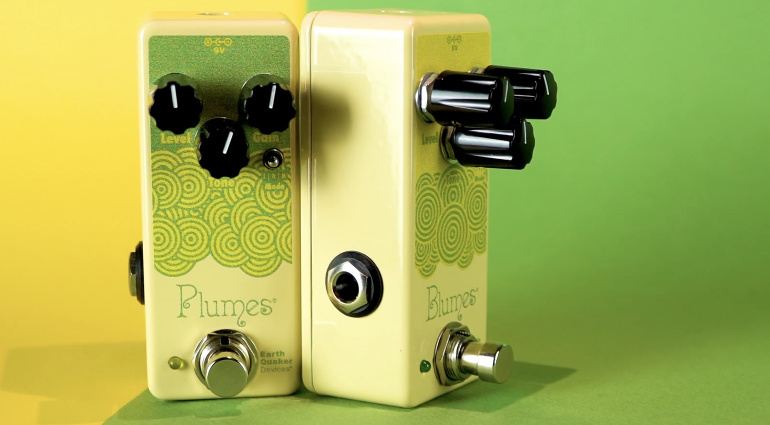
The release marks a significant moment for the brand, catering to modern pedalboard architects who prioritize space-saving footprints while demanding professional-grade tone-shaping capabilities. Both the Plumes Jr. and the Blumes Jr. Mod retain the intuitive control sets of their predecessors while packing refined circuitry into a more compact physical format.
Main Facts and Core Specifications
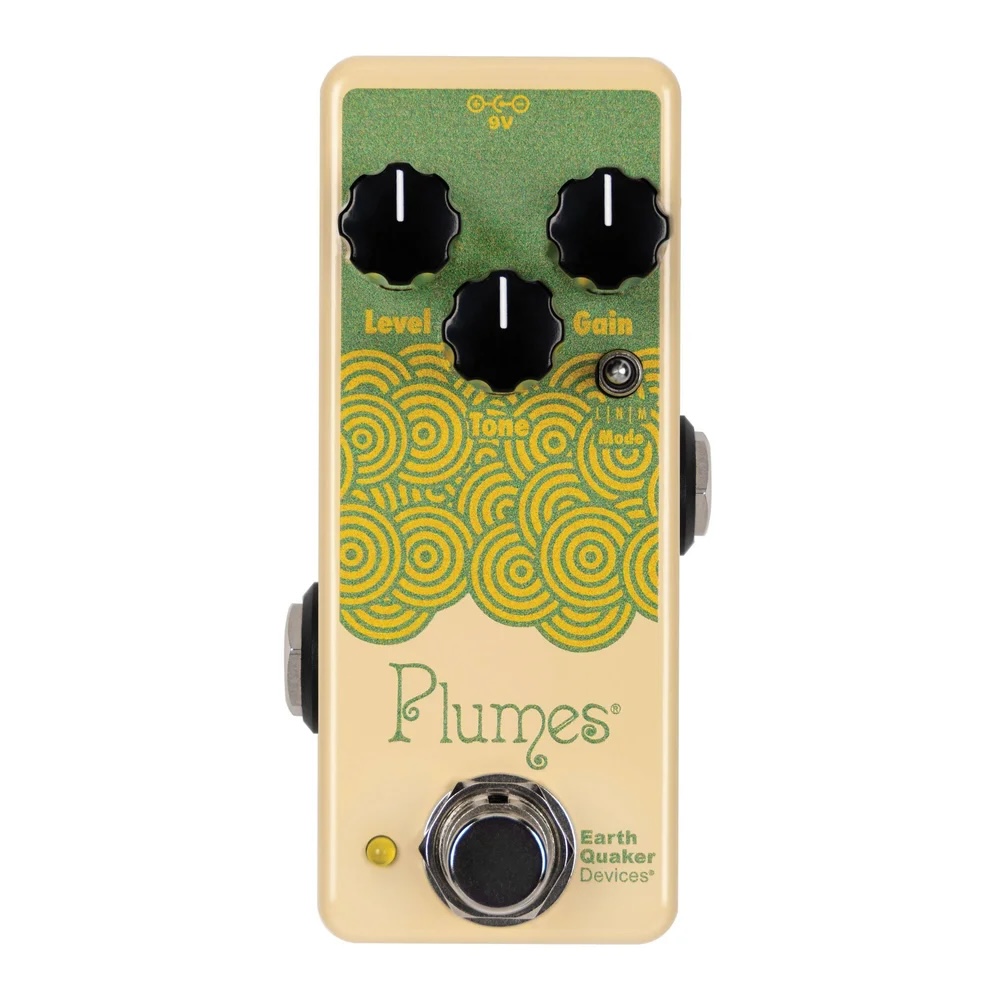
The newly launched Plumes Jr. and Blumes Jr. are engineered around a three-way mini-toggle switch that dictates the clipping topology of the circuit. While the original Plumes famously discarded traditional diodes in favor of a clean operational amplifier (op-amp) drive and added LED clipping for a glassy, high-output crunch, this limited run incorporates a third option: the MOSFET stage.
By substituting traditional silicon diodes with MOSFETs, EarthQuaker Devices has engineered a clipping mode that yields a notably dynamic response and a richer, more harmonic drive character. MOSFET clipping is widely revered in the guitar pedal community for emulating the warm, touch-sensitive breakup characteristic of overdriven vacuum tube amplifiers.
Despite the reduction in physical enclosure size, the control interface remains uncompromised. Users retain precise command over:
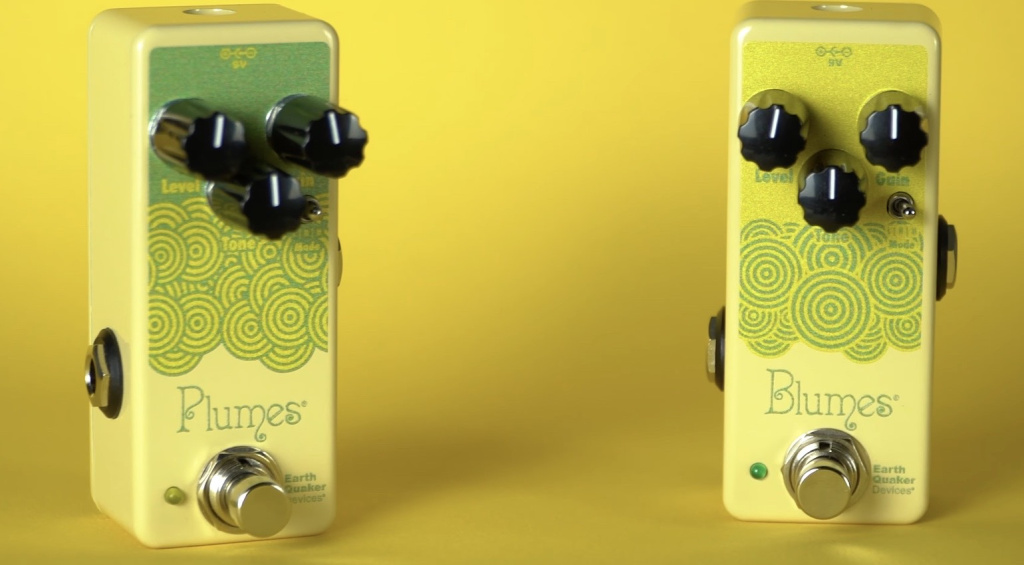
- Level: Controls the overall output volume of the pedal, providing ample boost capability to push the front end of a tube amplifier into natural saturation.
- Gain: Adjusts the amount of distortion and sustain, ranging from clean boost territory to thick, harmonically dense overdrive.
- Tone: A specialized active tone control that shapes the frequency response, allowing players to scoop mids, boost bass, or cut treble without losing clarity.
- Clipping Toggle: A three-way switch allowing instant toggling between LED clipping, clean op-amp drive (non-clipping mode), and the newly integrated MOSFET stage.
While the Plumes Jr. remains tailored primarily for electric guitar—exceling as a standalone overdrive, a transparent boost, or a tight mid-forward rhythm pusher in front of high-gain amplifiers—the Blumes Jr. is specifically optimized for low-end preservation. The Blumes variant is uniquely voiced to handle extended-range guitars, baritone instruments, 4- and 5-string bass guitars, and hardware synthesizers, ensuring that low-frequency content remains robust, punchy, and uncompressed even under heavy distortion.
Chronology and Background Context
To understand the significance of this release, one must examine the trajectory of EarthQuaker Devices and the cultural footprint of the original Plumes overdrive, which was first introduced to the market in 2019. Designed by company founder Jamie Stillman, the original Plumes was conceived as a fresh take on the classic mid-forward overdrive circuit topology (popularized by pedals like the Tube Screamer), but with significant modern architectural improvements.
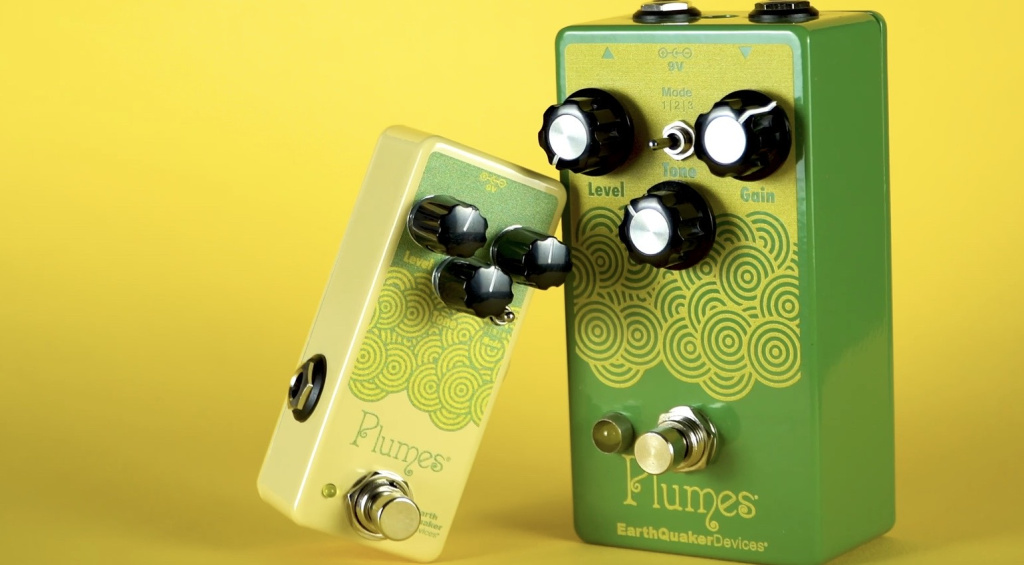
Unlike traditional vintage circuits that rely on silicon clipping diodes to achieve compression and distortion, the original Plumes utilized a unique JFET-based op-amp circuit combined with asymmetrical LED clipping. This design choice eliminated the muddy low-end loss and compressed dynamic range often associated with legacy mid-hump overdrives, resulting in massive headroom, exceptional clarity, and widespread adoption across diverse musical genres ranging from indie rock to modern metalcore.
Building upon the monumental commercial and critical success of the Plumes, EarthQuaker Devices subsequently released the Blumes Low Signal Shredder, adapting the circuit topology for lower frequencies and catering directly to bassists and synth players.

The introduction of the "Jr." series enclosures combined with the MOSFET modification represents an evolutionary step for both designs. While EarthQuaker Devices has occasionally released limited-run aesthetic variations and custom shop iterations, the integration of a completely new clipping voice into a miniaturized housing signals a direct response to contemporary player demands for pedalboard real estate conservation combined with expanded tonal palettes.
Engineering Analysis: The Impact of MOSFET Clipping
From a technical standpoint, the integration of MOSFET clipping into the Plumes and Blumes circuits represents a calculated shift in how the pedal interacts with instrument signals.
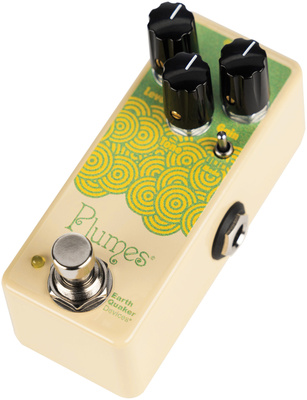
Standard silicon diodes clip symmetrical waveforms sharply and quickly, producing a compressed, smooth, but sometimes sterile distortion. LED clipping, utilized in position one of the new pedals, offers a higher forward voltage drop, resulting in a more open, crunchier sound with significantly more output volume and less compression.
MOSFETs, when configured as clipping diodes, exhibit a softer, more gradual transition into saturation. Because they pass current in a manner that closely mimics the grid-to-cathode conduction of vacuum tubes, MOSFET clipping stages typically deliver:
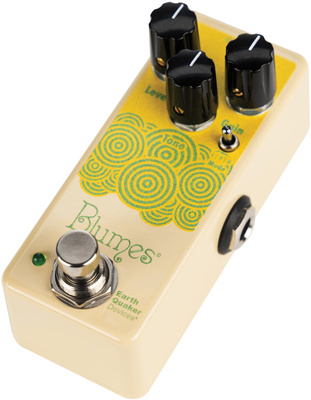
- Enhanced Touch Sensitivity: The pedal reacts more dynamically to picking attack, cleaning up noticeably when the player rolls down the guitar’s volume knob or picks with a lighter touch.
- Richer Harmonic Overtones: The frequency spectrum of the distorted signal retains more low-end integrity and high-frequency sparkle, avoiding the mid-range congestion common in traditional overdrive pedals.
- Increased Dynamic Headroom: Players will experience a feeling of greater amp-like responsiveness, as the pedal breathes more naturally with the transient peaks of the instrument.
By offering these three distinct clipping modes within a single, compact chassis, EarthQuaker Devices has effectively provided three distinct overdrive voicings in one unit, increasing its utility for studio engineers and live performers alike.
Broader Market Implications and Availability
The release of the Plumes Jr. and Blumes Jr. with MOSFET mods arrives at a time when the market for compact, high-performance guitar pedals is intensely competitive. As pedalboards become increasingly crowded with utility switchers, modulation devices, and spatial effects, players are actively seeking out micro- or downsized enclosures that do not compromise on component quality or sonic integrity.
By applying this treatment to two of their most culturally dominant circuits, EarthQuaker Devices has solidified their reputation for listening closely to the user community. However, because these units are being distributed as a strictly limited run rather than permanent additions to the standard catalog, industry analysts anticipate high demand and rapid sell-through rates among collectors, tone chasers, and loyal brand enthusiasts.
The pedals are currently available for purchase through major authorized musical instrument retailers, including Thomann and Sweetwater, as well as directly via select independent dealers. Given the limited nature of the production run, prospective buyers are encouraged to reference official video demonstrations provided by EarthQuaker Devices to evaluate the sonic differences between the LED, op-amp, and MOSFET modes before stock is exhausted.