Macklemore’s Free Palestine show at Wembley should be blocked, say members of the House Of Lords

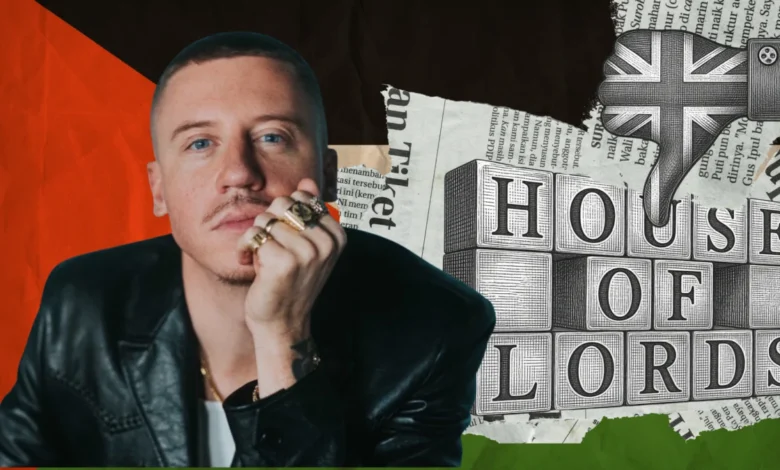
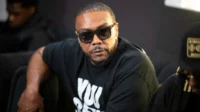
British Home Secretary Shabana Mahmood is facing mounting political pressure to block American rapper Macklemore from entering the United Kingdom ahead of his scheduled performance at London’s Wembley Arena. The controversy centers on the artist’s "Free Palestine" tour, specifically the allocation of concert profits to the Palestinian Youth Movement (PYM), a grassroots activist group that has drawn fierce criticism from British lawmakers over past statements regarding the conflict in the Middle East.
A cross-party coalition of 50 members of the House of Lords has formally petitioned Mahmood to intervene, utilizing immigration controls to prevent the Grammy Award-winning artist from crossing the border. The unfolding situation highlights the complex intersection of geopolitics, international touring logistics, free expression, and national security policies in the UK, echoing similar high-profile entry bans enacted against foreign public figures in recent months.
The House of Lords Intervention and Allegations Against the PYM
The parliamentary push to bar Macklemore—legally named Benjamin Hammond Haggerty—was spearheaded by prominent peers, including John Woodcock, Eric Pickles, Arlene Foster, Graham Brady, and Peter Goldsmith. In their correspondence with the Home Office, the 50 peers argued that allowing a foreign national to enter the country primarily to raise funds for an organization with controversial associations poses a direct threat to public order and democratic norms.
According to reports from British media outlets, the peers’ letter explicitly targets the Palestinian Youth Movement. The PYM defines itself as an independent, grassroots coalition dedicated to organizing Palestinian and Arab youth in the pursuit of national liberation. However, critics point to statements issued by the group and affiliated figures following the October 7, 2023, attacks led by Hamas in southern Israel. Specifically, the Lords’ letter highlights past declarations from PYM-associated individuals characterizing the Hamas-led incursions as "justified" and describing the abduction of civilian and military hostages as "legitimate" and "effective."
Furthermore, the parliamentary intervention draws attention to a controversial campaign resource published by the PYM known as the "Siege on Labour" toolkit. The document provided pro-Palestine activists with strategic guidance on lobbying Members of Parliament, including recommendations to stage demonstrations outside local constituency offices. The Lords argued in their letter that constituency offices represent vulnerable workspaces where MPs and their staff interact directly with the public, transforming targeted rallies from standard political protest into an intimidating strategy designed to coerce elected officials through fear.
Context of the "Free Palestine" Tour and Fallout from the United States
The current European mini-tour—which includes stops in Dublin, Paris, and London—was conceived by Macklemore following his abrupt removal from Ed Sheeran’s major stadium tour across the United States. The cancellation in the US occurred after Macklemore delivered impassioned on-stage remarks criticizing Israeli military actions in Gaza and vocalizing support for Palestinian statehood.
The decision to drop the rapper from the line-up followed intense pressure from major stadium stakeholders, most notably the Gillette Stadium in Foxborough, Massachusetts. The venue is owned by billionaire businessman Robert Kraft, a prominent philanthropist and vocal supporter of Israel. Sheeran and his concert promoters bowed to venue-level demands, removing Macklemore to preserve the scheduling of the tour dates.
The move triggered immediate solidarity reactions across the American leg of the tour, with several supporting acts withdrawing from the bill. Although Sheeran opted to proceed without opening acts, ironically, his scheduled performances at Kraft’s Gillette Stadium were ultimately canceled due to severe weather conditions rather than the brewing political controversy.
Macklemore addressed his dismissal from the Sheeran tour during his first subsequent live performance at Colorado’s Red Rocks Amphitheatre. On stage, he defended his humanitarian stance, telling the audience that advocating for human rights during times of mass suffering transcends standard political divides. He expanded his critique to encompass other global humanitarian crises, mentioning Sudan, the Democratic Republic of Congo, Lebanon, Haiti, and the anxieties faced by undocumented immigrant communities in the United States under Immigration and Customs Enforcement (ICE) scrutiny.
The itinerary for the "Free Palestine" tour brings the artist to Dublin for its opening night, followed by a performance in Paris, and culminates on Friday evening at Wembley Arena in London. Live Nation, the multinational entertainment company marketing the London date, has faced sharp inquiries regarding its risk assessment protocols for the event.
Reactions from the Jewish Community and Civil Society
The announcement of the Wembley Arena concert last month prompted immediate concern and requests for clarification from British Jewish community organizations. The Jewish Leadership Council (JLC) issued a formal public statement acknowledging the artist’s right to engage in political advocacy while emphasizing that the visual imagery and rhetoric employed in his recent live performances necessitated rigorous security evaluations.
In an inquiry directed at Live Nation, the JLC formally requested details regarding how the promoter evaluated safety risks associated with the concert and what specific measures were being implemented to guarantee that Jewish audiences, venue staff, and local residents feel secure and welcomed.
Simultaneously, debate has intensified regarding the legal and ethical boundaries of government intervention in cultural events. Proponents of a travel ban assert that denying entry to a foreign national who funnels financial resources to contentious political organizations is a measured administrative action rather than an infringement on artistic expression. Conversely, free-speech advocates and defenders of the artist argue that penalizing a performer for their political speech establishes a perilous precedent for cultural censorship in the UK.
Legal Precedents and Immigration Mechanisms
The mechanisms available to the Home Secretary to prevent Macklemore’s entry rely on the UK’s electronic travel authorization (ETA) framework and discretionary immigration powers. Under current British immigration policy, the Home Office holds the legal authority to exclude foreign nationals whose presence is deemed not conducive to the public good, often invoking character, conduct, or associations as primary justifications.
A notable precedent occurred earlier in the year when the UK government effectively blocked controversial American artist Kanye West from entering the country ahead of his planned performances at the Wireless Festival, following a series of widely condemned antisemitic remarks.
However, legal and political analysts note a distinct nuance in the Macklemore case. While West’s exclusion was a direct response to personal statements characterized as overt hate speech, Macklemore’s rhetoric has focused primarily on geopolitical criticism and humanitarian appeals. Consequently, the House of Lords contingent has carefully framed its appeal around the destination of the concert revenues—specifically the PYM—rather than attempting to criminalize or penalize the rapper’s on-stage commentary regarding Middle Eastern foreign policy.
The Lords’ petition clarifies that denying entry would not infringe upon the general public’s ability to access Macklemore’s recorded music or donate independently to authorized humanitarian relief funds operating in conflict zones. Instead, the intervention is characterized strictly as declining a foreign national the administrative privilege of monetizing British audiences on behalf of an organization linked to political intimidation and the defense of militant tactics.
Scrutiny Surrounding the Parliamentary Letter
The political legitimacy of the letter itself has also become a subject of public debate and administrative scrutiny. The document was primarily authored by Lord John Woodcock, whose political activities and external consultancies have previously faced formal challenges. Reports indicate that the Good Law Project and Compassion in Politics filed an official complaint with the House of Lords Commissioner for Standards regarding Woodcock’s alleged connections to Leonardo, a major international defense manufacturer with extensive contractual ties to the Israeli military. Critics suggest that these industrial links introduce questions regarding potential conflicts of interest among the parliamentary signatories.
Additional prominent figures backing the parliamentary appeal include Lord Eric Pickles, who serves as the chairman of the Conservative Friends of Israel group within the House of Lords, alongside former Northern Ireland First Minister Arlene Foster, veteran parliamentarian Graham Brady, and former Attorney General Peter Goldsmith.
Broader Implications for the Live Entertainment Industry
As the clock ticks toward the scheduled Friday night performance at Wembley Arena, the decision rests squarely with Home Secretary Shabana Mahmood and the Home Office. The case underscores a growing tension within the global entertainment industry, where artists increasingly utilize major platforms to voice partisan stances on complex international conflicts, forcing promoters, venues, and governments to navigate unprecedented security, legal, and public relations challenges.
Should the government decide to intervene and revoke Macklemore’s travel authorization, it would mark a significant escalation in the UK’s use of immigration policy to police the political associations of international touring artists. Regardless of the final outcome, the controversy has cemented the intersection of live music, philanthropic fundraising, and geopolitical activism as one of the most volatile arenas in contemporary British public life.
Related posts: