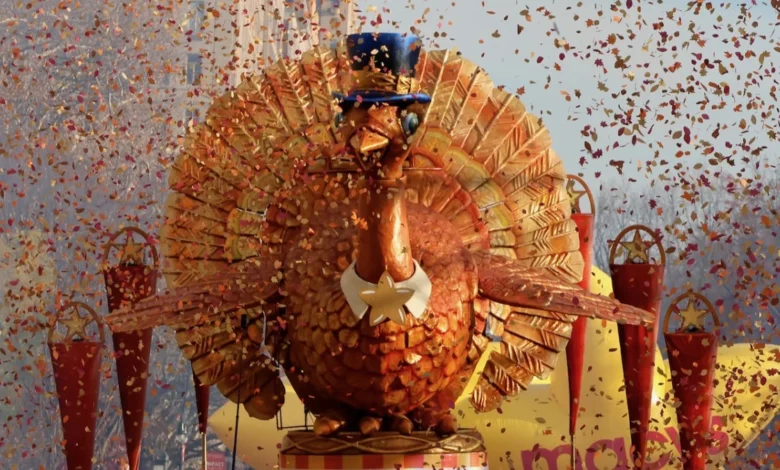
The Macy’s Thanksgiving Day Parade has been postponed until Saturday due to the threat of severe weather in New York City forecasted for Thursday. This unprecedented shift marks a significant disruption to one of the most ingrained traditions in American culture, forcing organizers to recalibrate an operation that typically takes an entire year to plan. The decision, reached after intensive meteorological briefings and coordination with New York City municipal authorities, prioritizes the physical safety of the thousands of participants, massive balloon handlers, and the millions of spectators who typically line the streets of Manhattan.
A Centennial Milestone Delayed
The 2027 iteration of the Macy’s Thanksgiving Day Parade is particularly significant, as it marks the event’s 100th anniversary. Since its inception in 1924, the parade has served as a cultural touchstone, evolving from a small promotional event for the Macy’s department store into a global television spectacle. While the parade has faced challenges in the past—including temporary cancellations during World War II between 1942 and 1944—this Saturday postponement represents a modern-day adjustment necessitated by increasingly volatile weather patterns and the logistical complexities of managing 21st-century crowd control.
Macy’s official statement reflected the gravity of the situation: “The safety of our participants and spectators is our top priority, and after close consultation with our City and agency partners, we have made the decision to move this year’s celebration.” For a parade that relies on wind-sensitive, oversized helium balloons, the meteorological forecast for Thursday—which reportedly included high-velocity wind gusts that would exceed the threshold for safe balloon flight—left organizers with little choice but to pivot to a later date.
Chronology of the 2027 Parade Planning
The logistical scope of this event is staggering. Planning for the 2027 centennial began in early 2026, involving the coordination of over 100 floats, dozens of marching bands, and a star-studded lineup of musical performers. The transition to a Saturday schedule requires a massive, last-minute reshuffling of permits, security personnel, broadcasting slots, and talent contracts.
Historically, the parade follows a strict schedule:
- Wednesday: Balloon inflation at the American Museum of Natural History, a traditional public event that has now also been impacted by the scheduling shift.
- Thursday Morning (Traditionally): The 2.5-mile route beginning at 77th Street and Central Park West, moving through Columbus Circle, and ending at the Macy’s flagship store at Herald Square.
- Saturday (The 2027 Adjustment): The entire operation will be compressed and migrated to the weekend, presenting a unique challenge for city officials who must now coordinate police presence and traffic management during a period usually reserved for high-volume weekend commerce.
A Star-Studded Centennial Roster
Despite the delay, the talent lineup remains intact, serving as a testament to the cultural pull of the centennial celebration. The parade will feature a diverse array of artists spanning genres and generations. Musical performances are slated from Natasha Bedingfield, Baha Men, Blues Traveler, and the influential new wave pioneers DEVO. The inclusion of Jimmy Fallon & The Roots provides a staple of late-night television energy, while global sensations like Feid and RIIZE reflect the parade’s modern international reach.
The roster also includes EJAE, Mckenna Grace, the Indigo Girls, Icona Pop, JoJo, Wyclef Jean, Queen Latifah, Il Volo, Natalie Merchant, Jamie Miller, Ryan Peter Murphy, Leslie Odom Jr., Keke Palmer, Anthony Ramos, and Smash Mouth. Special appearances by notable figures such as Jack McBrayer, Janet McTeer, Melissa Joan Hart, Holly Robinson Peete, and Rodney Peete are expected to draw significant engagement. A highly anticipated tribute to the legendary Dolly Parton, led by Megan Hilty, remains a centerpiece of the broadcast schedule, ensuring that the emotional heart of the centennial celebration survives the scheduling disruption.
Weather and Balloon Safety Protocols
The primary driver for this postponement is the "balloon safety threshold." In 1997, a high-wind incident resulted in a balloon striking a lamppost, leading to serious injuries and a subsequent overhaul of the parade’s safety regulations. Since then, the New York Police Department (NYPD) and Macy’s have maintained strict wind-speed limits.
Typically, if sustained winds exceed 23 mph or gusts exceed 34 mph, the massive balloons—some of which are equivalent in size to a five-story building—must be grounded or flown at lower altitudes. Meteorologists analyzing the Thursday system determined that the atmospheric instability would likely lead to gusts well beyond these safety parameters. By moving the event to Saturday, organizers are betting on a more stable high-pressure system, which is a common feature of November weather patterns in the Northeast.
Economic and Logistical Implications
The ripple effects of shifting a major event in New York City are profound. Macy’s, as a retailer, views the parade as a massive marketing engine, but the city itself views it as a major economic driver. Hotels, restaurants, and transit systems rely on the influx of tourists who arrive specifically for the Thanksgiving holiday.
A Saturday parade shifts the economic impact from the traditional holiday window to the weekend. While this may mitigate some retail losses for the department store, it creates significant friction for travel logistics. Thousands of tourists who planned their trips around the Thursday date are now faced with the choice of extending their stays or missing the event entirely. Furthermore, the city’s Department of Transportation must manage the reopening of major arteries that were slated for closure on Thursday, now requiring a second round of complex traffic detours.
Security and Municipal Coordination
The NYPD plays an integral role in the parade’s execution, deploying thousands of officers, counter-terrorism units, and K-9 squads. Coordinating these resources on a Saturday, when city activity is already high, requires a substantial reassignment of the force. Commissioner-level discussions were reportedly held to ensure that the security footprint remains identical to the planned Thursday operation.
From a broadcast perspective, the delay is equally complex. Networks carrying the parade must negotiate time slots and advertising commitments. Because the parade is one of the most-watched non-sporting television events in the United States, a shift to Saturday requires re-clearing content schedules for affiliate stations across the country.
Broader Context and Legacy
The 100th anniversary was intended to be a victory lap for the parade, celebrating a century of resilience. The parade survived the Great Depression, the transition from live animals to iconic giant balloons, and the digital age’s shift in how audiences consume live entertainment. The decision to postpone, while inconvenient, is being framed by historians and event planners as a continuation of that resilience. By choosing to move the event rather than cancel or scale it down significantly, Macy’s is signaling that the tradition is more important than the specific calendar date.
In the history of the parade, such interruptions are rare but defining. The 1942–1944 cancellations were due to the exigencies of World War II, when helium was redirected for military use. The 2027 delay, while driven by climate rather than conflict, reflects a similar pragmatic approach to the reality of the environment in which the parade operates.
Looking Ahead
As of the latest updates, organizers have confirmed that the route remains unchanged. The parade will step off from 77th Street and conclude in front of the Macy’s Herald Square store. Spectators are being urged to monitor the Macy’s official website and local New York City news outlets for real-time updates regarding specific street closures and public transit modifications for Saturday.
The centennial parade, though delayed by 48 hours, remains the focal point of the city’s festive season. While the meteorological forecast for Saturday remains under constant observation, current models suggest a return to calmer conditions. For the organizers, the priority remains the same: to deliver a spectacle that honors 100 years of history while ensuring that the next century of parades can continue in safety.
As the city prepares for a "Saturday Thanksgiving" of sorts, the focus shifts to the coordination of thousands of volunteers, balloon pilots, and performers. The success of this logistical pivot will likely be studied by event management professionals for years to come, as it highlights the increasing need for flexibility in the face of climate-related disruptions for large-scale urban gatherings.