The digital audio workstation (DAW) ecosystem continues to expand its offerings for music producers operating on constrained budgets, marked by the release of three sophisticated audio processing and generation tools. Released by independent software developers nClear Audio, Sonix Audio, and RiverFlux Audio, the latest additions to the free plugin market include a British-console-inspired bus compressor with multi-instance project mapping, a versatile sample-based drum machine with deep sound design architecture, and an advanced eight-band multi-band bit crusher. These software solutions bridge the gap between entry-level freeware and high-end commercial plugins, offering capabilities historically reserved for paid ecosystems.
Background and Context of the Free Plugin Ecosystem
Over the past decade, the market for virtual studio technology (VST) plugins has undergone a significant transformation. Once dominated by expensive hardware emulations and proprietary systems requiring heavy financial investments, the software landscape has increasingly embraced the open-source and freemium models. Independent developers and boutique audio tech companies now frequently leverage formats such as VST3, AU (Audio Units), CLAP (Clever Audio Plugin), and LV2 to reach wider audiences, utilizing free plugins as a primary mechanism for brand visibility and community engagement.
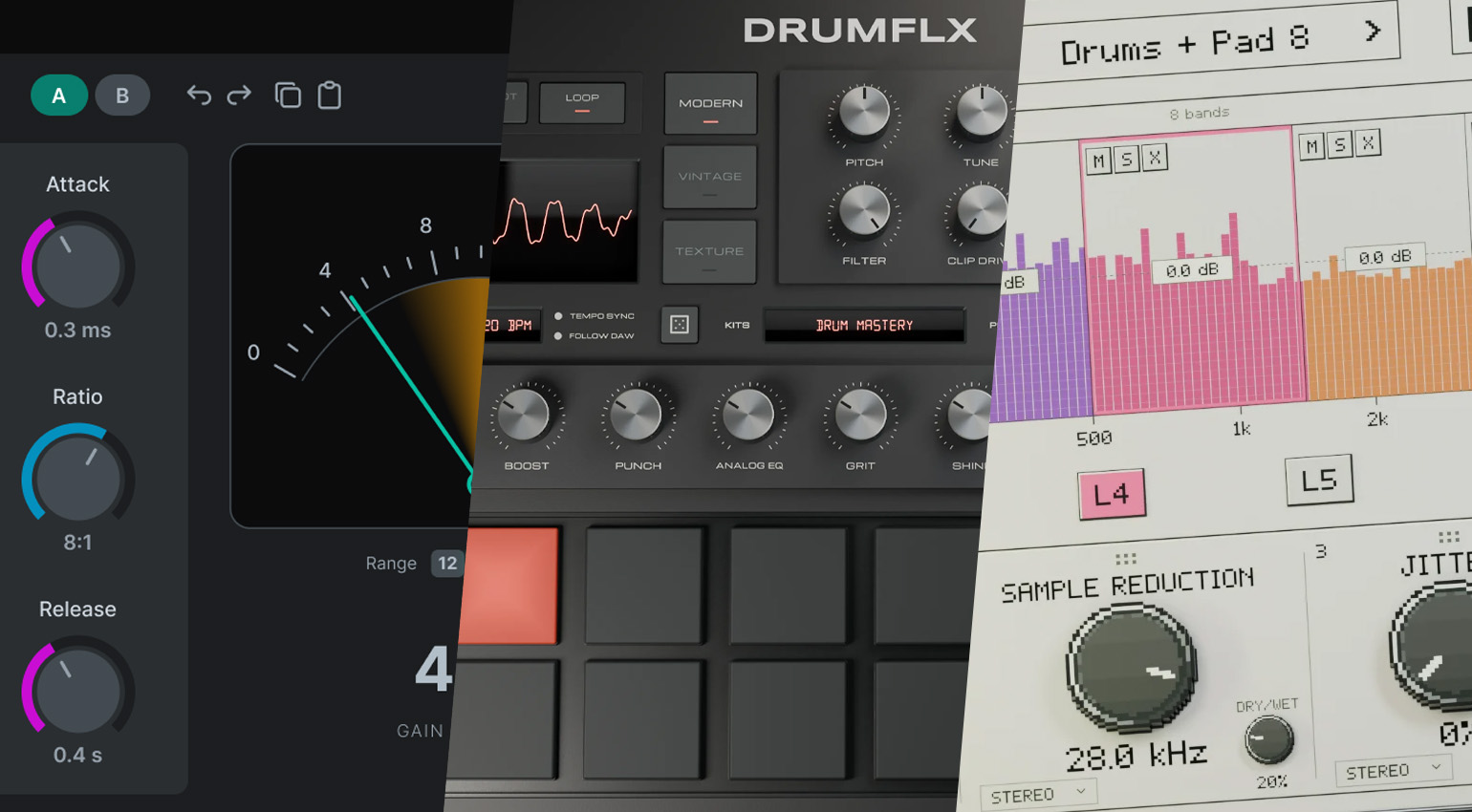
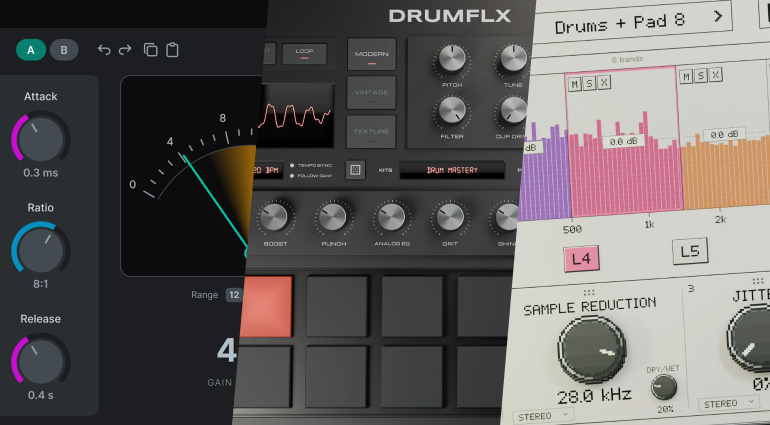
The introduction of high-caliber free tools like Gluon, DRUMFLX, and Bit Layer reflects a broader industry trend where the performance threshold of zero-cost software rivals commercial counterparts. Producers, bedroom beatmakers, and professional mix engineers alike increasingly rely on these tools to streamline workflows, experiment with non-linear processing, and optimize processing overhead without sacrificing sonic fidelity.
nClear Audio Gluon: Intelligent Bus Compression and Multi-Instance Control
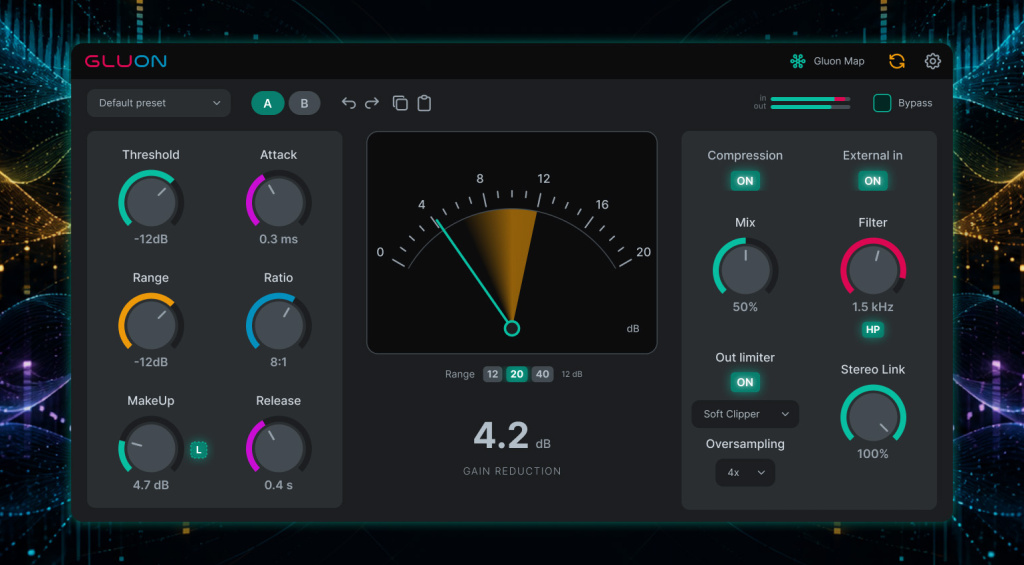
The first notable release in this week’s lineup is Gluon by nClear Audio, a stereo bus compressor that draws philosophical and sonic inspiration from classic British hardware mixing consoles. Rather than presenting a direct circuit-by-circuit emulation, the developers have crafted a modern dynamic processor designed to glue mixes together while introducing features rarely found outside of premium ecosystem suites.
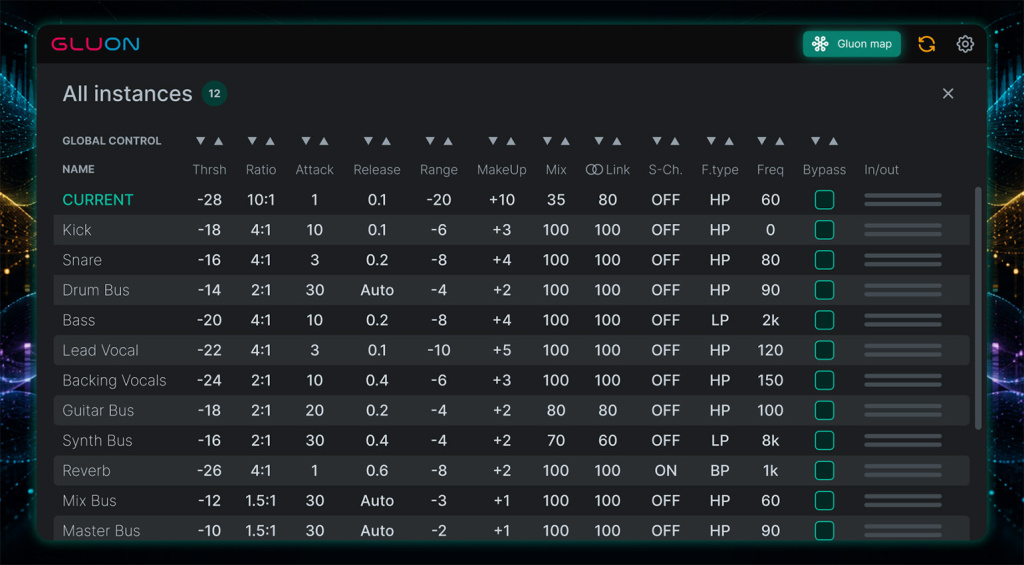
Standard controls on Gluon include Threshold, Ratio, Range, Makeup Gain, Attack, and Release, accompanied by a scalable gain reduction meter. For hybrid setups and modern mixing workflows, the processor also integrates a dedicated Mix knob for parallel compression, an external sidechain input equipped with an internal filter to prevent pumping on low-frequency material, and an uncompromised output limiter to safeguard downstream analog-to-digital converters and master buses.
What sets Gluon apart from conventional free dynamic processors is its centralized Map window. This interface displays all active instances of the plugin across an entire digital audio workstation project. While audio data is not transmitted between separate channels, the global control feature enables engineers to execute relative parameter adjustments across multiple tracks simultaneously, preserving the individual balance of each instance.
Additionally, Gluon incorporates an automated Learn function for its Makeup Gain parameter. By engaging the ‘L’ button and passing approximately ten seconds of audio through the plugin, the internal algorithm evaluates the variance between the dry and compressed signals, automatically computing a compensatory gain level. This functionality minimizes auditory fatigue and bias caused by volume discrepancies during critical listening phases. Gluon is compatible with macOS, Windows, and Linux operating systems, supporting VST3, AU, CLAP, and LV2 plugin architectures.
Sonix Audio DRUMFLX: A Hybrid Sample-Based Drum Machine
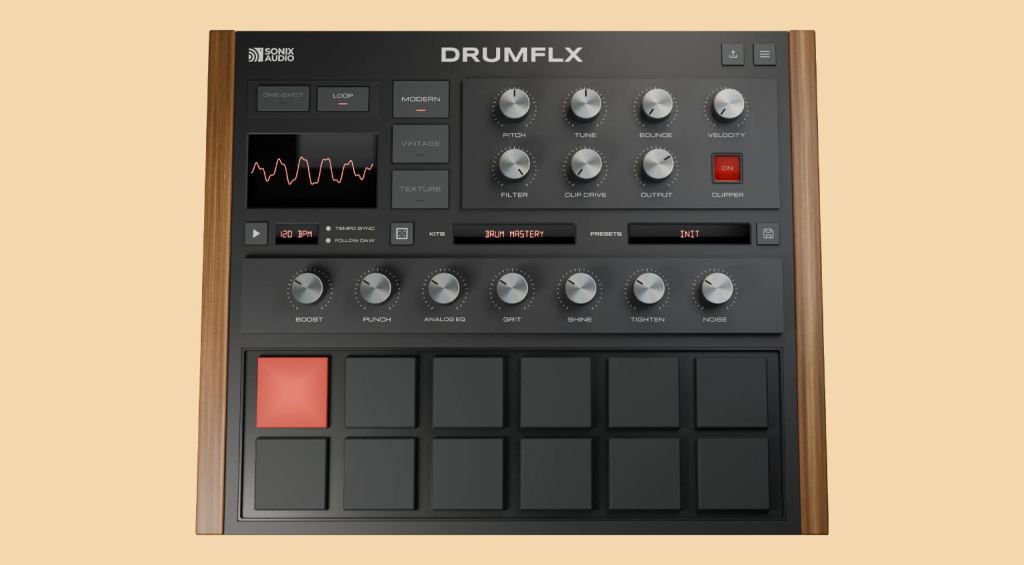
Addressing the rhythmic and foundational needs of modern electronic music production, Sonix Audio has introduced DRUMFLX, a sample-based drum machine plugin that transcends traditional static sample players. Designed with flexibility in mind, the plugin operates across three distinct operational modes: Modern, Vintage, and Texture. Each mode reconfigures the internal signal path and user interface to cater to specific aesthetic requirements, ranging from pristine, punchy modern hip-hop to gritty, tape-saturated aesthetic styling.
In Modern mode, DRUMFLX is optimized for transient-heavy programming, making it well-suited for trap, pop, and contemporary urban genres. Producers can utilize dedicated Boost and Punch controls to sharpen initial transients, while an integrated analog-inspired equalizer shapes the low-frequency foundation. Additional character parameters, including Grit, Shine, and Noise, allow users to inject harmonic complexity directly into individual drum elements.
Switching to Vintage mode alters the signal behavior, replacing the transient boost functionality with a dedicated Drive parameter that emulates the non-linear saturation characteristics of vintage tape machines and hardware samplers. For avant-garde sound design, Texture mode introduces Resample and Instability controls alongside internal delay and reverb algorithms, enabling producers to generate evolving, ambient rhythmic structures.
Beyond its sound generation capabilities, DRUMFLX features a Loop mode that maps individual MIDI pads to an integrated library of rhythmic loops rather than static one-shot samples. Crucially, the plugin supports user-defined sample importation, ensuring that producers are not restricted to the factory content library. DRUMFLX is available for macOS and Windows environments in VST3 and AU formats.
RiverFlux Audio Bit Layer: Surgical Multi-Band Digital Degradation
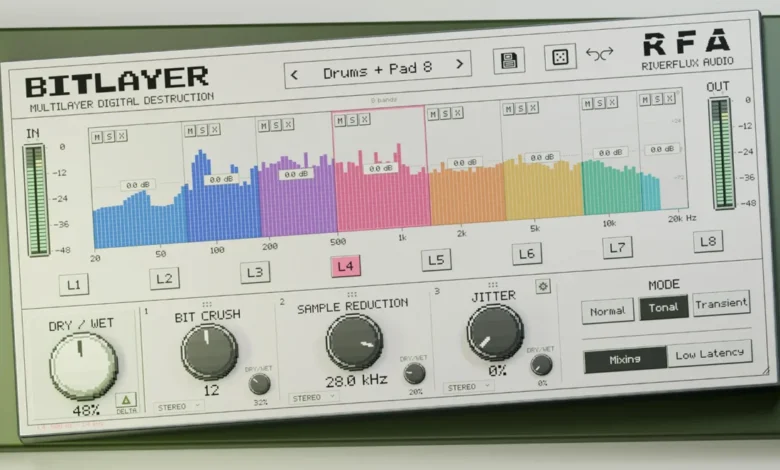
Rounding out the weekly releases is Bit Layer by RiverFlux Audio, a digital distortion processor that reimagines the traditional bit-crushing effect. Standard bit crushers typically apply sample rate reduction and bit depth truncation indiscriminately across the full frequency spectrum of an incoming audio signal. Bit Layer diverges from this convention by employing a sophisticated multi-band architecture that divides the audio input into eight discrete frequency zones.
Within each of the eight bands, users can independently configure Bit Crush depth, Sample Rate Reduction, and Jitter parameters. Furthermore, the processor provides independent stereo and mid/side processing modes for each parameter within every band. This level of granularity allows producers to apply targeted digital artifacts—such as sample rate degradation or quantization distortion—to very specific spatial and spectral coordinates, such as introducing high-frequency digital grit exclusively to the extreme left and right margins of a stereo field between 2 kHz and 3 kHz.
To accommodate different source materials, Bit Layer includes selectable Tonal and Transient processing modes, tailoring the internal envelope response to sustain-heavy instruments or percussive transients, respectively. The depth of control offered by Bit Layer elevates it beyond standard utility distortion effects, positioning it as a precise sound-sculpting instrument for electronic music production, sound design, and mixing experimentation. Bit Layer supports macOS, Windows, and Linux platforms across VST3, CLAP, and AU formats.
Industry Implications and Future Outlook
The simultaneous arrival of Gluon, DRUMFLX, and Bit Layer underscores a maturation in the independent developer community. By democratizing advanced DSP concepts—such as multi-instance project mapping, multi-mode sound generation, and surgical multi-band degradation—these developers challenge the economic barriers traditionally associated with professional music production software.
As digital audio workstations continue to evolve and computing architectures become increasingly efficient, the reliance on proprietary, high-cost ecosystems is expected to face mounting competition from agile, community-driven development teams. For independent artists and professional studios alike, the integration of tools offering enterprise-grade functionality at zero financial cost signals a resilient and expanding frontier in audio engineering technology.