Superstruct Entertainment Introduces Comprehensive Artistic Code to Safeguard Creative Independence Across 80+ Major European Festivals

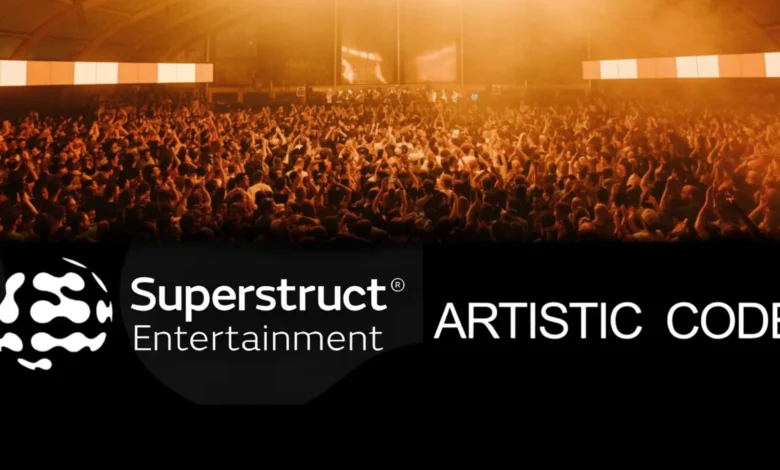
The modern live music landscape exists at a volatile intersection of commercial entertainment and global geopolitics. In an era where festival stages increasingly double as forums for socio-political discourse, festival operators find themselves caught in an escalating crossfire of public boycotts, social media campaigns, and calls for censorship. Addressing this mounting pressure head-on, live entertainment titan Superstruct Entertainment has officially launched its landmark Artistic Code. Designed to establish a uniform standard for artistic expression, the code governs over 80 prominent European festivals, including heavyweight events such as Awakenings, Boardmasters, Field Day, Flow Festival, Kendal Calling, Mighty Hoopla, Sónar, Sziget, Truck Festival, Victorious, and Y Not.
The introduction of this framework marks a significant policy shift for a corporate entity that oversees a massive share of the festival market. By codifying its stance on freedom of speech, Superstruct aims to provide its decentralized festival teams with a definitive operational shield against external pressures, while assuring performers that their creative independence remains protected from booking through to show day.
Main Facts and Scope of the Artistic Code
At its core, Superstruct’s newly published Artistic Code is a binding statement of intent that explicitly defends the right of artists to challenge, provoke, and express contentious viewpoints without editorial interference from corporate ownership. The framework asserts that festivals must remain open environments for diverse perspectives, establishing that artists performing at Superstruct-affiliated events may articulate political opinions, social commentary, or personal beliefs that do not necessarily reflect the views of the festival organizers or corporate stakeholders.
According to the text of the policy, Superstruct does not engage in pre-show censorship or editorial control to align performance content with corporate values or commercial interests. However, the code draws distinct boundaries, defining two absolute red lines where artistic freedom must yield to safety and legality:
- Public Safety and Non-Discrimination: Any expression that puts the physical safety of visitors, staff, or artists at risk—such as inciting dangerous crowd surges, promoting violence, or targeting specific individuals or groups with discriminatory rhetoric—is strictly prohibited.
- Legal Compliance: Content or speech that violates the statutory laws of the host jurisdiction, including explicit support for legally proscribed terrorist organizations, is forbidden.
The policy also extends to physical items and stage props, specifically addressing the contentious issue of flag-waving. Under the new guidelines, audience members and performers alike are permitted to display flags, symbols, and political imagery. Restrictions will only be enforced if a specific flag is illegal within the host market, or if local permit authorities and safety teams identify a verified crowd safety hazard. Controversial symbols will not be banned simply for provoking public debate.
Background Context and Corporate Evolution
The rollout of the Artistic Code does not occur in a vacuum; it is the direct result of a rapidly shifting sociopolitical climate and significant corporate restructuring within the live events sector. In 2024, private equity firm KKR completed its acquisition of Superstruct Entertainment, a transaction that immediately thrust the festival operator into the geopolitical spotlight.
KKR’s extensive global investment portfolio, specifically its financial ties and historical investments linked to Israel, triggered a wave of coordinated activist campaigns. Advocacy groups and politically engaged music fans launched widespread boycotts targeting individual festivals operating under the Superstruct umbrella. These campaigns placed immense pressure on festival bookers and independent brand teams, who suddenly found themselves forced to navigate reputational fallout stemming from their ultimate corporate parentage.
Unlike monolithic corporate entertainment conglomerates, Superstruct’s portfolio consists largely of independently founded festivals that have cultivated fiercely loyal, distinct brand communities over decades. Consequently, the burden of responding to boycott threats historically fell upon individual festival management teams. In many instances, these teams publicly distanced themselves from KKR’s broader corporate investments, occasionally issuing statements criticizing unethical capital deployment while affirming solidarity with humanitarian causes, such as the Palestinian movement. Notably, neither Superstruct management nor KKR intervened to silence these localized expressions of dissent, setting a precedent of operational autonomy that has now been institutionalized through the Artistic Code.
Chronology of Recent Political Controversies
Over the past three decades, music festivals have transitioned from apolitical zones of pure escapism to high-profile platforms for geopolitical activism. The tensions surrounding festival line-ups generally manifest in two distinct categories: demands to blacklist specific artists due to their political commentary, and campaigns urging artists to boycott specific events based on sponsorship or ownership profiles.
The former category has generated intense legal and public scrutiny, particularly concerning anti-Israel commentary and allegations of antisemitism. High-profile incidents include:
- Bob Vylan: The British punk duo drew international headlines and police investigations following on-stage remarks regarding the Israel Defense Forces (IDF), with critics condemning their rhetoric as an incitement to violence and antisemitism. Despite public outrage and subsequent police reviews, the band’s comments never resulted in criminal charges.
- Kneecap: The Belfast-based hip-hop trio faced intense cancellation campaigns amid allegations that they expressed support for proscribed organizations, including Hamas and Hezbollah. Band member Mo Chara was criminally charged over the alleged display of a Hezbollah flag on stage; however, the prosecution’s case collapsed entirely due to administrative errors, though defense counsel maintained that the charges lacked legal merit regardless.
- Kanye West: Separately, high-profile artists with histories of public antisemitic statements, such as Kanye West, have repeatedly ignited fierce internal debates within the industry regarding whether festival bookers have a moral obligation to refuse platforms to controversial figures, regardless of their commercial drawing power.
Concurrently, the artist boycott campaigns have placed immense psychological and financial stress on performers. Musicians who rely heavily on festival performance fees to sustain their touring operations and release schedules often find themselves caught between conflicting political mandates. Artists have reported experiencing private bullying and aggressive online harassment from activist networks who frame a performer’s decision to fulfill a festival contract as an implicit endorsement of the event’s corporate ownership.
Official Responses and Leadership Statements
Launching the code, Superstruct Chief Operating Officer Rebecca Kane Burton emphasized that artistic freedom remains the foundational pillar of the company’s operational philosophy.
"Artistic freedom sits at the heart of our festivals. They are places for artists to express themselves, challenge ideas and bring different points of view to audiences," Kane Burton stated. "We believe strongly in backing that freedom. The Artistic Code makes our position clear and gives artists and our festival teams shared principles to work from, with creative independence at the heart of them."
While corporate leadership has formally endorsed the right of artists to speak their minds, the code explicitly reserves the right for Superstruct and its individual festival brands to exercise their own speech. The policy notes that if an artist’s public statements or off-stage behavior diverges sharply from an individual festival’s core community values, the organization reserves the right to publicly clarify its independent institutional position. This mechanism allows festivals to distance themselves from specific rhetoric without resorting to pre-emptive blacklisting or censorship.
Broader Impact and Industry Implications
The implementation of Superstruct’s Artistic Code carries profound implications for the wider live entertainment ecosystem. By establishing a formalized, transparent policy regarding freedom of expression, Superstruct has set a new governance benchmark for multi-festival operators operating in an increasingly polarized cultural environment.
Industry analysts suggest that the code will serve dual functions:
- Legal and Operational Shield: When public controversies erupt over a controversial booking, festival press offices will no longer need to formulate ad-hoc PR responses under duress. Instead, they can direct stakeholders to a standardized, objective framework that clearly demarcates corporate responsibility from artistic expression.
- Psychological Relief for Artists: By publicly affirming that performing at a festival does not constitute an ideological endorsement of the promoter’s corporate structure or an artist’s off-stage politics, the policy helps mitigate the chilling effect of cancel culture and online harassment campaigns.
However, challenges remain. Because terms like "incitement to violence," "discriminatory rhetoric," and "public safety risk" remain inherently subjective, future controversies are inevitable. Disagreements will undoubtedly persist over whether specific on-stage statements cross the threshold of Superstruct’s absolute red lines.
Ultimately, the Artistic Code represents a pragmatic acknowledgment that modern festival operators cannot police the personal politics of the artists they hire. By drawing a sharp line between unlawful speech and provocative art, Superstruct Entertainment has chosen to defend the chaotic, vibrant, and frequently uncomfortable nature of live performance, cementing the festival stage as a space where free expression remains non-negotiable.