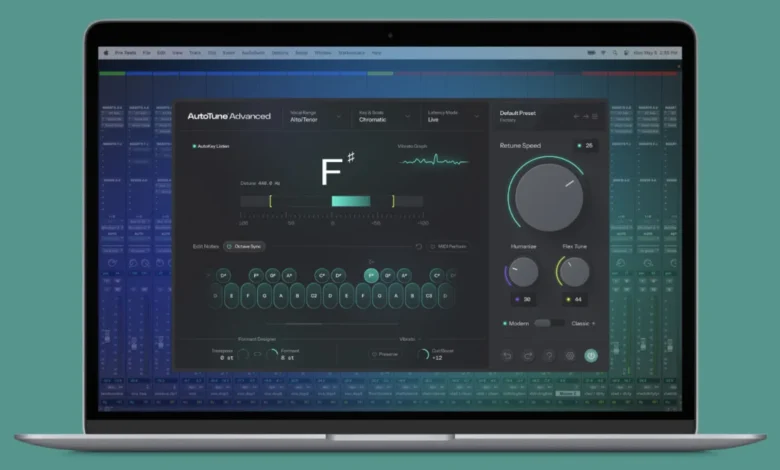
The landscape of modern music production has undergone a seismic shift since the late 1990s, when pitch-correction technology first transitioned from a closely guarded studio secret into a household name. Over the past three decades, Antares Audio Technologies has maintained its position at the vanguard of this technological evolution. The industry standard-bearer has continually adapted its flagship algorithms to meet the ever-stricter demands of producers, mix engineers, and vocalists alike. In a move that redefines the boundaries of automated pitch manipulation, Antares has officially launched its newest flagship solution: AutoTune Advanced. Designed to bridge the gap between lightning-fast automatic tuning and the preservation of organic human expression, this latest iteration introduces a radically redesigned pitch algorithm and a patent-pending vibrato engine that promises to change how vocals are sculpted in both real-time performance and studio mixing environments.
Main Facts of the Release
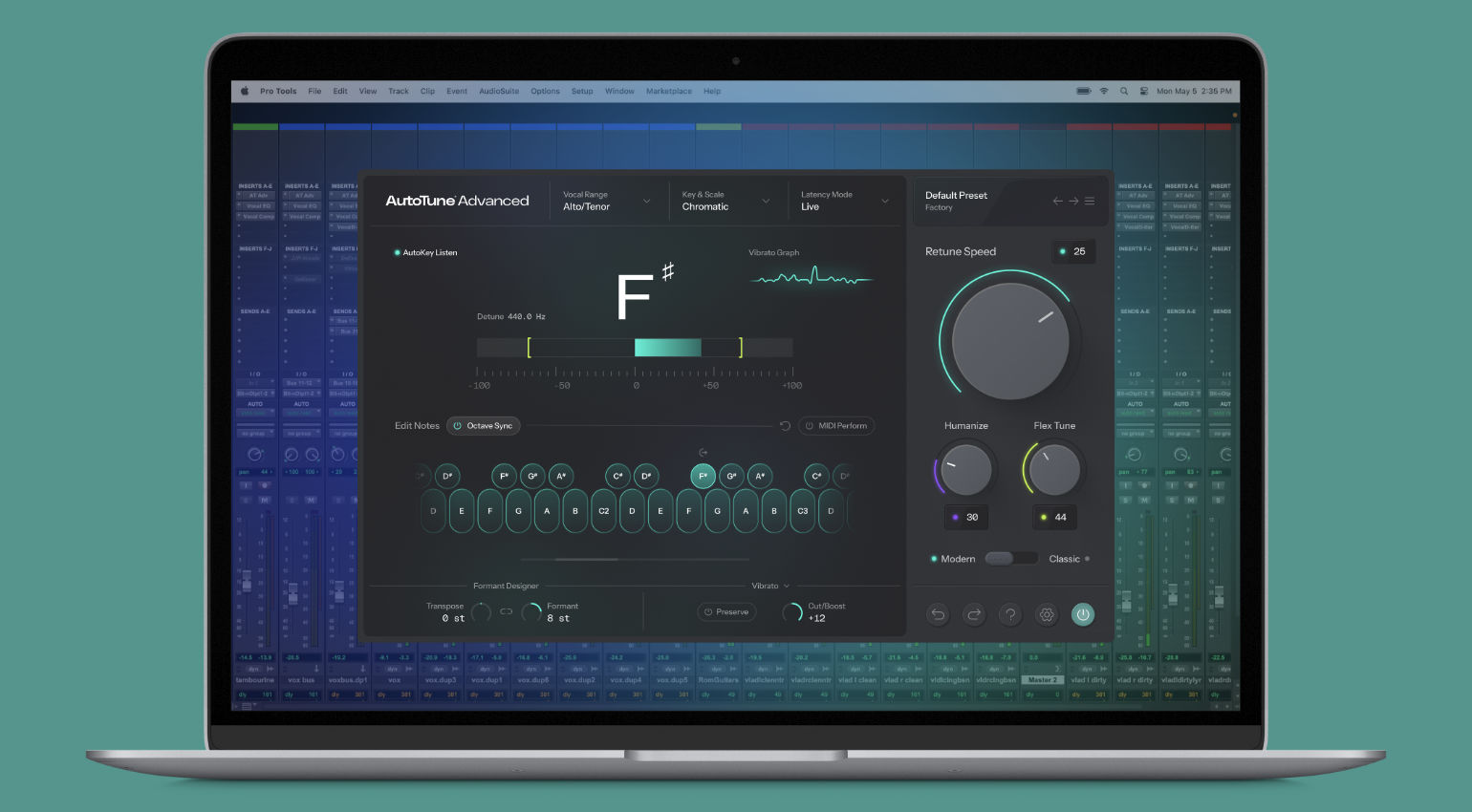
Antares AutoTune Advanced arrives as a significant branch from the core computational DNA that made the original AutoTune an indispensable fixture in commercial recording studios worldwide. Positioned within the current Antares software lineup as a powerful alternative to AutoTune Pro 11, the new plugin deliberately bypasses the traditional Graph Mode interface, which is typically reserved for meticulous, note-by-note manual editing. Instead, AutoTune Advanced doubles down on a streamlined, ultra-efficient automatic pitch correction workflow driven by a completely overhauled Auto-Mode pitch algorithm.
According to preliminary technical disclosures from Antares, this newly refined algorithm surpasses the tracking speed, accuracy, and transparency of any previous generation of automatic pitch correction in their catalog. The crowning achievement of this release, however, is the integration of the patent-pending DVA (Dynamic Vibrato Accentuation and Analysis) vibrato engine. This specialized engine addresses one of the most long-standing criticisms of aggressive pitch correction: the flattening and robotic homogenization of a singer’s natural vocal quiver. By decoupling pitch-correction speed from the management of natural vibrato, AutoTune Advanced allows producers to dial in ultra-fast, modern synthetic tuning effects—often colloquially known as the "T-Pain effect"—while keeping the artist’s natural pitch variations and expressive micro-dynamics intact.
Furthermore, the plugin features a real-time vibrato visualizer alongside an extensive suite of controls that permit engineers to manipulate wave shapes, timing parameters, and expressive depth on the fly. To ensure versatility across different stages of music production, AutoTune Advanced incorporates an ultra-low latency Live mode, transforming the software into a robust vocal-shaping instrument tailored for stage performance and tracking monitoring. For the final stages of a project, a dedicated High Quality processing mode ensures artifact-free, mix-ready audio fidelity during offline rendering and heavy session consolidation.
Chronology and Development of Pitch Correction
To fully understand the significance of the AutoTune Advanced release, it is necessary to examine the historical trajectory of pitch-correction technology. The journey began in 1997 when Dr. Andy Hildebrand, a geophysicist working in the oil industry who used algorithms to interpret seismic data, realized that the exact same mathematical principles could be applied to audio waveforms to detect and alter pitch. The initial release of Auto-Tune revolutionized the recording industry almost overnight, initially used subtly to rescue out-of-tune vocal takes before artists began intentionally pushing the software to extreme settings for stylistic effect.
Throughout the 2000s and 2010s, Antares steadily iterated on its foundational code, introducing real-time correction capabilities, graphical editing interfaces, and specialized artist-focused plugins. As computing power expanded, so did the demand for zero-latency tracking solutions and more transparent algorithms that could correct pitch without introducing phase artifacts or digital distortion. The introduction of Auto-Tune Pro 11 cemented the software’s dominance in high-end mixing environments, offering deep manual control via its comprehensive Graph Mode.
However, modern workflow demands in commercial and bedroom studios alike began shifting toward speed and efficiency. Producers working under tight deadlines increasingly sought tools that could deliver immediate, high-grade results without requiring the time-consuming process of manual pitch drawing. This market shift laid the groundwork for the development of AutoTune Advanced. By stripping away the visual complexity of Graph Mode and focusing entirely on an enhanced, intelligent Auto-Mode complemented by advanced vibrato management, Antares has created a specialized instrument tailored specifically to the pace of contemporary pop, hip-hop, and modern electronic music production.
Supporting Data and Technical Architecture
The technical architecture of AutoTune Advanced relies heavily on advanced psychoacoustic modeling and real-time frequency detection. Traditional pitch correction algorithms often struggle to differentiate between a deliberate, emotive vibrato and an unwanted pitch deviation, frequently flattening both into a rigid, robotic line unless manually adjusted by an engineer. The DVA vibrato engine in AutoTune Advanced utilizes advanced machine-learning-inspired tracking parameters to analyze the frequency modulation of a vocal performance in real time.
Data provided by Antares indicates that the updated Auto-Mode algorithm tracks incoming vocal transients up to forty percent faster than previous iterations, significantly reducing the window of latency in live environments. When paired with the software’s native low-latency architecture, the plugin operates with a processing delay so minimal that vocalists can monitor their tuned performance directly through headphones during recording sessions without experiencing disorienting phase delay or timing drag.
On the hardware compatibility front, AutoTune Advanced is designed to integrate seamlessly into major Digital Audio Workstations (DAWs) supporting AAX, VST3, and Audio Units (AU) formats on both macOS and Windows operating systems. Despite its heavy computational workload—particularly when running multiple instances in High Quality mode—optimized multithreading support ensures that CPU spikes are kept within manageable limits on modern multi-core processing rigs.
Industry Reactions and Market Implications
The release of AutoTune Advanced has generated significant discussion within the professional audio engineering community. As the vocal processing market has become increasingly saturated with competing plugins from developers such as Celemony (Melodyne), Soundtoys, Waves, and Synchro Arts (Revoice Pro), industry leaders have been forced to innovate continuously to maintain market share.
While competitors have made substantial inroads in polyphonic pitch correction, DNA-based audio editing, and sophisticated harmonization, Antares has chosen to double down on its historic core competency: real-time monophonic vocal tuning and immediate workflow efficiency. Early reactions from beta testers and professional mix engineers suggest that the DVA vibrato engine represents a genuine leap forward for producers who rely heavily on modern pop tuning aesthetics but have historically struggled to maintain the emotional resonance of a vocalist’s natural performance.
Nevertheless, the software has also sparked conversations regarding pricing structures within the virtual instrument and audio effect market. Positioned firmly at a flagship price point, AutoTune Advanced represents a substantial financial investment for independent producers, hobbyists, and project studio owners. While established commercial studios and high-volume professional engineers will likely view the acquisition cost as an essential operational expense for streamlining vocal production pipelines, the premium pricing may place the technology out of reach for budget-conscious creators, potentially driving them toward more economical subscription models or competing third-party alternatives.
Broader Impact on Vocal Production and Future Outlook
The introduction of Antares AutoTune Advanced signals a mature phase in the evolution of pitch-correction technology. For decades, the debate surrounding pitch correction has centered on a perceived binary choice: pristine, transparent preservation of natural performance versus aggressive, stylized digital manipulation. By demonstrating that modern algorithms can simultaneously execute extreme tuning speeds while dynamically protecting and accentuating natural vibrato, AutoTune Advanced blurs the lines between these two traditional approaches.
This technological convergence points toward a future where vocal production software becomes increasingly intuitive, allowing artists and engineers to spend less time wrestling with technical artifacts and more time focusing on creative expression. As processing power continues to grow and algorithmic accuracy improves, the expectation for vocal quality in commercial releases will inevitably rise. Antares, by continuing to refine the tool that helped define the modern sonic palette, has ensured that it remains at the center of this ongoing evolution. Whether AutoTune Advanced will eventually replace traditional workflows entirely or simply serve as a specialized high-speed tool in the modern engineer’s arsenal remains to be seen, but its immediate impact on the landscape of vocal production is undeniable.