Sting Evolves Beyond Max for Live to Become a Universal Generative Composition Powerhouse for VST3 AU and CLAP


The landscape of generative music production has undergone a significant shift as the acclaimed algorithmic sequencer Sting has officially shed its constraints as a Max for Live device. Long celebrated by electronic musicians for its intuitive, hands-on approach to acid-style basslines and complex rhythmic patterns, the software has now been released as a standalone plug-in supporting VST3, AU, and CLAP formats across macOS, Windows, and Linux. This transition marks a departure from the Ableton Live ecosystem, positioning the tool as a platform-agnostic powerhouse for producers working in any digital audio workstation (DAW).
Developed by the acclaimed sound designer and programmer Iftah, the new iteration of Sting represents the culmination of years of iterative development. The move to universal plug-in formats is not merely a technical migration; it is a strategic expansion designed to bring algorithmic, improvisational sequencing to a wider array of creative workflows. By transcending its original container, Sting enters the broader market of professional audio software with a suite of features that address modern demands for both tactile control and deep, generative flexibility.
A Chronology of Iterative Design
The journey of Sting serves as a case study in the evolution of software instruments. Its origins can be traced back to the collaborative efforts of the duo Skinnerbox, where early iterations of the sequencer—famously branded as STING!64—gained a cult following for their bright, yellow-hued, molecule-themed interface and a distinctive, cheeky smiley-face motif. These early versions were celebrated for their ability to generate acid-inflected patterns with minimal user intervention, relying on high-level parameters like density, velocity, and swing.

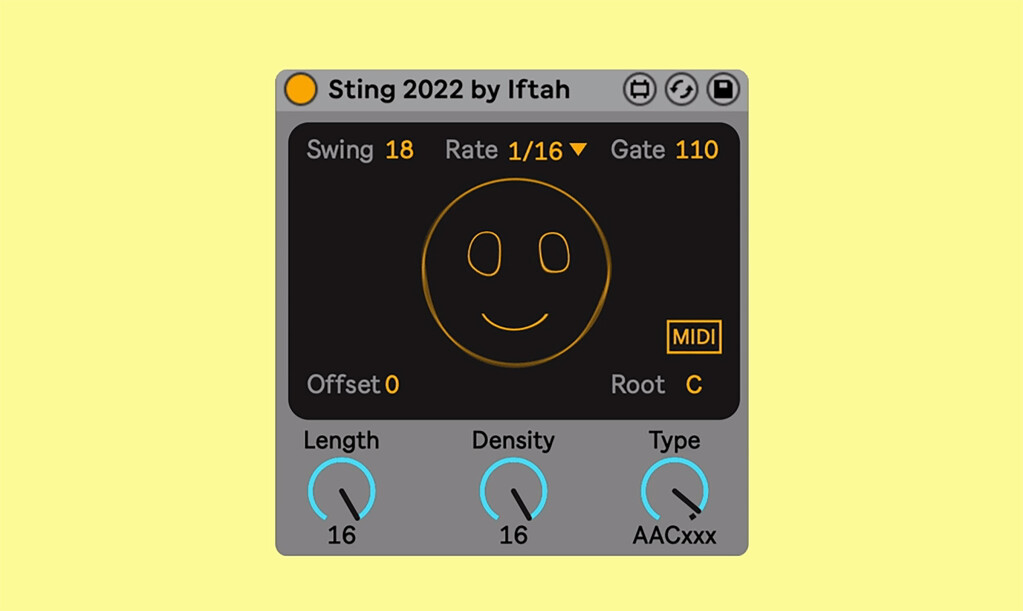
In 2022, the software underwent a major structural overhaul. This version introduced more sophisticated control schemes, including the "Type" parameter, which allowed for a broader range of melodic structures beyond the standard acid bassline. This era solidified the tool’s reputation as a reliable, "very nice" pattern generator that balanced algorithmic complexity with user-friendly operation. The latest release, however, represents the most significant leap forward. By moving away from the Max for Live environment—a sandbox that, while powerful, inherently limited the user base to Ableton Live owners—Iftah has opened the door for users of Logic Pro, Bitwig Studio, Reaper, and other professional environments to integrate Sting directly into their signal chains.
Technical Capabilities and Feature Expansion
The modern incarnation of Sting is far more than a simple acid generator. While its core competency remains the creation of rhythmic and melodic lines, the new plug-in version introduces advanced capabilities that cater to both performance-oriented artists and studio-bound composers.
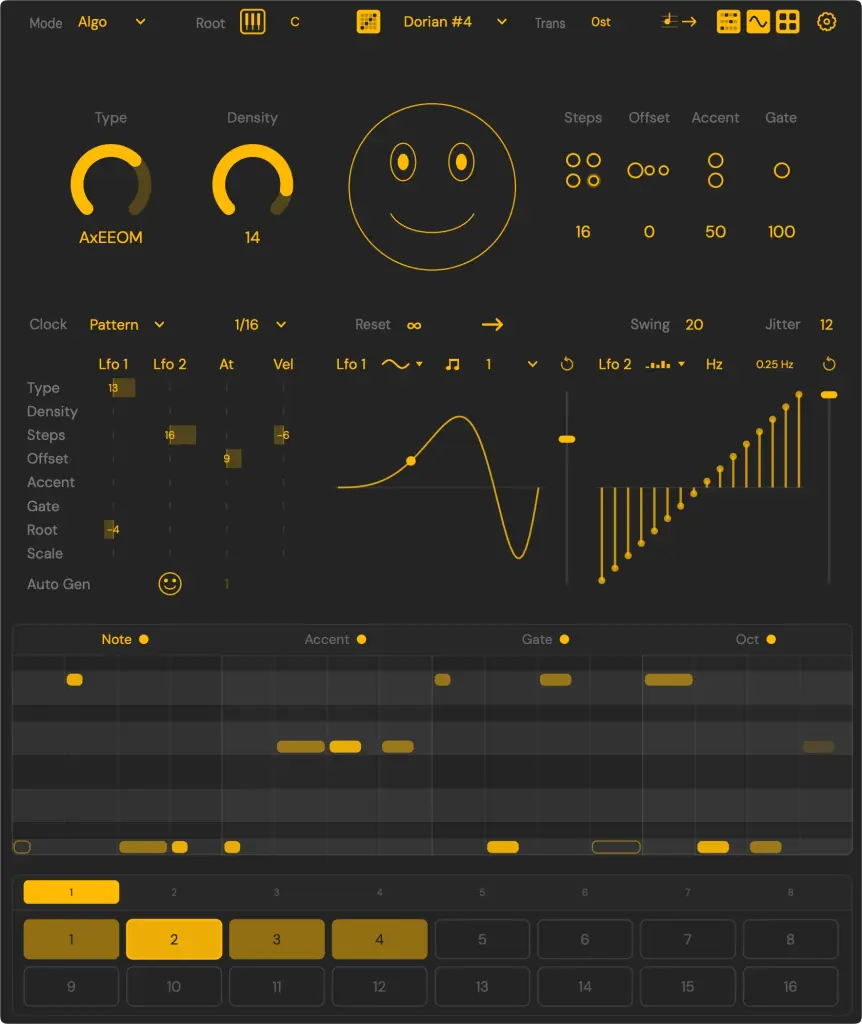
Central to this update is a comprehensive modulation section that allows for deeper manipulation of patterns. Users can now import MIDI files, providing a bridge between pre-existing compositions and the software’s generative algorithms. Furthermore, the introduction of a multi-voice counterpoint mode enables the system to generate complex, simultaneous lines, chords, and bass parts, effectively turning the plug-in into a multi-instrumental composer.
The interface has been redesigned to accommodate these new functions while maintaining the clear, modular layout that users have come to expect. High-resolution controls for steps, offset, accent, and gate remain, but they are now supplemented by a MIDI piano roll and a range of mapping options that allow for granular control over the generative process.
Accessibility as a Design Priority
One of the most notable aspects of the new Sting release is its commitment to accessibility. Recognizing that the creative process should not be limited by visual requirements, the developer has integrated features that ensure the software is accessible to blind and visually impaired musicians. This is an increasingly critical area of focus in audio software design, where many interfaces have become overly reliant on high-density visual feedback. By prioritizing screen reader compatibility and logical, keyboard-accessible workflows, the new Sting stands as an example of inclusive design in a sector that has historically lagged in this regard. This approach is intended to lower the barrier to entry for creators who rely on assistive technology, ensuring that the generative power of the software is available to all.
Hardware Integration and Tactical Control
A defining philosophy behind Sting is the rejection of the "black box" generative approach—the idea that a user simply commands a bot to create music. Instead, Iftah has focused on "tactile control," emphasizing the role of the performer in the generative process.
The software features deep integration with hardware controllers, most notably the Novation Launchpad, which utilizes a dedicated "takeover mode." This allows users to physically interact with the sequencer’s output, tweaking patterns and modulating parameters in real-time. Additionally, support for Monome hardware provides further avenues for performers to manipulate the sequencer in a live setting. By involving the user’s muscles and physical reflexes, the software maintains a human element that distinguishes it from purely automated AI-driven composition tools.
Market Implications and Distribution Model
The shift to a commercial plug-in model—necessitated by the high costs of cross-platform support, Apple Silicon compatibility, and JUCE framework maintenance—represents a pragmatic change in the software’s business model. While the transition from a freely distributed Max for Live device to a paid commercial product may impact some users, the developer has implemented a hybrid distribution strategy. To maintain the spirit of accessibility and experimentation, the website features a daily allocation of seven free downloads, supported by a live-updating counter. This allows the community to continue to access the tool at no cost while ensuring the sustainability of the project’s development.
The broader implications of this release are significant. As the market for generative tools becomes increasingly saturated with "black box" AI solutions that abstract away the creative process, tools like Sting occupy a vital niche. They empower the user to remain the conductor of their own musical output. The ability to integrate this functionality into any DAW, combined with a focus on hardware performance and inclusive design, suggests that Sting will continue to be a staple in the arsenals of electronic music producers.
Professional Analysis of the Generative Landscape
The current trend in music software is moving toward a hybrid model of human-in-the-loop generative systems. Rather than replacing the composer, these tools aim to augment human creativity by handling the repetitive aspects of pattern generation, such as probability-based velocity changes or complex rhythmic shifts. Sting excels in this area by providing a high degree of transparency in its operations. By allowing the user to set the boundaries—the "rules" of the generation—the software acts as an instrument rather than a competitor.
The adoption of the CLAP (CLever Audio Plug-in) standard, alongside VST3 and AU, is a forward-looking decision. CLAP provides a modern, high-performance interface that allows for more efficient communication between the host DAW and the plug-in, particularly regarding modulation and multi-threading. This ensures that even as projects grow in complexity, the sequencer remains stable and responsive.
Ultimately, the release of the universal Sting plug-in is a testament to the longevity of well-conceived software. By evolving from a specific device within a single platform to a professional-grade instrument available to the entire audio industry, Iftah has ensured that his vision of "expressive, algorithmic, improvisational" music-making will continue to influence production styles for years to come. Whether used for acid basslines or complex counterpoint, the software remains a premier choice for those who view the DAW as a canvas for interactive performance.