The Pedagogical Ear ELISION Ensemble and the Evolution of Listening in Contemporary Performance Practice

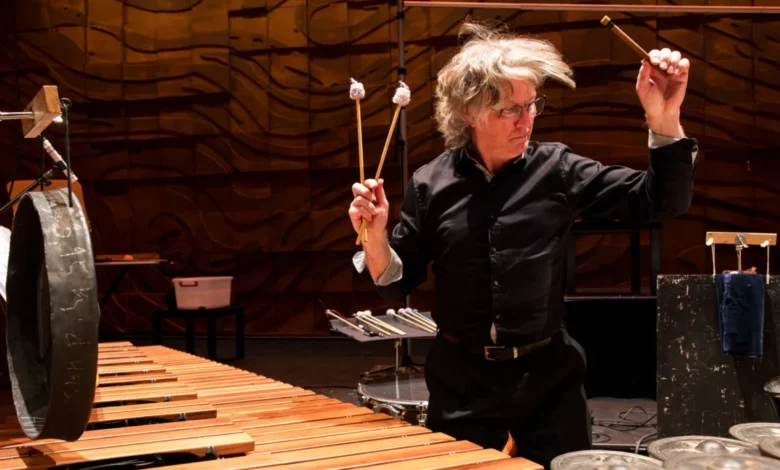
The discourse surrounding contemporary classical music often revolves around its accessibility, its technical rigor, or its departure from traditional tonal structures. However, a more nuanced conversation has emerged among practitioners and critics regarding the cognitive relationship between the sound and the auditor. Within the professional circles of the "new music" scene, a particular colloquialism has taken root: the idea that certain compositions constitute "a music that teaches you how to listen to it." This concept suggests that some works do not merely present a series of sounds to be consumed, but rather establish an internal logic that requires the listener to undergo a process of acclimation and cognitive entrainment. This pedagogical dimension of performance is at the heart of the recent work by the ELISION Ensemble, particularly in their collaborations involving composers Liza Lim and Richard Barrett and performers such as percussionist Peter Neville.
The phrase "music that teaches you how to listen" implies a specific kind of patience and iterative development. It suggests that the internal logic of a work—its gestation of form and its unique syntax—is not immediately transparent but becomes legible through the act of sustained attention. This phenomenon is not universal across all modern composition. For example, the works of Luciano Berio are often characterized by a different kind of immediacy or a collage-like density that does not necessarily function as a primer for its own decoding. Conversely, the music of Morton Feldman, with its extreme durations and subtle repetitions, is frequently cited as a quintessential example of music that re-tunes the listener’s perception over time. For ensembles like ELISION, this distinction is crucial, as their repertoire often demands a high degree of "listening labor" from the audience, transforming the concert hall into a space of active intellectual and sensory engagement.
The Foundation and Legacy of ELISION Ensemble
To understand the current state of these pedagogical performances, it is necessary to examine the history of the ELISION Ensemble. Founded in 1986 in Melbourne, Australia, the ensemble quickly established itself as one of the world’s leading exponents of "New Complexity" and other avant-garde movements. Under the long-term leadership of artistic director Daryl Buckley, ELISION has maintained a commitment to a specific kind of virtuosity—one that is not merely about speed or dexterity, but about the physical and mental endurance required to navigate highly intricate scores.
Since its inception, ELISION has been defined by its deep, multi-year collaborations with specific composers. This "laboratory" approach allows for the development of a unique performance practice where the musicians become intimately familiar with the idiosyncratic languages of creators like Liza Lim and Richard Barrett. Over nearly four decades, the ensemble has premiered hundreds of works, many of which push the boundaries of what is considered playable. This history of pushing technical limits has naturally led to the current focus on the listener’s experience; if the performer must learn a new way to play, the listener must learn a new way to hear.
Profiles in Complexity: Liza Lim and Richard Barrett
The ensemble’s identity is inextricably linked to the works of Liza Lim and Richard Barrett. Lim, an Australian composer of international renown, often incorporates elements of ritual, Sufi aesthetics, and Indigenous Australian culture into her work. Her music is characterized by a "haptic" quality—a sense of touch and physicality that manifests in the grainy, multi-phonic textures of the instruments. In Lim’s work, the "teaching" happens through the repetition of gestures that feel organic yet alien, forcing the listener to find patterns in the chaos of noise and microtonality.
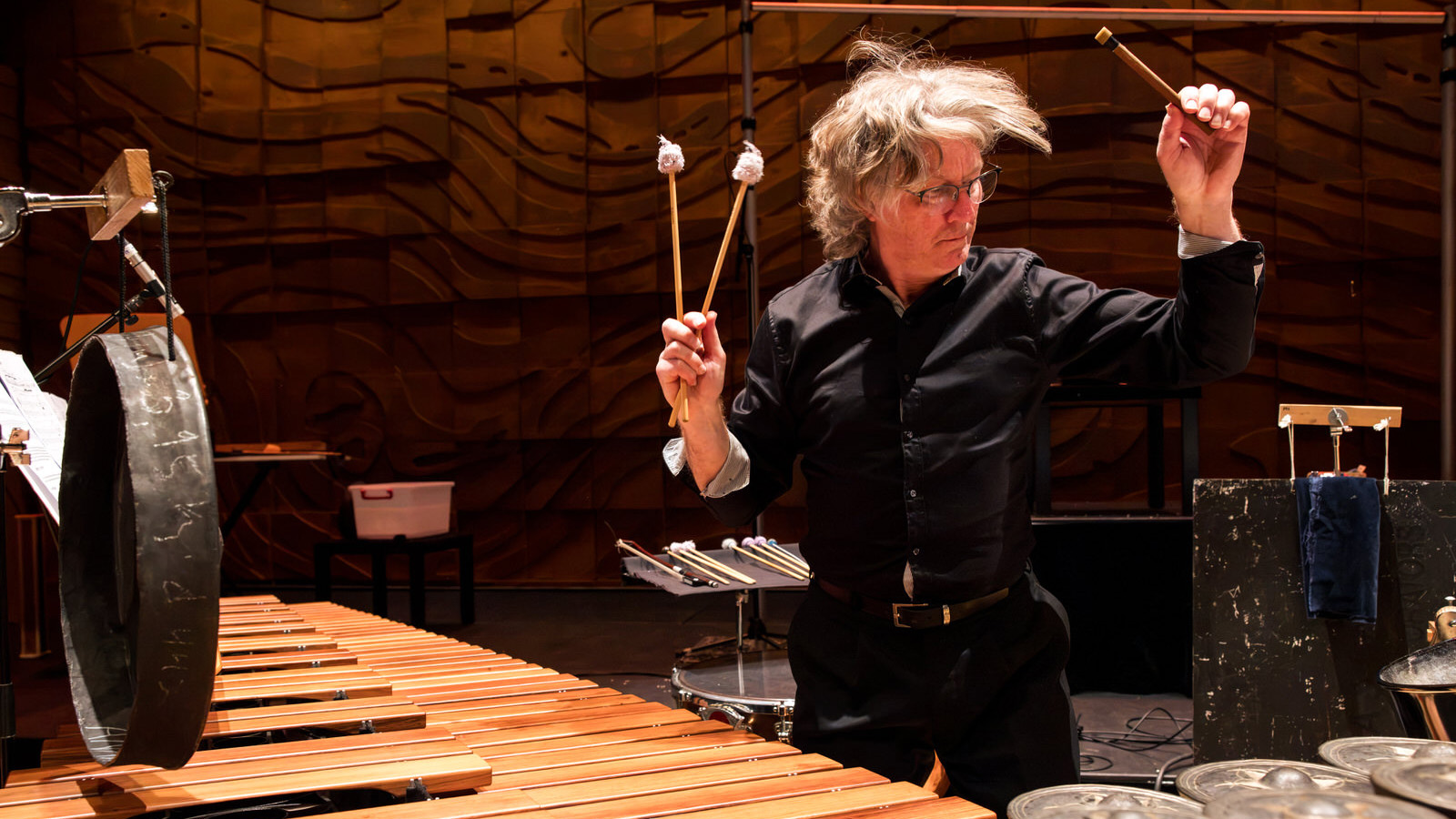
Richard Barrett, on the other hand, represents a different facet of the avant-garde. His music often integrates complex electronics with acoustic instruments, exploring themes of geology, history, and political resistance. Barrett’s compositions are frequently part of larger cycles, such as "Construction" or "Dark Matter," which can span several hours. This scale requires the listener to adapt to a structural logic that operates over vast timeframes. When ELISION performs a work like "elsewhen," featuring percussionist Peter Neville, the audience is confronted with a meticulous organization of sound where every strike and resonance is part of a larger, albeit non-linear, narrative.
Chronology of Innovation: A Timeline of ELISION’S Evolution
The trajectory of the ELISION Ensemble reflects the broader shifts in contemporary music over the last thirty years. The following timeline highlights key moments in their development:
- 1986: ELISION is founded in Melbourne, focusing on Australian contemporary music.
- 1993: The ensemble gains significant international attention with the premiere of Liza Lim’s opera The Oresteia. This work solidified their reputation for tackling monumental, complex theatrical projects.
- 1996: A landmark collaboration with Richard Barrett begins, leading to the development of several large-scale cycles that would be performed at major European festivals.
- 2006: The ensemble begins a period of residency at the SWR Experimentalstudio in Freiburg, deepening their engagement with electronic music.
- 2014: ELISION celebrates its 30th anniversary with a series of global tours, emphasizing their role as a "trans-national" ensemble with members based in Europe, Australia, and the United States.
- 2020–2024: The ensemble pivots toward more intimate, highly specialized chamber works and solo projects, exploring the "pedagogical" aspects of listening in the post-pandemic era.
Data and Supporting Evidence: The Metrics of New Music
While contemporary music is often viewed as a niche market, the data surrounding ELISION’s output suggests a significant and sustained impact on the cultural landscape. The ensemble has released over 40 recordings on prestigious labels such as NMC, Kairos, and Mode Records. These recordings serve as an archival record of their "listening pedagogy," allowing audiences to revisit complex works and undergo the learning process multiple times.
Furthermore, ELISION’s influence is felt in the academic sector. Members of the ensemble frequently hold residencies at institutions such as Harvard, Stanford, and the University of Huddersfield. These residencies involve workshops where student composers and performers are taught the specific techniques required for "New Complexity." This institutional footprint ensures that the "logic of gestation" inherent in their repertoire is passed down to the next generation of artists.
The Performer as Teacher: The Case of Peter Neville
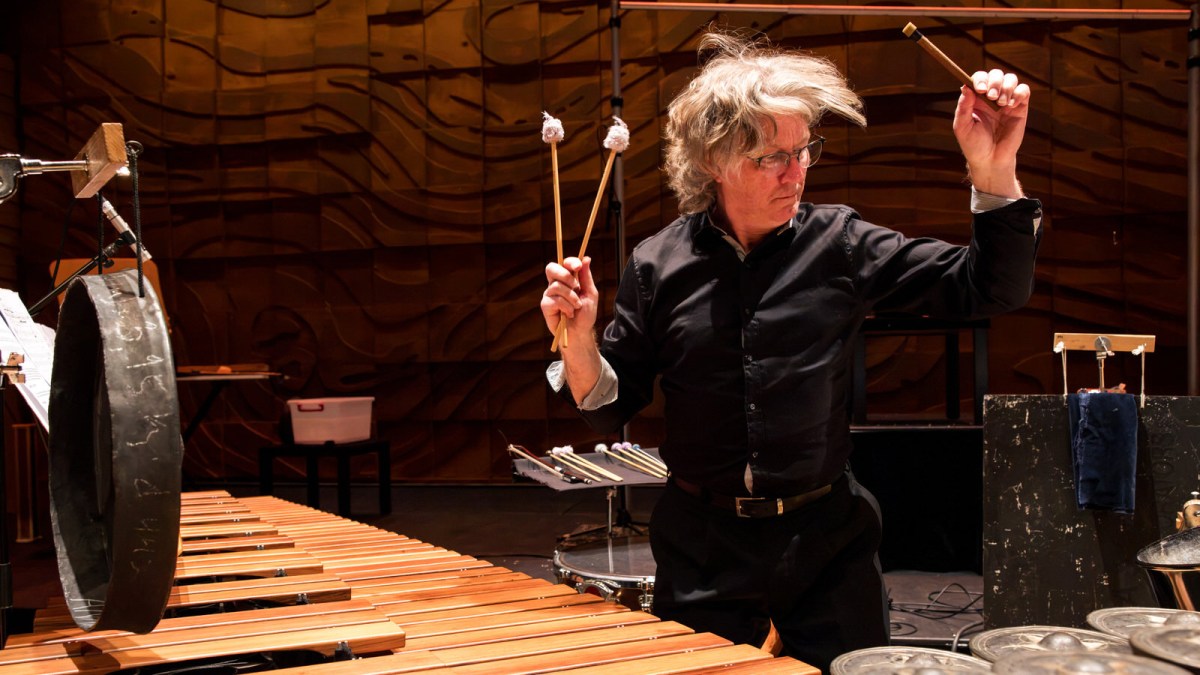
The role of the individual performer is central to how music "teaches" its audience. In the performance of "elsewhen," percussionist Peter Neville acts as a guide. Percussion, by its nature, is a visual and physical medium. When a listener sees the effort required to produce a specific, perhaps barely audible, sound, it provides a visual anchor for the auditory experience.
Neville’s performance practice involves a deep understanding of the acoustics of his instruments—not just the drums and cymbals, but also "found" objects and specialized microtonal instruments. By making the mechanics of sound production visible and intentional, the performer assists the listener in navigating the work’s internal logic. This physical manifestation of the score helps bridge the gap between the abstract complexity of the composition and the sensory experience of the audience.
Official Responses and Critical Reception
The reception of ELISION’s work often mirrors the "pedagogical" theme. Critics have frequently noted that attending an ELISION concert is an "exhaustive" but "rewarding" experience. In a review of a recent London performance, one critic noted that "the music does not meet you halfway; it demands that you travel to its location, learn its language, and abide by its rules."
Artistic Director Daryl Buckley has often spoken about the ensemble’s mission in interviews, stating that the goal is not to provide "comfort" but to provide "discovery." This sentiment is echoed by the composers they work with. Richard Barrett has remarked that his music is intended to create a "shared space of exploration" between the performer and the listener. These statements reinforce the idea that the ensemble views its work as a form of intellectual and aesthetic education.
Broader Impact and Implications for the Future of Listening
The work of the ELISION Ensemble has implications that extend beyond the world of contemporary classical music. In an age characterized by fragmented attention spans and the "algorithmic" consumption of culture, the demand for "sustained listening" is a radical act. By performing music that "teaches you how to listen to it," ELISION is asserting the value of deep focus and cognitive effort.
This approach challenges the prevailing trend of making art more "accessible" through simplification. Instead, it suggests that accessibility can be achieved through engagement and education. If the music provides the tools for its own understanding, then the barrier to entry is not a lack of knowledge, but a lack of time and attention.
As we move further into the 21st century, the "pedagogical ear" may become a vital tool for navigating an increasingly complex world. The lessons learned in the concert hall—patience, the search for internal logic, and the appreciation of nuanced gesture—are transferable skills. Through their rigorous commitment to the most challenging works of our time, the ELISION Ensemble continues to prove that music is not just a sequence of sounds, but a profound way of learning how to be in the world.